CR80 Card Size Standard Guide: Dimensions and Uses Explained
Table of Contents []
- The CR80 Card Size Standard: Everything You Need to Know - Plastic Card ID
- What Exactly Is the CR80 Standard?
- Types of CR80 Cards and What They're Used For
- CR80 Cards for Specific Business Applications
- Choosing the Right Card Printer for CR80 Cards
- Specialty CR80 Options: Beyond Standard White PVC
- Frequently Asked Questions About CR80 Card Size
- Start Your Card Program with Plastic Card ID Today
The CR80 Card Size Standard: Everything You Need to Know - Plastic Card ID
Pull a card from your wallet right now. That rectangle of plastic you're holding? It almost certainly conforms to one of the most quietly influential standards in modern commerce - the CR80. Understanding the CR80 card size standard is the foundation of any successful card program, whether you're issuing employee badges, membership cards, loyalty rewards, or access credentials.
Most people never think twice about why their driver's license fits perfectly in the same slot as their gym membership card or hotel room key. The answer is ISO 7810 - a globally recognized dimensional standard that keeps cards universally compatible across wallets, readers, and printers. At Plastic Card ID, we've built over 25 years of expertise around this standard, helping more than 100,000 businesses across the United States design, source, and deploy card programs that actually work.
| Specification | Measurement (Inches) | Measurement (MM) |
|---|---|---|
| Card Width | 3.375" | 85.6 mm |
| Card Height | 2.125" | 54 mm |
| Card Thickness | 0.030" (30 mil) | 0.762 mm |
| Corner Radius | 0.125" | 3.18 mm |
| ISO Standard | ISO 7810 ID-1 | |
What Exactly Is the CR80 Standard?
 The designation "CR80" comes from the card industry's own sizing nomenclature - CR stands for "credit card," and 80 refers to the thickness measurement within the original specification framework. Today, the CR80 is codified under ISO 7810 as the ID-1 format, making it the international baseline for identification, transaction, and access cards. Every blank PVC card sold by CPE in the standard configuration meets this exact specification.
What makes the CR80 so dominant isn't arbitrary convention - it's engineering logic. At 30 mil thickness, the card is rigid enough to withstand daily wallet friction, flexible enough not to crack under normal bending stress, and dimensionally consistent enough to feed reliably through card printers and reader slots. It's a balance struck decades ago that still holds up remarkably well against every modern application thrown at it.
Why ISO 7810 Matters for Your Card Program
When you purchase cards that conform to ISO 7810 ID-1, you're buying into a guarantee of compatibility. Your cards will fit in standard cardholders, badge reels, lanyard slots, and card sleeves. They'll feed cleanly through Evolis, Zebra, and Fargo desktop printers without jamming or misaligning. Compliance with ISO 7810 is not just a technical detail - it's operational insurance.
Organizations that cut corners on card dimensions - sourcing from unvetted suppliers who deliver slightly off-spec product - end up dealing with printer jams, reader errors, and cardholder complaints. The tolerances in the ISO 7810 standard are tight for a reason. Even a fraction of a millimeter in the wrong direction can cause consistent feeding problems in high-volume card printer operations.
CR80 vs. Other Card Sizes: Understanding the Differences
The CR80 is not the only card size in circulation, though it dominates the market. The CR79 (3.303" x 2.051") is slightly smaller and designed specifically for cards that will be embedded in adhesive overlaminates. The CR100 is a jumbo format measuring 3.88" x 2.63", popular for gift card carriers and oversized loyalty mailers. And the CR90 (3.625" x 2.375") occasionally appears in healthcare and insurance applications.
For the vast majority of business card programs - employee IDs, loyalty cards, membership cards, access credentials, gift cards, event badges - the CR80 is the right choice. It's the size your printers expect, your readers are calibrated for, and your cardholders are built to accommodate. Deviating from CR80 requires deliberate justification, not just curiosity about alternatives.
The 30 Mil Thickness Explained
Thickness is measured in "mil," where one mil equals one-thousandth of an inch. The CR80 standard specifies 30 mil (0.030"), which translates to approximately 0.762 millimeters. This is the thickness your fingertips intuitively expect when handling a "real" plastic card. Thinner cards - sometimes sold as economy options - feel flimsy and signal low quality to the recipient. Thicker cards beyond 30 mil may not feed through standard card printers at all.
The 30 mil specification exists at the intersection of durability and practicality. Cards at this thickness survive years of wallet use, resist delamination under normal conditions, and maintain their structural integrity through encoding processes, lamination overlays, and magnetic stripe application. It's the thickness that made plastic cards replace paper - and it hasn't needed an upgrade in over three decades.
Types of CR80 Cards and What They're Used For
Not all CR80 cards are created equal - and that's precisely the point. The CR80 standard defines the shell; what goes inside or on top of that shell determines what the card can actually do. Plastic Card ID carries a comprehensive catalog of CR80-format cards spanning every major card technology in use today, from the simplest blank white PVC stock to sophisticated RFID smart cards with encrypted memory sectors.
Choosing the right card type requires matching the technology to the use case - not the other way around. A loyalty card that just needs to be scanned at a POS terminal has very different requirements than a proximity access card securing a server room or a casino player card tracking play history. The table below covers the major types, but let's walk through each category with the nuance it deserves.
Blank PVC Cards: The Foundation of In-House Card Programs
Blank white CR80 PVC cards are the single most versatile product in any card program manager's toolkit. They arrive as a blank canvas - no encoding, no pre-printed design - ready to accept whatever your card printer produces. Organizations that print cards in-house gain total design control and dramatically lower per-card costs over time, especially once the initial printer investment is amortized across thousands of cards.
A blank CR80 card becomes whatever you need it to be: an employee ID badge with a color photo and access level indicator, a loyalty card with a custom design that reinforces your brand, a membership card with sequential numbering, or a temporary visitor pass printed on demand. The card doesn't define the application - the program does. That's what makes blank PVC stock the workhorse product for businesses of every size.
Magnetic Stripe Cards: HiCo vs. LoCo
Magnetic stripe cards add a functional data layer to the CR80 format. The stripe - that familiar brown or black band on the back - stores encoded data that card readers can retrieve. CPE supplies both HiCo (High Coercivity) and LoCo (Low Coercivity) magnetic stripe cards, and the choice between them matters significantly depending on how the card is used.
- HiCo cards use a high coercivity magnetic material (2750 Oe) that is highly resistant to accidental erasure. They're the right choice for cards carried near other magnetic sources - in wallets with other cards, near phones, or in environments with magnetic interference.
- LoCo cards use lower coercivity material (300 Oe) and are typically sufficient for short-term or controlled-environment applications like hotel key cards where the read/write infrastructure is managed closely.
- Magnetic stripe cards are ideal for loyalty programs, gift cards, time and attendance systems, and access control applications that rely on swipe-style readers.
- Encoding can be done in-house using a card printer with a magnetic stripe encoder module, giving you full control over the data written to each card.
RFID, Proximity, and Smart Chip Cards in CR80 Format
The CR80 format accommodates significantly more technology than most people realize. RFID and proximity cards embed an antenna and microchip within the card body itself - the 30 mil thickness provides just enough space to house these components while maintaining a smooth, professional exterior. These cards communicate wirelessly with compatible readers, making them ideal for access control, time tracking, and contactless loyalty applications.
At the advanced end of the spectrum, MIFARE DESFire smart cards deliver encrypted, multi-application functionality that meets enterprise-grade security requirements. Casino player cards, hotel room keys, and corporate access credentials all rely on this technology. The card looks and feels identical to a standard CR80 - same dimensions, same weight, same wallet compatibility - but carries sophisticated technology inside.
CR80 Cards for Specific Business Applications
 Theory is useful; real-world application is better. The CR80 standard enables an enormous range of business programs, and the results businesses achieve when they make the switch from paper to plastic are consistently measurable. Retailers who move from paper gift certificates to CR80 plastic gift cards routinely see sales increases in the 35-50% range - a return that dwarfs the per-card cost many times over.
Loyalty programs built on CR80 plastic cards outperform paper punch cards not just because they're more durable, but because they live in wallets. A card in a wallet is a card that gets used. A paper punch card gets lost in a junk drawer after the second visit. The physical permanence of a CR80 card is, paradoxically, one of its most powerful marketing attributes.
Employee ID and Access Control Programs
For organizations managing employee identification, the CR80 card is the industry-standard medium for a reason. It accepts full-color photo printing, text, barcodes, and encoded access credentials in a single card body. A well-designed employee ID card does triple duty: it identifies the holder visually, grants or restricts physical access electronically, and reinforces your organizational brand every time it's displayed.
Proximity and smart chip CR80 cards integrate directly with access control systems from major manufacturers, enabling door access, time and attendance tracking, printer release, and even cashless cafeteria payments - all on a single card the employee keeps in their wallet. The operational return on a well-deployed CR80-based access control program is substantial.
Membership and Loyalty Card Programs
Membership organizations - gyms, clubs, professional associations, retail loyalty programs - rely on CR80 cards to signal permanence and legitimacy that paper simply cannot convey. When a new member receives a professionally produced plastic card with their name on it, the psychological message is clear: this organization is serious, and so is your membership.
Loyalty cards in the CR80 format enable POS-integrated reward tracking through magnetic stripe or barcode encoding, replacing manual punch systems with data-driven programs that let you understand customer behavior and tailor rewards accordingly. The card becomes a data collection instrument as much as a rewards vehicle.
Event Credentials and Temporary Access Cards
Events ranging from corporate conferences to trade shows to private membership gatherings use CR80 cards for credentials, access passes, and VIP identifiers. Printed on-demand using a desktop card printer, event credentials can include attendee names, session access levels, photos, barcodes for check-in scanning, and sponsor branding - all on a card that recipients keep as a memento rather than tossing in the recycling bin after the event.
For recurring events or multi-day conferences, encoded CR80 cards enable sophisticated access management - session gating, meal vouchers, speaker meet-and-greet access - without the logistical complexity of separate ticketing systems. One card, many functions, all in the format that fits every lanyard and badge holder ever manufactured.
Choosing the Right Card Printer for CR80 Cards
Plastic Card ID supplies card printers from three industry-leading manufacturers - Evolis, Zebra, and Fargo - each with distinct strengths suited to different program scales and feature requirements. Selecting the right printer is as important as selecting the right card stock, and the two decisions are deeply interconnected. Printer specifications dictate which card features you can apply in-house versus outsourcing.
Desktop card printers designed for CR80 cards typically print at 300 DPI resolution, sufficient for photo ID quality imagery and sharp barcode readability. Higher-end models offer 600 DPI for exceptionally fine detail work. Feed mechanisms are calibrated for 30 mil card stock - one of the many reasons staying within the CR80 specification protects your printer investment.
Single-Sided vs. Dual-Sided Printing
Entry-level CR80 card printers print on one side of the card, which is entirely sufficient for simple ID cards, loyalty cards, and basic membership credentials where the reverse side carries only standard boilerplate. Dual-sided printers add significantly more design flexibility - employee cards can carry a photo and name on the front with access level details, emergency contacts, or a barcode on the reverse.
For most small-to-medium business card programs producing under 500 cards per month, a single-sided printer with an encoding module covers the majority of use cases. Organizations running higher volumes or complex multi-sided designs should look at dual-sided models with lamination modules for added card durability.
In-Line Encoding Options
Modern card printers can apply magnetic stripe encoding, smart chip programming, and RFID writing in a single pass through the printer - no separate encoding step required. In-line encoding transforms a card printer into a complete card issuance system, enabling on-demand card production that's particularly valuable for organizations that need to issue cards immediately at the point of enrollment rather than ordering pre-encoded stock in advance.
To reach our team for printer selection guidance, call 800.835.7919 and one of our experienced card program specialists will help match you with the right hardware for your specific volume and feature requirements.
Ribbons, Cleaning Kits, and Consumables
A card printer is only as good as the consumables feeding through it. CPE stocks a full range of printer ribbons - YMCKO full-color ribbons for photo ID quality output, KO monochrome ribbons for high-volume single-color printing, and specialty ribbons including metallic and UV fluorescent options for security applications. Matching the ribbon to the printer model and card application is critical for consistent output quality.
Card printer cleaning kits are one of the most overlooked investments in card program maintenance. Dust and debris accumulation on print heads causes banding artifacts and premature head failure - cleaning kit investment of a few dollars protects a printer investment of several hundred to several thousand dollars. Plastic Card ID includes cleaning supplies as part of its full card program supply catalog.
Specialty CR80 Options: Beyond Standard White PVC
The CR80 format is a dimensional standard, not a material restriction. Within the 3.375" x 2.125" x 30 mil specification, there's remarkable room for specialty finishes and materials that serve distinct aesthetic and functional purposes. Organizations looking to elevate their card programs beyond the standard white PVC baseline have more options than most people realize.
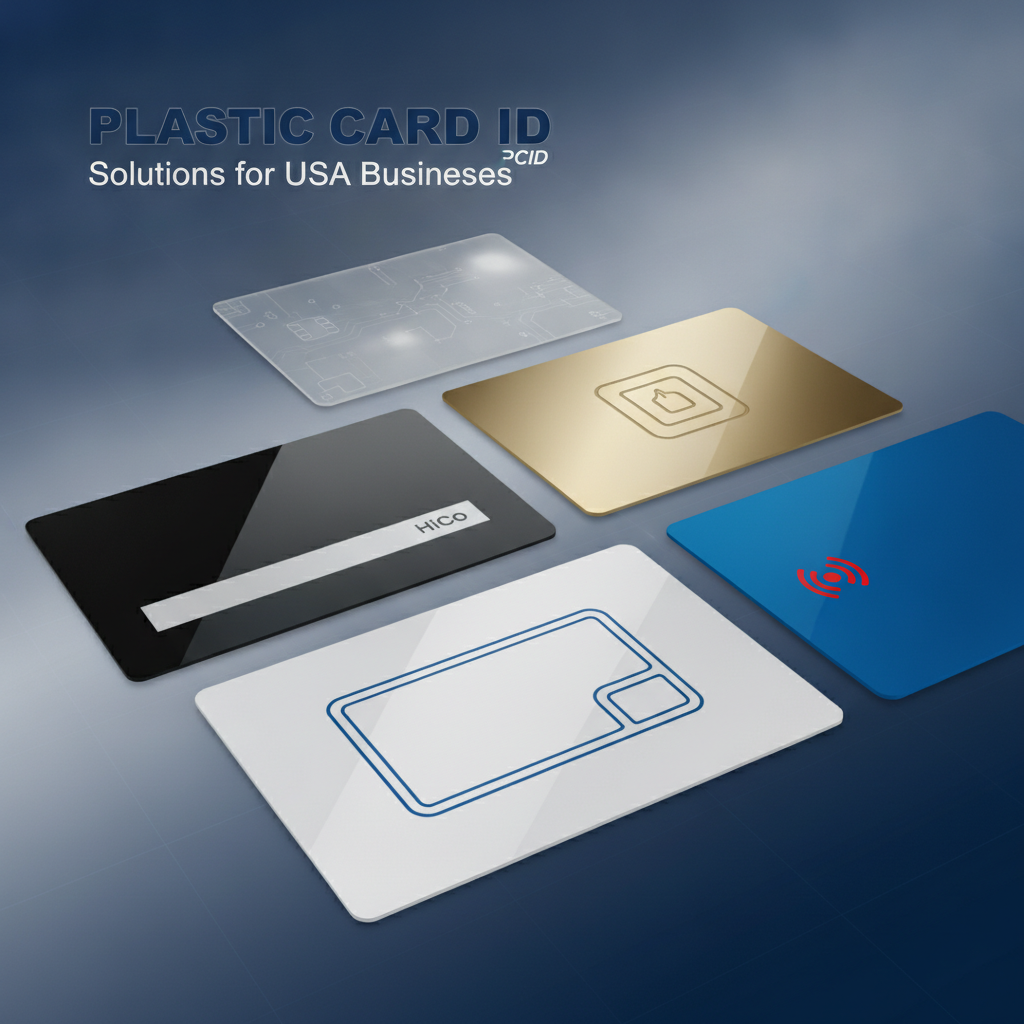
From crystal-clear transparent cards that showcase a minimalist design aesthetic, to colored PVC stock in dozens of pre-tinted shades, to genuine metal cards in stainless steel, brass, and gold finishes - the CR80 format accommodates premium materials that transform a functional card into a brand statement. These specialty options are particularly effective for luxury memberships, VIP programs, and high-end retail loyalty applications where the card itself communicates brand values.
Clear and Frosted Plastic Cards
Clear CR80 cards offer a striking visual effect that standard white PVC cannot replicate. Printed designs appear to float within the transparent card body, creating a premium aesthetic particularly effective for nightclub VIP passes, high-end retail loyalty programs, and technology company employee credentials. Frosted clear cards add a subtle texture that diffuses light across the card surface for an equally distinctive look.
Both clear and frosted cards accept standard card printer ribbons and encode normally with magnetic stripe or RFID technology, meaning the specialty appearance doesn't compromise card functionality. They're CR80-compliant in every dimensional respect - they simply look extraordinary compared to standard stock.
Metal Cards and Premium Formats
For organizations where the card itself is a statement of exclusivity, Plastic Card ID offers luxury metal cards in stainless steel, brass, and gold. A metal card in a wallet doesn't just get noticed - it gets remarked upon. Executive membership programs, premium credit-adjacent loyalty cards, and VIP event credentials in metal format create an immediate impression of exclusivity and permanence that no plastic card can match, however well-designed.
Metal cards conform to CR80 dimensions, fitting standard cardholders and presenting identically to plastic cards in professional settings. The weight difference - noticeably heavier than PVC - is itself a tactile signal of premium quality that recipients consciously register and respond to positively.
Custom Die-Cut and Specialty Shapes
While the standard CR80 rectangle dominates the market, custom die-cut cards allow organizations to create distinctive shapes - key fobs, rounded cards, mini-cards, or entirely custom outlines - that command attention and reinforce brand identity. These specialty formats work well for key ring loyalty tags, promotional cards, and branded merchandise that functions as both a card and a brand artifact.
Custom die-cut shapes still utilize the same PVC material and encoding technologies as standard CR80 cards - the shape is the variable, not the underlying card technology. Production minimums and lead times for custom die-cuts differ from standard CR80 stock; CPE specialists can walk you through what makes sense for your specific program scale and budget.
Frequently Asked Questions About CR80 Card Size
After more than two decades helping businesses build card programs, certain questions come up consistently. Here are the most common questions about the CR80 standard, answered directly.
Is CR80 the Same as a Standard Credit Card Size?
Yes - the CR80 and standard credit card size are the same specification: 3.375" x 2.125" x 0.030" thick, with 0.125" corner radii, conforming to ISO 7810 ID-1. Every major credit card, debit card, driver's license, and ID card worldwide is manufactured to this standard. When Plastic Card ID refers to "standard plastic card" stock, CR80 is what we mean - and it's what every card printer in our lineup is designed to process.
The consistency of the standard across decades of card issuance is a remarkable feat of international standardization. A card printed in 1985 to CR80 spec would still fit in a modern cardholder, still feed through a modern card printer, and still swipe through a modern magnetic stripe reader. That backward compatibility is a feature, not a coincidence.
How Many CR80 Cards Can I Print Per Ribbon?
Ribbon yield depends on the ribbon type and the printer model. A typical YMCKO full-color ribbon for a desktop card printer yields 200-250 prints per ribbon roll. Monochrome KO ribbons used for single-color text and barcode printing yield substantially more - often 500-1000 prints per roll - making them cost-effective for high-volume, simple-design applications like access cards.
- YMCKO full-color ribbons: 200-250 cards per roll, best for photo ID and full-color branded cards.
- KO monochrome ribbons: 500-1000 cards per roll, ideal for text-only or barcode-only printing.
- YMCKOK ribbons add a second black resin panel for sharper text on top of full-color imagery.
- Specialty ribbons (holographic, UV, metallic) vary widely in yield - consult with CPE for specific model compatibility.
- Ribbon cost per card typically ranges from $0.08-$0.45 depending on type and volume - factor this into total program cost projections.
What Quantities Does Plastic Card ID Supply?
Card programs at every scale are welcome at Plastic Card ID. Small organizations running modest programs of 50-100 cards per month receive the same quality product and service attention as enterprise clients running tens of thousands of cards through their systems. Blank CR80 PVC cards are available in quantities from a single box of 100 cards to full pallet orders, with per-card pricing that reflects economies of scale at higher volumes.
For organizations uncertain about their monthly card volume needs, CPE specialists can help model a program budget based on projected card counts, printer requirements, ribbon consumption, and ancillary supplies like card carriers, sleeves, and affixing and mailing services for programs that distribute cards by post.
Start Your Card Program with Plastic Card ID Today
 The CR80 standard exists to make card programs predictable, compatible, and professional. Every decision downstream of that 3.375" x 2.125" x 30 mil specification - what type of card, what encoding technology, what printer, what quantities - is a decision Plastic Card ID has helped more than 100,000 American businesses navigate over 25 years and 50 million cards. That depth of real-world experience is available to you, starting with the first conversation.
Whether you're launching a brand-new loyalty program, upgrading paper ID badges to professional plastic cards, deploying a contactless access control system, or simply sourcing reliable CR80 blank stock for an existing printer setup, CPE has the product catalog, the technical knowledge, and the long-term partnership orientation to make your program succeed.
Contact Plastic Card ID at 800.835.7919 today and let's build a card program that works as hard as you do.