Signature Panels on Blank Plastic Cards: Key Facts
Table of Contents []
- Signature Panels on Blank Plastic Cards: What Every Card Program Manager Needs to Know - Plastic Card ID
- Why Signature Panels Matter More Than Most Programs Realize
- Choosing the Right Blank Card Stock with Signature Panels
- Printing on Blank Cards with Signature Panels: Tips for Better Results
- Frequently Asked Questions About Signature Panels on Plastic Cards
- Blank Card Programs at Any Scale - Built to Last with Plastic Card ID
Signature Panels on Blank Plastic Cards: What Every Card Program Manager Needs to Know - Plastic Card ID
Most people notice the front of a plastic card first - the logo, the color, the feel of it between their fingers. But flip that card over, and one small strip quietly does some heavy lifting: the signature panel. It is easy to overlook, easy to underestimate, and almost universally misunderstood by organizations building card programs from scratch. Whether you are running a membership program, an employee ID system, or a loyalty card rollout, understanding how signature panels work - and what blank cards with or without them can do for your operation - is genuinely worth your time.
Plastic Card ID has supplied plastic cards to over 100,000 businesses and organizations across the United States, and in that experience, questions about signature panels come up more often than you might expect. This page covers everything: what signature panels are, why they matter, when to use them, and how to choose the right blank card stock for your specific program needs.
What Exactly Is a Signature Panel?
A signature panel is a specially coated strip, almost always white or off-white, applied to the back of a plastic card. Its surface is engineered to accept ink from a ballpoint pen and hold that ink permanently, without smearing, fading, or bleeding into the card's PVC substrate. Standard CR80 cards (30 mil thickness, conforming to ISO 7810) - the same dimensions as a standard credit card - often carry this feature.
The material used in a signature panel is typically a heat-sensitive or pressure-sensitive coating bonded to the card during manufacturing. It is not simply a sticker or tape. When printed cards come out of a card printer, the signature panel area accepts thermal transfer ink from ribbons, allowing additional information - or nothing at all - to appear there alongside the handwritten signature space.
Not every blank plastic card includes a signature panel by default. This is a critical distinction for buyers. Some card stock comes pre-equipped with signature panels; other stock is entirely plain PVC on both sides. Knowing which you need before ordering saves time, money, and frustration during card production.
The Difference Between Signature Panel Cards and Plain PVC Stock
Plain PVC blank cards have a smooth, glossy back surface that is not designed to hold pen ink reliably. Write on one with a ballpoint pen and the ink sits on top, smears easily, and will not last. For programs where cardholders never need to sign anything - such as pure access control cards or RFID tokens - plain stock is perfectly appropriate and typically costs less per unit.
Signature panel cards introduce that coated strip, which solves the ink-adhesion problem entirely. The coating is slightly matte in appearance, creating a visual contrast against the glossy card body. This matte area is where cardholders sign their name, and that signature becomes a near-permanent fixture on the card. For any program involving cardholder verification, membership agreements, or liability acknowledgment, this feature is not optional - it is essential.
Common Misconceptions That Cost Organizations Money
One surprisingly common mistake is ordering plain blank PVC cards for a membership or ID program and then discovering - after printing hundreds of cards - that cardholders cannot sign them. Reprinting is expensive. The fix seems simple in hindsight, but it is the kind of detail that disappears in the excitement of launching a new card program.
Another misconception: assuming all signature panel cards are the same. Quality varies. Low-quality panels can peel, crack under heat, or fail to hold ink from certain pen types. Sourcing from a trusted supplier with real-world production experience eliminates this uncertainty. That is precisely the kind of partnership CPE has built with clients across every industry sector over 25 years of operation.
| Card Type | Signature Panel Included | Best Use Case | Typical Back Surface |
|---|---|---|---|
| Blank PVC CR80 (Plain) | No | Access tokens, RFID, event badges | Glossy smooth PVC |
| Blank PVC CR80 with Signature Panel | Yes | Membership, ID, loyalty | Glossy with matte white strip |
| Magnetic Stripe Card (HiCo/LoCo) with Panel | Yes (common configuration) | Gift cards, loyalty, hotel key | Mag stripe signature panel |
| Smart Chip / RFID Card | Optional | Access control, campus ID | Varies by configuration |
| Clear / Frosted PVC Card | Optional (white panel applied) | Premium membership, VIP | Transparent with white strip |
Why Signature Panels Matter More Than Most Programs Realize
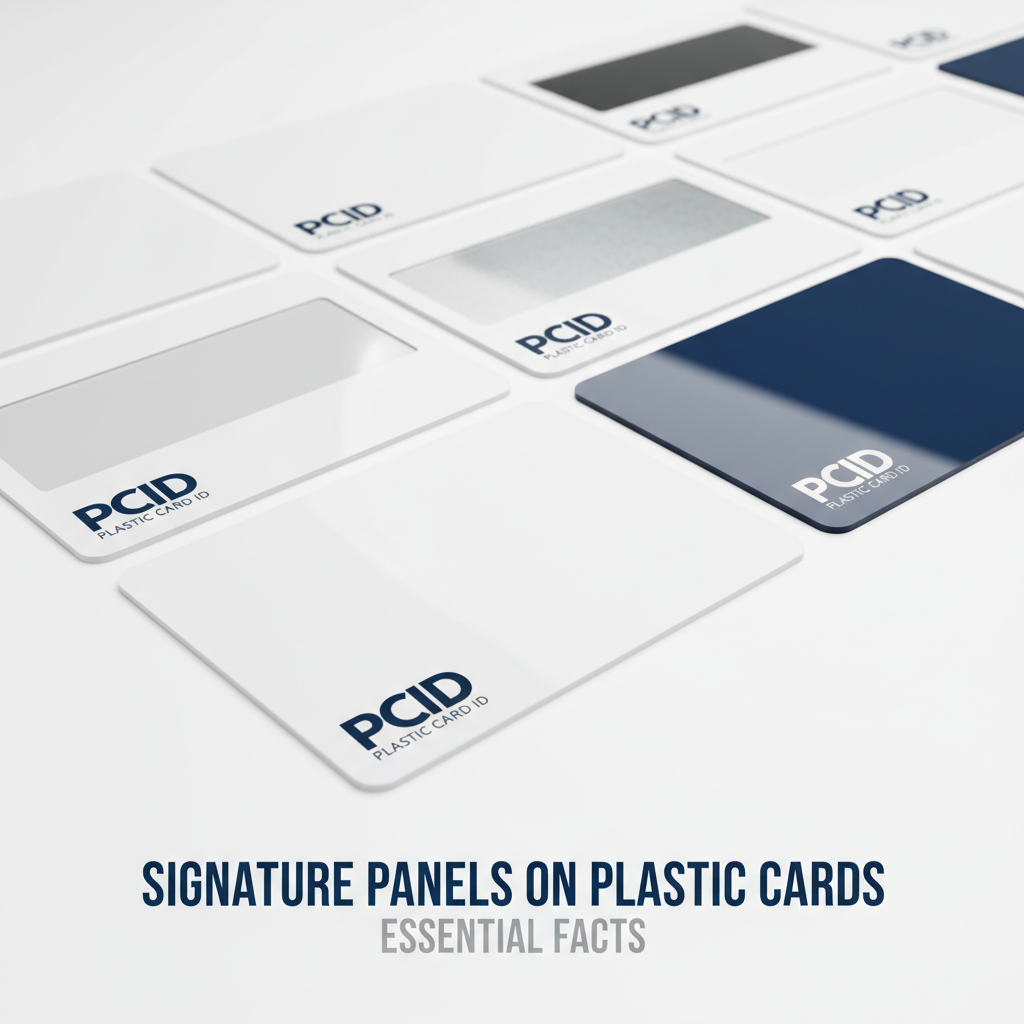 There is something deceptively simple about a signature panel. It is a small rectangle on the back of a card, and yet it performs a function that no other card element replicates: it creates a direct, physical, legally meaningful link between a specific person and a specific card. That link matters in contexts ranging from health club memberships to corporate ID programs to loyalty schemes where account ownership disputes occasionally arise.
Think about what a signature actually does. It is an agreement, a declaration, a physical identifier. When a cardholder signs a membership card, they are affirming ownership and, in many organizational contexts, acknowledging the terms of use printed on the back or in the accompanying agreement. The presence of a signature panel elevates a plastic card from an access token to a legal instrument of identity. That distinction carries weight.
Membership and Club Programs
Gyms, country clubs, professional associations, and subscription-based services routinely issue membership cards with signature panels. The cardholder's signature serves as instant visual verification when a staff member checks credentials at the front desk or gate. No app, no PIN, no secondary verification needed - just flip the card, match the signature, confirm identity. It is fast, reliable, and surprisingly hard to replicate fraudulently.
For organizations running membership programs at any scale, this functionality is not a nice-to-have. It is the mechanism that makes the card credible as a verifiable identity document within that organization's ecosystem. CPE works with clubs and associations ranging from 50 members to tens of thousands, and signature panel cards consistently rank among the most requested configurations.
Employee ID and Corporate Badge Programs
Corporate ID cards present a slightly different use case. In many enterprise environments, the signature panel is used in combination with other security features - magnetic stripes, RFID chips, or proximity technology - to create a layered identity credential. The signature adds a human-verifiable element to an otherwise electronic card, which is valuable during system outages, at unmanned checkpoints, or in visitor management scenarios.
HR departments and facilities managers consistently appreciate the professional appearance of a well-produced ID card with a clean, clearly defined signature panel. It signals that the organization takes identity management seriously. A card that looks authoritative is treated with more respect by both employees and visitors - a subtle but genuinely impactful outcome of thoughtful card specification.
Gift Cards and Loyalty Programs
Retailers have known for decades that switching from paper-based systems to plastic cards changes customer behavior measurably. Sales increases of 35-50% are documented among retailers who make that transition for gift card programs. Signature panels on loyalty and gift cards add another dimension: they allow for account recovery processes, disputed transaction resolution, and point-of-sale verification that paper and digital systems handle less elegantly.
When a customer presents a loyalty card with a visible signature, a cashier can cross-reference it against a photo ID in seconds. That fast, low-friction verification keeps checkout lines moving while protecting the program from abuse. Combining a magnetic stripe for data encoding with a signature panel for human verification gives loyalty programs a genuinely powerful tool.
Choosing the Right Blank Card Stock with Signature Panels
Selecting blank card stock sounds simple until you are looking at a catalog that includes plain PVC, signature panel variants, magnetic stripe configurations, HiCo versus LoCo options, RFID combinations, and specialty materials. The right choice depends on several variables: what you print onto cards, how those cards are used, what printers you own or plan to purchase, and what security level your program requires.
The decision tree is not complicated once you understand the variables, but skipping this analysis leads to wasted inventory, reprinting costs, and in some cases, program delays. CPE has navigated these decisions with clients in virtually every industry, and the guidance below reflects that accumulated practical knowledge.
Standard CR80 Blank Cards with Signature Panels
The CR80 format - 3.375 inches by 2.125 inches, 30 mil thick - is the universal standard. These are the dimensions of every credit card, driver's license, and most professional ID cards you have ever seen. Blank CR80 cards with signature panels work in virtually all desktop card printers from major brands including Evolis, Zebra, and Fargo, making them the default choice for most in-house card programs.
Per-card costs on blank CR80 stock with signature panels are low, especially at volume. Organizations that invest in a card printer and blank card stock invariably discover lower per-card costs over time compared to ordering fully custom pre-printed cards for every run. This is particularly true for programs with frequent cardholder turnover, such as employee ID programs at high-growth companies or event credential programs.
When evaluating blank card stock, pay attention to panel placement and size. Most signature panels run the full width of the card near the bottom of the back face, but configurations vary. Verify that the panel position is compatible with your printer's output layout before ordering in bulk.
Magnetic Stripe Cards with Integrated Signature Panels
Magnetic stripe cards come in two coercivity grades: High Coercivity (HiCo) and Low Coercivity (LoCo). HiCo stripes are harder to accidentally erase and are preferred for long-lasting programs - loyalty cards, employee badges, hotel keys used repeatedly. LoCo stripes are appropriate for shorter-life applications like event access cards or temporary credentials.
Most magnetic stripe card configurations can be ordered with an integrated signature panel. The panel typically occupies a defined zone on the card back, distinct from the stripe position. This combination - magnetic stripe for machine-readable data plus signature panel for human verification - is arguably the most versatile configuration available in standard blank card stock.
Smart Cards and RFID Cards: Signature Panel Considerations
Contactless smart cards and RFID proximity cards introduce a different physical structure. The embedded antenna and chip alter the card's construction, which means signature panel application follows different manufacturing parameters. Most smart card configurations - including MIFARE DESFire variants used in advanced access control - can still be manufactured with a signature panel on the back, but this is a specification that must be confirmed at the ordering stage rather than assumed.
For organizations deploying contactless access control who also need cardholder identity verification, specifying a signature panel at the card manufacturing stage is far simpler and less expensive than attempting to add one later. Getting the specification right the first time is a hallmark of working with an experienced supplier - and it is a process CPE has refined over thousands of client engagements. Reach out to the team at 800.835.7919 to walk through your specific smart card requirements before placing any order.
Printing on Blank Cards with Signature Panels: Tips for Better Results
 Blank card stock is only the first half of the equation. What you do with it - the printing process, the ribbon type, the printer settings, and the design execution - determines whether your finished cards look polished and professional or amateurish and inconsistent. Signature panel cards introduce one specific printing consideration that plain PVC stock does not: the panel itself responds differently to certain printing processes than the surrounding PVC surface does.
Understanding this is not technically difficult, but it requires attention. Desktop card printers using thermal transfer ribbons produce excellent results on both the card face and the signature panel area, provided that the ribbon type matches the card substrate specifications. Printing over the signature panel with full-color panels or dark backgrounds can obscure the white panel area and make subsequent handwriting harder to read - a result worth avoiding through thoughtful card layout.
Card Printer Compatibility and Ribbon Selection
Evolis, Zebra, and Fargo printers each handle blank card stock with signature panels reliably when configured correctly. YMCK ribbon configurations (which include a black resin panel) print crisp text and barcodes over the signature panel area, while the white panel itself remains visible and functional alongside the printed content. This is the most common configuration for ID card programs that need text printed on the card back near the signature area.
Cleaning kits matter more than most users realize. Dust, debris, and ribbon residue accumulate inside card printers over time, and the results show up as streaks, spots, and uneven printing - most visibly on white surfaces like signature panels. A regular cleaning schedule, using the correct cleaning kits for your specific printer model, is the single most impactful maintenance step for consistent card quality.
Layout Considerations When Designing for Signature Panel Cards
When designing your card's reverse side layout, treat the signature panel as a reserved zone. Position barcodes, magnetic stripe encoding instructions, legal text, and secondary information above or beside the panel rather than overlapping it. Most card design software and printer driver interfaces allow you to define a no-print zone over the signature panel area, which prevents accidental coverage.
Text printed directly onto the signature panel surface using certain ribbon configurations can reduce the panel's ability to hold pen ink cleanly. If your program requires printed text in the signature zone - a "Signature:" label, for example - use a thin, light font or consult with your card supplier about panel-compatible print specifications. Small design decisions like this one have an outsized impact on the end user's card experience.
- Reserve a minimum 0.25-inch clear zone around the signature panel perimeter in your layout template.
- Use YMCK or KO ribbon panels when printing near signature areas for clean, non-smearing results.
- Print "Authorized Signature" or "Sign Here" prompts in light gray rather than black to preserve panel usability.
- Avoid full-bleed reverse-side designs that cover the signature panel area entirely.
- Test a small batch before committing to a full production run when changing ribbon types or card stock suppliers.
Card Carriers, Sleeves, and Protecting the Signed Card
Once a card is signed, protecting that signature matters. Card sleeves - clear protective holders designed for CR80 cards - shield the signature panel from abrasion during daily use. For organizations issuing cards through direct mail, card carriers ensure that cards arrive in pristine condition and that the signature panel is not compromised by adhesive, moisture, or mechanical damage during transit.
CPE supplies a full range of card carriers and sleeves alongside blank card stock and printers, making it straightforward to configure a complete issuance and mailing solution from a single source. Protecting the finished card from the moment it is printed to the moment it reaches its cardholder is a detail that distinguishes well-run card programs from sloppy ones.
Frequently Asked Questions About Signature Panels on Plastic Cards
After working with over 100,000 customers and selling upward of 50 million cards, certain questions surface repeatedly. The following covers the most common ones related specifically to signature panels - answered directly, without jargon.
Can I Add a Signature Panel to Cards I Already Have in Stock?
Not easily. Signature panels are applied during card manufacturing, not as an aftermarket addition. Adhesive-backed signature panel tape products exist and work reasonably well for low-volume or emergency applications, but they do not match the durability or appearance of factory-applied panels. For any program running at meaningful scale, ordering card stock with the correct panel specification from the start is the right approach.
If you have existing plain PVC stock that you need to retrofit temporarily while waiting for proper panel stock, adhesive signature strips are available as a short-term workaround. Use them for that purpose only - not as a permanent solution. The per-card cost difference between plain PVC and signature panel PVC is small enough that it rarely justifies the compromise of an aftermarket fix.
Do Signature Panels Work with All Pen Types?
Standard ballpoint pens perform best on factory-applied signature panels. The ink from a ballpoint bonds cleanly to the panel coating and dries quickly without smearing. Felt-tip and marker-style pens can work but tend to produce wider lines and occasionally bleed at the edges of the panel coating. Gel pens occupy a middle ground - they write smoothly but take slightly longer to set on panel surfaces.
For card programs where signature clarity is critical - executive membership cards, high-security ID cards, VIP credentials - recommend ballpoint pens to cardholders at the point of issuance. A brief instruction at the signing moment is a low-cost way to ensure clean, legible, permanent signatures on every card issued.
How Durable Are Signature Panels Over Time?
A properly applied signature panel on a quality blank card maintains its integrity for the typical card lifespan of two to five years, assuming normal use conditions. Excessive heat - leaving a card on a car dashboard in summer, for instance - can affect the panel coating over extended periods. Lamination over a signed signature panel is possible in some configurations and can extend the panel's resistance to abrasion, though it also prevents future re-signing if card reissuance is not planned.
For programs with multi-year card lifespans, specify cards with higher-quality signature panel coatings at the time of ordering. This is a conversation worth having with your card supplier before committing to large volume purchases. The cost difference is typically minimal; the durability difference over a three-year card life is significant.
Blank Card Programs at Any Scale - Built to Last with Plastic Card ID
Whether your organization issues 50 cards a month or 50,000, the fundamentals do not change. The right blank card stock - specified correctly, sourced reliably, and paired with the right printing equipment - produces a card program that operates smoothly, costs less per unit than alternatives, and delivers a physical credential that outperforms paper in every meaningful metric. Signature panels are one component of that specification, but they are a component that matters profoundly for programs where cardholder identity verification is part of the program's function.
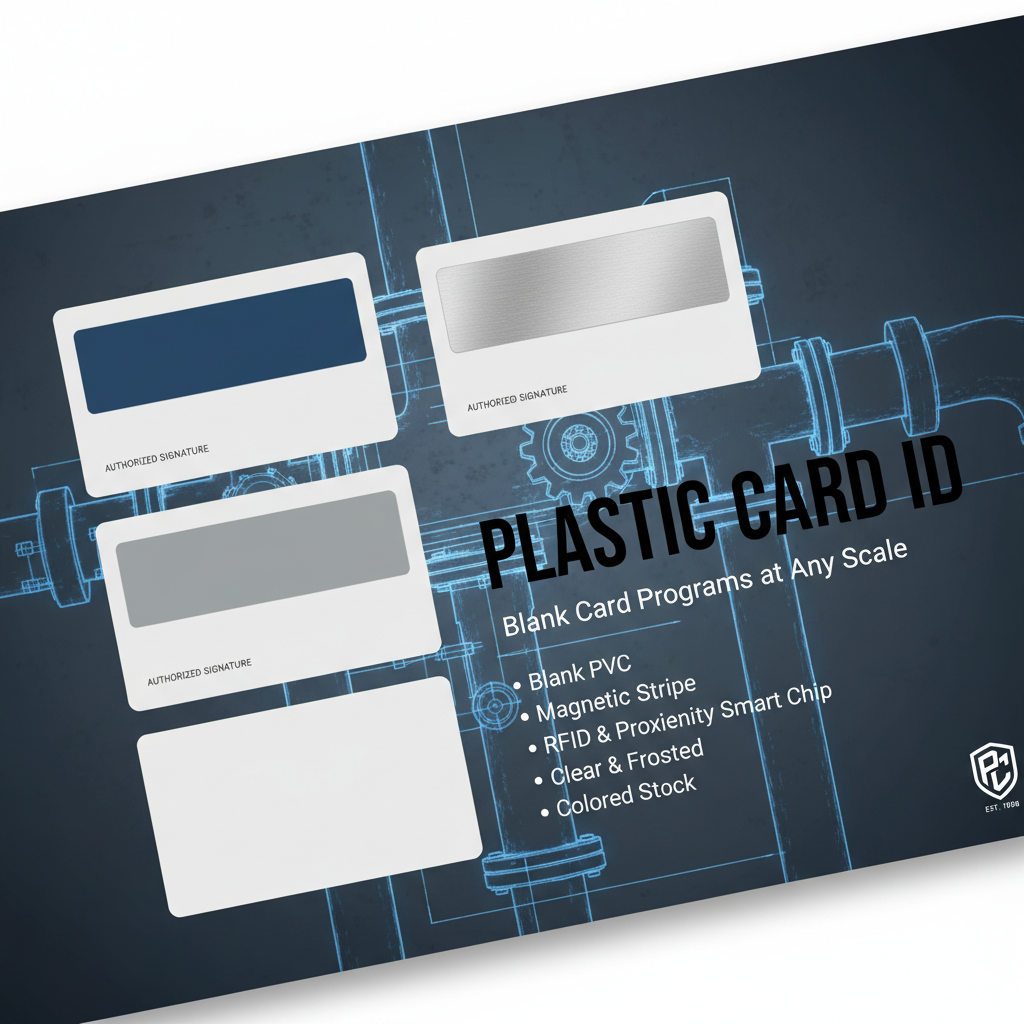
Plastic Card ID offers the full range of blank PVC cards, signature panel configurations, magnetic stripe options, RFID and smart card variants, card printers, ribbons, cleaning kits, and ancillary supplies needed to run a card program of any scale entirely from one source. That breadth of inventory - combined with 25 years of practical experience across more than 100,000 customer engagements - is what separates a strategic supply partner from a commodity vendor. Building a card program the right way, from the first card to the millionth, is the work Plastic Card ID has been doing since before most current card technologies existed.
Finding the Right Card Configuration for Your Program
Every card program starts with a conversation about requirements: How many cards per month? What data needs encoding? Is human verification part of the use case? What printers are already in place? What is the expected card lifespan? Answering these questions up front determines the right card stock specification - including whether a signature panel is needed - and prevents the costly experience of discovering a specification error after production has begun.
The team at CPE has guided organizations through this process thousands of times. The outcome is always the same: a clear specification, a reliable supply arrangement, and a card program that functions the way it was intended to from day one. There is no substitute for this kind of experience-backed guidance when building a card program that needs to work reliably at scale.
Placing Your Order and Getting Expert Support
Ordering blank card stock with signature panels - or any card configuration - through Plastic Card ID is straightforward. The catalog covers every major card type and configuration used by USA-based businesses and organizations today. Quantity tiers are designed to serve both smaller programs and high-volume operations, with per-card pricing that reflects the economies of scale that come with volume ordering.
Questions about specifications, compatibility, or program design are handled by knowledgeable staff who understand card programs from both the supply and operational sides. This is not a transactional supplier relationship - it is a working partnership oriented toward your program's long-term success. Reach out, describe your needs, and get a clear answer without the runaround.
Ready to Get Started?
Contact Plastic Card ID today at 800.835.7919 to discuss your blank card requirements, signature panel specifications, or any aspect of building or scaling a card program. With over 50 million cards supplied and 25 years of industry experience behind every recommendation, Plastic Card ID is the partner your card program deserves.
Call Plastic Card ID at 800.835.7919 - because your card program is too important to leave to a supplier who treats it like a commodity transaction.
Previous Page