Blank Smart Chip Cards Overview: Types Applications
Table of Contents []
- Blank Smart Chip Cards: What Every Business Should Know Before Buying - Plastic Card ID
- Understanding the Technology Inside a Blank Smart Chip Card
- Why Blank Cards Outperform Pre-Printed Cards for Most Programs
- Industries and Applications Where Blank Smart Chip Cards Excel
- Selecting the Right Blank Smart Chip Card: A Buyer's Checklist
- Pairing Blank Smart Chip Cards With the Right Card Printer
- Specialty Blank Smart Chip Card Options Worth Knowing About
- Partner With Plastic Card ID for Your Blank Smart Chip Card Program
Blank Smart Chip Cards: What Every Business Should Know Before Buying - Plastic Card ID
Walk into any modern office, hotel, or university campus, and you will find them everywhere - tucked into lanyards, tapped against readers, slid into kiosks. Smart chip cards have quietly become the backbone of how organizations manage identity, access, loyalty, and data. But here is what surprises most buyers: the blank version of these cards is often the smarter purchase. No design lock-in, no per-card customization fees, full control handed directly to your team.
This guide unpacks everything worth knowing about blank smart chip cards - what they are, how they work, which industries rely on them most heavily, and how to choose the right card for a program that actually performs. Whether you are launching a new access control system or scaling a loyalty program from 200 cards to 20,000, the decisions you make at the card-selection stage will ripple through your program for years.
| Card Type | Interface | Typical Use | Read Range |
|---|---|---|---|
| Contact Smart Chip | Physical contact | Secure ID, loyalty, campus cards | Direct insert |
| Contactless / RFID | Radio frequency | Access control, attendance | Up to 10 cm |
| MIFARE DESFire | Contactless (13.56 MHz) | High-security access, transit | Up to 10 cm |
| Proximity (125 kHz) | Contactless low-frequency | Door access, time-tracking | Up to 15 cm |
| Dual Interface | Contact Contactless | Multi-system environments | Varies |
Understanding the Technology Inside a Blank Smart Chip Card
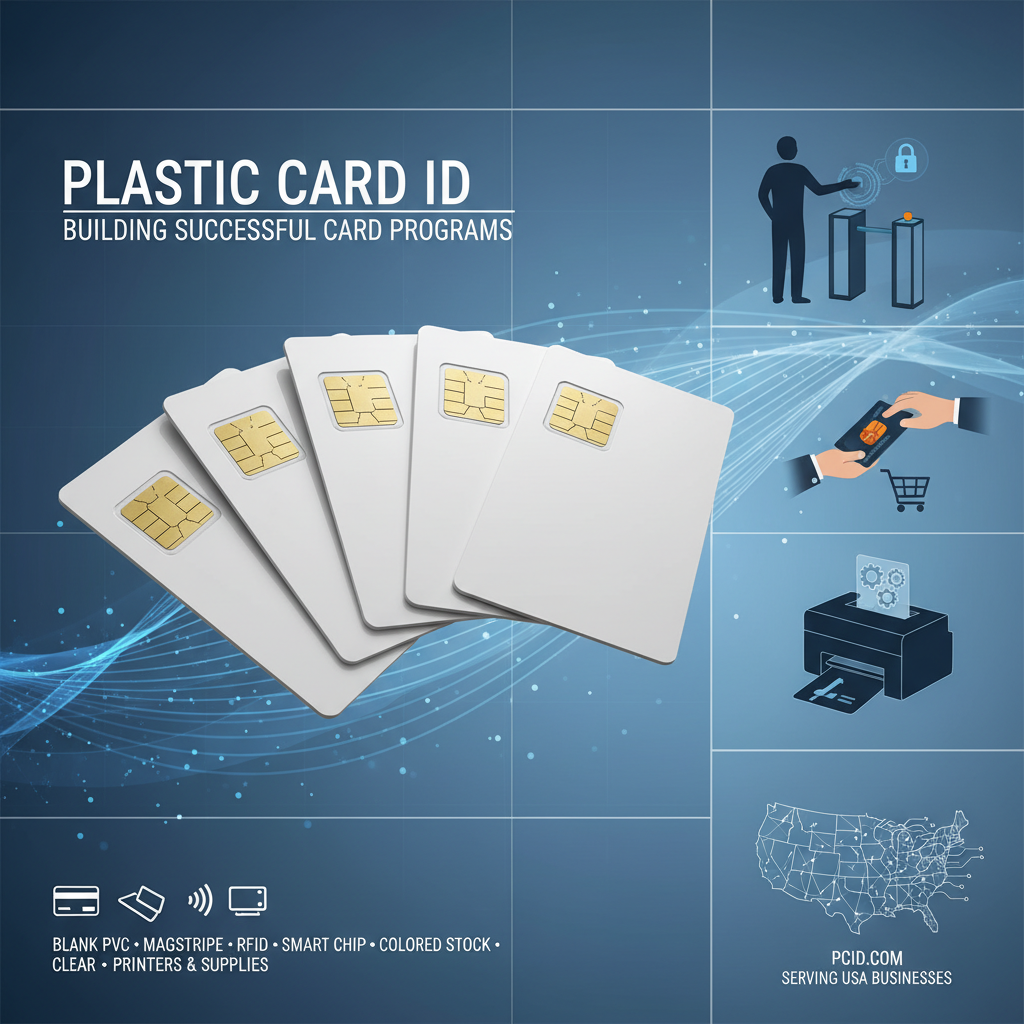 Strip away the glossy surface and what you find inside a smart chip card is genuinely impressive engineering. An embedded integrated circuit - the chip itself - communicates with a reader either through direct metal contact points or through an internal antenna loop that enables wireless data exchange. The chip stores, processes, and protects data in ways a magnetic stripe simply cannot match. That difference matters enormously when your program depends on reliability and security.
Blank smart chip cards arrive without any pre-printed graphics or pre-encoded data, which is precisely the point. Organizations that print and encode cards in-house using desktop card printers gain speed, flexibility, and control that purchasing pre-printed cards simply cannot offer. The blank canvas approach means a single card stock SKU can serve a dozen different departments, programs, or purposes depending on what gets loaded onto it.
Contact vs. Contactless: Choosing the Right Interface
Contact smart cards require physical insertion into a reader - the gold-colored contact pad on the card's face connects to the reader's terminals. This is the interface most people associate with chip-and-PIN payment systems, though for non-payment applications like campus IDs or loyalty programs, it offers robust data security at a manageable cost. Contact cards shine in environments where controlled, deliberate transactions are the norm.
Contactless cards use radio frequency to transmit data when the card is held near a reader, typically within a few centimeters. The user experience is frictionless - a quick tap or wave handles the transaction. For busy environments like building entrances, event check-ins, or cafeteria payments, this speed advantage is tangible and worth paying attention to. Most modern card issuance systems support both formats, so the choice often comes down to what your existing infrastructure requires.
MIFARE DESFire and High-Security Applications
Within the contactless category, MIFARE DESFire cards represent the gold standard for high-security card programs. Operating at 13.56 MHz and supporting advanced encryption standards, DESFire cards are the preferred choice for universities managing multi-application campus cards, corporations running layered access control, and any organization where data integrity is non-negotiable. The architecture supports multiple applications on a single card - access control, meal plans, library privileges, and vending credits can all coexist securely.
What makes DESFire cards particularly compelling for organizations buying blank stock is the flexibility to encode each card specifically at the time of issuance. Rather than pre-encoding cards for a single purpose, your team configures each card to match the individual cardholder's permissions. Programs running CPE can often reduce card waste and administrative overhead significantly by adopting this approach from the start.
Proximity Cards: The 125 kHz Workhorse
Proximity cards operating at 125 kHz have been the workhorses of access control systems for decades. They are widely compatible with installed reader infrastructure across the country, which means many organizations do not need to upgrade their hardware when they switch from a legacy card supplier to a more capable one. The technology is mature, reliable, and cost-effective for straightforward access control applications.
Where proximity cards trail behind higher-frequency contactless options is in data capacity and security depth. They carry a fixed ID number that the reader matches against a database - there is no on-card processing or encryption. For basic door access, employee time-tracking, or visitor management, this is entirely sufficient. For programs that need the card itself to carry rich data or support multiple applications, upgrading to a 13.56 MHz standard will serve better in the long run.
Why Blank Cards Outperform Pre-Printed Cards for Most Programs
The intuitive assumption is that buying cards already printed with your branding saves time. In practice, for most mid-to-large programs, blank cards paired with an in-house card printer deliver faster turnaround, lower long-term cost, and far greater operational flexibility. A new employee needs a badge today, not next week when the next print run arrives. An event organizer needs credentials by Thursday, not the following month.
Pre-printed cards also lock you into a design at the time of ordering. When your logo changes, your brand colors shift, or your program expands to include a new tier, pre-printed stock becomes an expensive inventory problem. Blank smart chip cards sidestep this entirely - your design lives in your printer software, updated whenever necessary, without a single wasted card.
Per-Card Cost Over Time: A Practical Breakdown
Blank CR80 smart chip cards - the standard ISO 7810 size at 30 mil thickness - typically cost significantly less per unit than fully custom-printed cards sourced from external vendors, especially when purchased in volume. Factor in the elimination of shipping delays, minimum order requirements, and design revision fees, and the economic case for blank card programs becomes very clear very quickly.
Organizations printing 50 to 500 cards per month will generally find that a desktop card printer from Evolis, Zebra, or Fargo pays for itself within one to two years when compared against ongoing custom print orders. Programs at the higher end of that range often see the break-even point arrive even sooner. The math consistently favors bringing card production in-house - and blank smart chip cards are what make that model work.
Design Control and Brand Consistency
When your organization prints cards in-house, every card that leaves your printer looks exactly as designed - no color variation between batches, no surprises when the order arrives. For membership programs, employee ID systems, and loyalty cards, visual consistency is part of the value proposition. A card that looks sharp and professional signals that the organization behind it is serious and established.
Blank smart chip cards also allow for variable data printing - each card can carry a unique name, number, photo, or barcode printed directly onto the card surface during issuance. This is how hospital ID badges, university student cards, and corporate access credentials are produced at scale without sacrificing individual customization. CPE clients consistently report that this capability alone justifies the investment in an in-house card program.
Inventory Management Simplified
Running a card program with blank stock rather than pre-printed cards dramatically simplifies inventory. A single pallet of blank smart chip cards can serve every department, every application, and every new employee or member who joins your organization. There is no need to track multiple SKUs for different card designs, manage expiring pre-printed inventory, or rush-order cards when a design-specific batch runs low.
Simplified inventory translates directly to lower administrative overhead and fewer program disruptions. For organizations managing hundreds or thousands of cardholders, this operational simplicity compounds over time into a meaningful competitive advantage. Procurement teams, IT administrators, and HR departments all benefit from a card program built around flexible blank stock.
Industries and Applications Where Blank Smart Chip Cards Excel
 Smart chip cards have found their way into virtually every sector of the American economy - and the variety of applications continues to expand. From casino gaming floors to university dormitories, from corporate campuses to municipal transit systems, the underlying technology is remarkably consistent even as the specific use cases diverge widely. Understanding where blank smart chip cards perform best helps buyers choose the right card for their specific environment rather than defaulting to whatever happens to be cheapest.
Access Control and Physical Security
Corporate campuses, government facilities, healthcare institutions, and data centers all rely on smart chip cards to manage who can go where and when. The chip stores access privileges that can be updated remotely without issuing a new card - an employee's access level changes the moment your system administrator updates their profile. This dynamic credentialing capability is something magnetic stripe cards and older proximity formats struggle to match.
Blank smart chip cards in access control programs are typically encoded at issuance using a card printer equipped with a smart card encoding module. The result is a card that is simultaneously a visual ID badge and a functional access credential. Organizations that have consolidated these two functions onto a single card consistently report reductions in administrative burden and improvement in security compliance.
Loyalty, Membership, and Rewards Programs
Plastic loyalty cards outperform paper punch cards by a margin that retail researchers have documented extensively - and smart chip loyalty cards outperform plain magnetic stripe versions when the program involves multiple locations, tiered rewards, or real-time point tracking. The chip allows the card itself to carry account data, reducing dependence on network connectivity at the point of interaction. Retailers who switch from paper punch cards to plastic loyalty cards regularly see customer retention improvements alongside measurable sales increases.
For membership organizations - gyms, clubs, professional associations, museums - a smart chip membership card conveys something that paper or a simple barcode card cannot: permanence and institutional weight. Members who carry a well-made plastic card in their wallet tend to engage more consistently with the organization than those who receive a paper card or rely entirely on a mobile app. Physical cards remain powerful precisely because they are tangible.
Casino Player Cards and Hospitality
Casino player cards are among the most demanding applications in the smart chip card world. They must withstand constant handling, survive spills and drops, track complex loyalty data across multiple properties, and resist tampering or duplication. Blank smart chip cards built to casino-grade specifications deliver on all of these requirements. Many casino programs use MIFARE-based contactless cards precisely because of the superior data security and multi-application flexibility.
Hotel key cards represent another high-volume hospitality application where smart chip technology has steadily replaced older magnetic stripe formats. Modern hotel management systems encode smart key cards at check-in, program the specific room access and amenity privileges for that guest, and deactivate the card automatically at checkout. Blank smart chip card stock that is compatible with these encoding systems allows hotel operators to source cards affordably and in bulk without sacrificing compatibility.
Selecting the Right Blank Smart Chip Card: A Buyer's Checklist
Not all smart chip cards are interchangeable. Chip type, operating frequency, memory capacity, and physical card construction all vary, and selecting the wrong card for your application can mean cards that will not communicate with your readers, programs that cannot be updated, or cards that fail prematurely under everyday use. A thoughtful selection process at the beginning saves significant frustration and expense later.
Key Specifications to Evaluate
- Chip type and protocol: Confirm whether your readers require a contact chip, a contactless chip, or dual interface. Verify the operating frequency (125 kHz for legacy proximity, 13.56 MHz for MIFARE and similar standards).
- Memory capacity: Simple access control requires only a few bytes of storage. Multi-application cards for campus environments or complex loyalty programs need substantially more memory - evaluate this against your software requirements.
- Encryption and security features: For sensitive applications, look for cards supporting AES or 3DES encryption. MIFARE DESFire EV2 and EV3 formats support both.
- Card construction: Standard CR80 at 30 mil is the most widely compatible size. Confirm printability if you plan to print on card surfaces.
- Printer compatibility: Verify that your Evolis, Zebra, or Fargo printer supports the encoding module required for your chosen card type.
- Volume and pricing: Blank smart chip cards are priced on a volume basis. Calculate your 12-month card usage and purchase accordingly to optimize per-card cost.
Contact Plastic Card ID for Expert Guidance
Choosing between card specifications is genuinely nuanced, and the consequences of a mismatch between card and reader infrastructure can be costly to unwind. That is precisely why working with a knowledgeable supplier who has navigated these decisions with over 100,000 customers makes a material difference. Call Plastic Card ID at 800.835.7919 to speak with a card program specialist who can match your application requirements to the right blank smart chip card from the first conversation.
With more than 25 years of experience and over 50 million cards shipped across the United States, the team at CPE has encountered virtually every card program configuration imaginable. That depth of experience is available to you at no extra charge - it comes with every order, every consultation, and every long-term supplier relationship they build.
Avoiding Common Purchasing Mistakes
The most frequent mistake buyers make is purchasing blank smart chip cards based on price alone without verifying protocol compatibility with existing reader hardware. A card that communicates on 125 kHz will not work in a 13.56 MHz reader, regardless of how competitively it was priced. Always confirm your reader specifications before placing an order, especially when migrating from a previous supplier or upgrading an existing card system.
The second most common mistake is underestimating volume needs. Card programs almost always grow - new employees, expanded membership drives, additional locations. Buying in quantities that reflect realistic 12-month demand rather than immediate need typically delivers better per-card pricing and ensures supply continuity. A supplier relationship with a company that stocks deep inventory, like CPE, means you are never caught short at a critical moment.
Pairing Blank Smart Chip Cards With the Right Card Printer
A blank smart chip card only reaches its potential when paired with a card printer and encoding system configured to match. The three major brands serving the business card printing market - Evolis, Zebra, and Fargo - each offer models capable of printing on card surfaces while simultaneously encoding smart chips, whether contact, contactless, or both. The combination of the right printer and the right blank card stock is where in-house card programs truly come to life.

Printer Features That Matter for Smart Card Programs
For organizations encoding smart chip cards in-house, the printer must include the appropriate encoding module - a contact smart card encoder, an RFID/contactless encoder, or a dual interface encoder depending on card type. Not every printer model supports every card type, which is another reason to involve a knowledgeable supplier in the equipment selection process. Printers in the mid-range tier, priced roughly $900-$2,500, typically cover the majority of business card encoding needs.
Print quality matters just as much as encoding capability. Cards serving as employee badges or membership credentials are visible representatives of your organization every time they are used. Dye-sublimation printing technology, available on Evolis, Zebra, and Fargo models, delivers photo-quality output that holds up to daily handling - a standard worth insisting on for any professional card program.
Ribbons, Supplies, and Ongoing Program Support
Running a card printer requires a reliable supply of printer ribbons, cleaning kits, and card carrying supplies. These consumables are not interchangeable across printer brands and models - using the wrong ribbon can damage a printer head and compromise print quality. Sourcing ribbons from the same supplier as your blank card stock simplifies procurement and ensures compatibility. CPE supplies a full range of printer consumables alongside card stock, making it a true one-stop resource for card program operators.
Printer maintenance - specifically regular cleaning cycles - directly affects the lifespan of both the printer and the quality of cards produced. Cleaning kits designed for your specific printer model remove debris from the print head and card path, preventing the streaking and color banding that signal a printer in need of attention. Building a cleaning schedule into your card program operations is one of the simplest ways to protect a significant equipment investment.
Specialty Blank Smart Chip Card Options Worth Knowing About
Beyond the standard white PVC CR80 format, the world of blank smart chip cards extends into specialty territory that many buyers do not realize is available until they ask. Clear cards, frosted cards, colored stock, custom die-cut shapes, and even luxury metal cards with embedded chip technology all exist within reach of organizations that want their card program to stand out. Specialty formats often deliver outsized brand impact relative to their incremental cost.
Clear and Frosted Smart Chip Cards
Transparent and frosted card substrates offer a distinctive aesthetic that standard white PVC cannot replicate. A clear smart chip card with printed graphics creates a layered visual effect that tends to draw attention and comment - valuable for membership programs, VIP credentials, or any situation where the card itself is part of the member or guest experience. These cards meet the same CR80 dimensional standard and work with the same printers and encoding equipment as standard white card stock.
Frosted cards offer a softer, more refined appearance that works particularly well for premium membership tiers, executive access credentials, and hospitality applications where the card is also a brand touchpoint. Organizations that have introduced frosted or clear smart chip cards into tiered programs often report that cardholders in the premium tier respond positively to the visual differentiation - a small detail that reinforces the value of membership.
Metal Cards With Embedded Chip Technology
At the highest end of the smart card spectrum sit metal cards in stainless steel, brass, and gold formats. These are not novelty items - they are fully functional smart credentials engineered to carry the same chip and antenna configurations as their PVC counterparts. The weight, feel, and visual impact of a metal card is simply incomparable. For VIP programs, executive memberships, elite loyalty tiers, and high-value client gifting, metal smart cards make an impression that lasts.
Metal card programs are typically produced in smaller quantities than standard PVC programs, and per-card cost is accordingly higher. But for the right application - a casino's highest-tier player card, a private club's founding member credential, a corporate client's access badge - the investment aligns with the value being communicated. CPE can discuss metal card options and minimum order quantities for organizations ready to explore this format.
Die-Cut and Non-Standard Shape Cards
Standard CR80 dimensions serve the vast majority of card programs, but there are situations where a non-standard shape serves the program better. Key fob credentials, mini cards for keychain attachment, and custom die-cut shapes for promotional or event applications all remain viable when built on smart chip card technology. These specialty formats work with many of the same encoding systems as standard cards, though printer compatibility requires confirmation.
Event credentials and conference passes built on smart chip technology in non-standard formats add an element of novelty and collectability that standard cards lack. For annual events, trade shows, and organizational gatherings where the credential itself is a keepsake, a distinctive format signals that the organization behind the event paid attention to details. That impression tends to outlast the event itself.
Partner With Plastic Card ID for Your Blank Smart Chip Card Program
 Decisions about blank smart chip cards have long-term consequences for every organization that relies on physical cards to manage identity, access, loyalty, or membership. Getting the technology right, the volume right, the supplier relationship right - these are not minor administrative details. They are foundational choices that shape how smoothly your card program operates and how professionally it represents your organization every day.
Plastic Card ID has spent more than 25 years building card programs for businesses and organizations across the United States. With over 100,000 customers served and more than 50 million cards shipped, the depth of practical experience on offer is unmatched among card suppliers in the country. From basic proximity cards to MIFARE DESFire smart credentials, from 50 cards per month to tens of thousands, the team is equipped to support programs at any scale with the right cards, the right printers, and the right ongoing supply of everything in between.
Ready to get your smart chip card program started or take your existing program to the next level? Contact Plastic Card ID today at 800.835.7919 - because your card program deserves a partner who has seen everything and can help you get it right from day one.
Previous Page