Access Control Levels with Plastic Cards Explained
Table of Contents []
- Access Control Levels With Plastic Cards: How Plastic Card ID Helps You Secure Every Zone
- Why Access Control Levels Matter More Than You Think
- Magnetic Stripe Cards: The Workhorse of Mid-Level Access
- RFID and Proximity Cards: Hands-Free Access at Scale
- Card Printers and In-House Credential Production
- Specialty Cards for Advanced Access Scenarios
- Partnering With Plastic Card ID for Your Access Control Card Program
Access Control Levels With Plastic Cards: How Plastic Card ID Helps You Secure Every Zone
Walk into almost any modern office building, hospital, university, or manufacturing facility and you will notice something immediately: people carry cards. Not just any cards - precisely encoded plastic credentials that tell a door, a reader, or a system exactly who is allowed where and when. Access control levels with plastic cards are the backbone of physical security for organizations of every size, and getting them right means understanding both the technology and the strategy behind them.
Most organizations discover the complexity of tiered access only after something goes wrong - an unauthorized entry, a contractor wandering into a restricted lab, or a former employee whose credentials were never deactivated. Building a layered, card-based access control system from the ground up eliminates those vulnerabilities before they become incidents. Plastic Card ID has spent over 25 years helping businesses across the United States do exactly that, supplying the cards, printers, and expertise to make it happen.
| Access Level | Typical Users | Recommended Card Type | Technology |
|---|---|---|---|
| Level 1 - General Access | All staff, visitors | Printed PVC ID card | Visual ID / Barcode |
| Level 2 - Standard Access | Full-time employees | Magnetic stripe card (LoCo) | Mag stripe reader |
| Level 3 - Restricted Access | Managers, supervisors | Proximity card (125kHz) | RFID proximity reader |
| Level 4 - Secure Areas | IT, security, executives | Smart chip card (13.56MHz) | MIFARE / contactless |
| Level 5 - High Security | C-suite, data center staff | MIFARE DESFire EV2/EV3 | Encrypted contactless |
Why Access Control Levels Matter More Than You Think
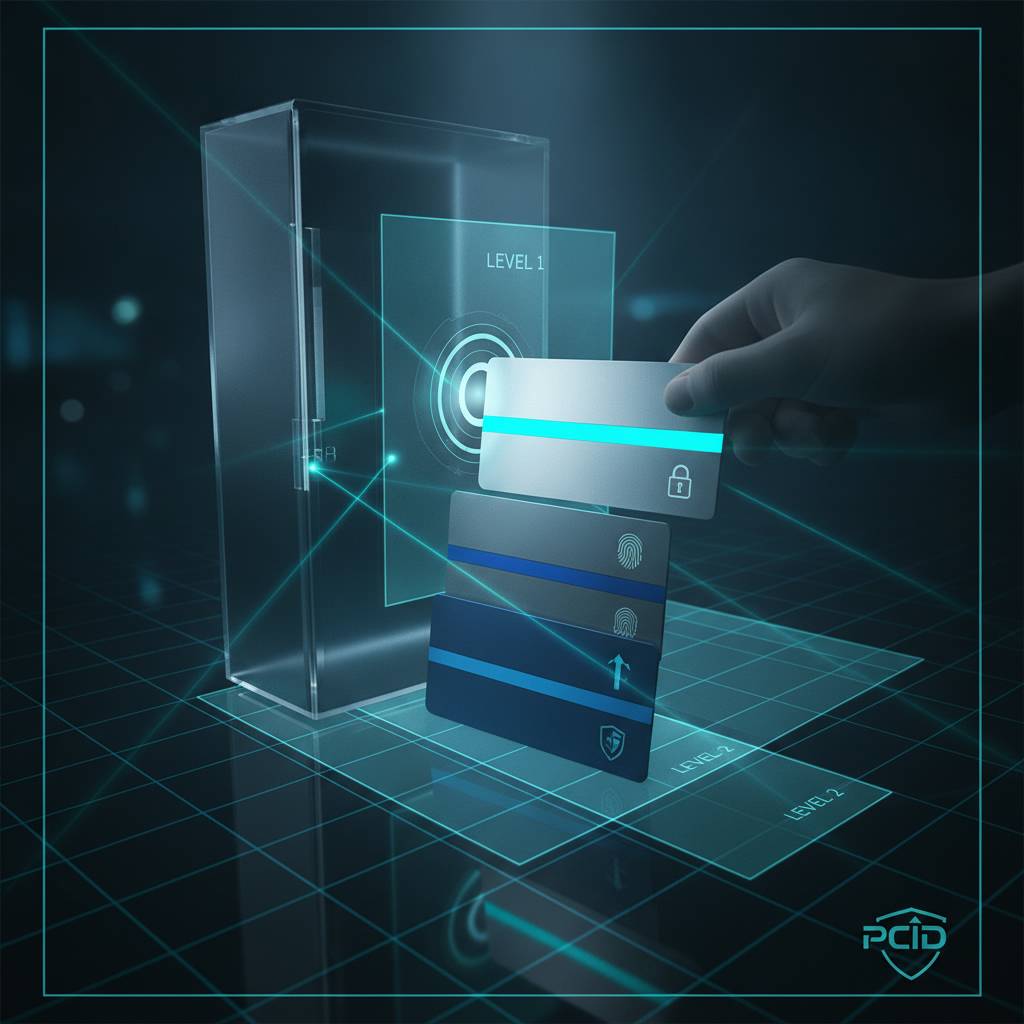 There is a common assumption that access control is primarily a technology problem - buy the right readers, install the right software, and you are protected. That is only partially true. The physical credential itself - the card in someone's pocket or on their lanyard - is the first and most visible line of defense. If the card is poorly made, easily cloned, or indistinguishable from a visitor badge, the entire system is compromised regardless of how sophisticated your backend software is.
Tiered access control means different people get different levels of entry. A seasonal temp at a warehouse should not have the same credential as the network administrator. A hospital volunteer should not hold a card that opens the pharmacy. Defining those levels clearly - and encoding them into durable, reliable plastic cards - is how organizations protect people, data, assets, and compliance standing simultaneously.
The Business Case for Multi-Level Card Programs
Beyond security, there is a compelling operational argument for structured access levels. When you can audit who entered a restricted zone and at what time, investigations become straightforward. Insurance carriers take note. Regulatory bodies - particularly in healthcare, finance, and government contracting - often require documented access controls as a condition of compliance.
Organizations that invest in a properly tiered plastic card program reduce unauthorized access incidents dramatically and often see measurable reductions in theft, data breaches, and liability exposure. The upfront cost of a well-designed card program is minor compared to a single security incident.
From Simple ID to Sophisticated Credential
A blank CR80 PVC card - the standard 30 mil card that matches the size of any credit card - starts life as a neutral platform. Print an employee photo and name on it and it becomes a visual ID. Add a magnetic stripe encoded with an access code and it becomes a functional credential. Embed a proximity chip or smart card technology and it becomes a powerful, multi-application security tool.
This scalability is exactly why CPE carries such a broad inventory. Not every organization needs MIFARE DESFire encryption from day one. Some start with printed visual IDs and magnetic stripe cards, then upgrade specific card types as their security posture matures. The ability to scale your card program incrementally - without ripping out infrastructure - is a serious operational advantage.
Common Access Control Mistakes Organizations Make
One of the most frequent errors is treating all employees as a single access tier. Every role carries different risk exposure. The receptionist who greets visitors should not have the same card as the server room technician. Failing to segment access levels creates systemic vulnerabilities that are difficult to identify until they are exploited.
Another common mistake is over-relying on visual inspection. A printed card with a photo works for basic identity verification, but a trained attacker can replicate a visual credential. Organizations with sensitive areas need encoded technology - magnetic stripe at minimum, RFID or smart chip for high-security zones - to ensure the reader, not just a human eye, validates the credential.
Magnetic Stripe Cards: The Workhorse of Mid-Level Access
Magnetic stripe cards have been a foundational access control tool for decades, and for good reason. They are affordable, widely compatible, and capable of carrying enough encoded data to support robust multi-level systems. Plastic Card ID supplies both High Coercivity (HiCo) and Low Coercivity (LoCo) magnetic stripe cards, each suited to different environments and use cases.
HiCo cards - encoded at 2750 Oe - are more resistant to accidental erasure from everyday magnetic interference. They are the right choice for cards that will be used frequently, stored near other cards or magnetic surfaces, or issued for long-term use. LoCo cards, encoded at 300 Oe, are appropriate for shorter-duration programs like event credentials or temporary visitor badges where longevity is less critical.
HiCo vs. LoCo: Choosing the Right Stripe for Your Program
The distinction matters more than many buyers initially realize. A HiCo card used in a hotel key system will outlast a LoCo card by a significant margin in environments with competing magnetic fields. For employee access programs that run year-round, HiCo is nearly always the right choice. For a trade show badge that will be used for three days and then retired, LoCo is perfectly adequate and often more cost-effective.
Both formats are available on standard CR80 blank card stock from CPE, ready for desktop or high-volume card printing. The same card can carry a printed design on one face and a functional magnetic stripe on the other - combining visual identity with encoded access data in a single, professional credential.
Encoding Standards and Track Configuration
Magnetic stripe cards typically feature up to three tracks of data. Track 1 holds alphanumeric data, Track 2 is numeric and is the most commonly used for access control and financial applications, and Track 3 is read-write and less commonly deployed. Most access control systems read Track 2, encoding an employee ID number, access level code, or facility code onto the stripe at the time of card issuance.
This encoding step is where in-house card printing truly shines. Organizations that print and encode their own cards can update access levels in real time without waiting for outside vendors. A promotion, a role change, or a terminated employee can be addressed immediately by reprinting or deactivating a single card. That kind of operational agility is only possible when you control the production process.
Magnetic Stripe for Visitor and Contractor Management
Temporary access is one of the trickiest security challenges. Contractors, vendors, and guests need just enough access to do their job - no more. Magnetic stripe cards make this manageable. Issue a LoCo card encoded with a time-limited access code and a specific facility zone identifier, and your readers will automatically restrict that credential to the appropriate areas without any manual intervention.
For high-traffic visitor programs, blank LoCo cards are available in bulk quantities that keep per-card cost minimal. Contact CPE at 800.835.7919 to discuss volume pricing and encoding options for visitor management card programs.
RFID and Proximity Cards: Hands-Free Access at Scale
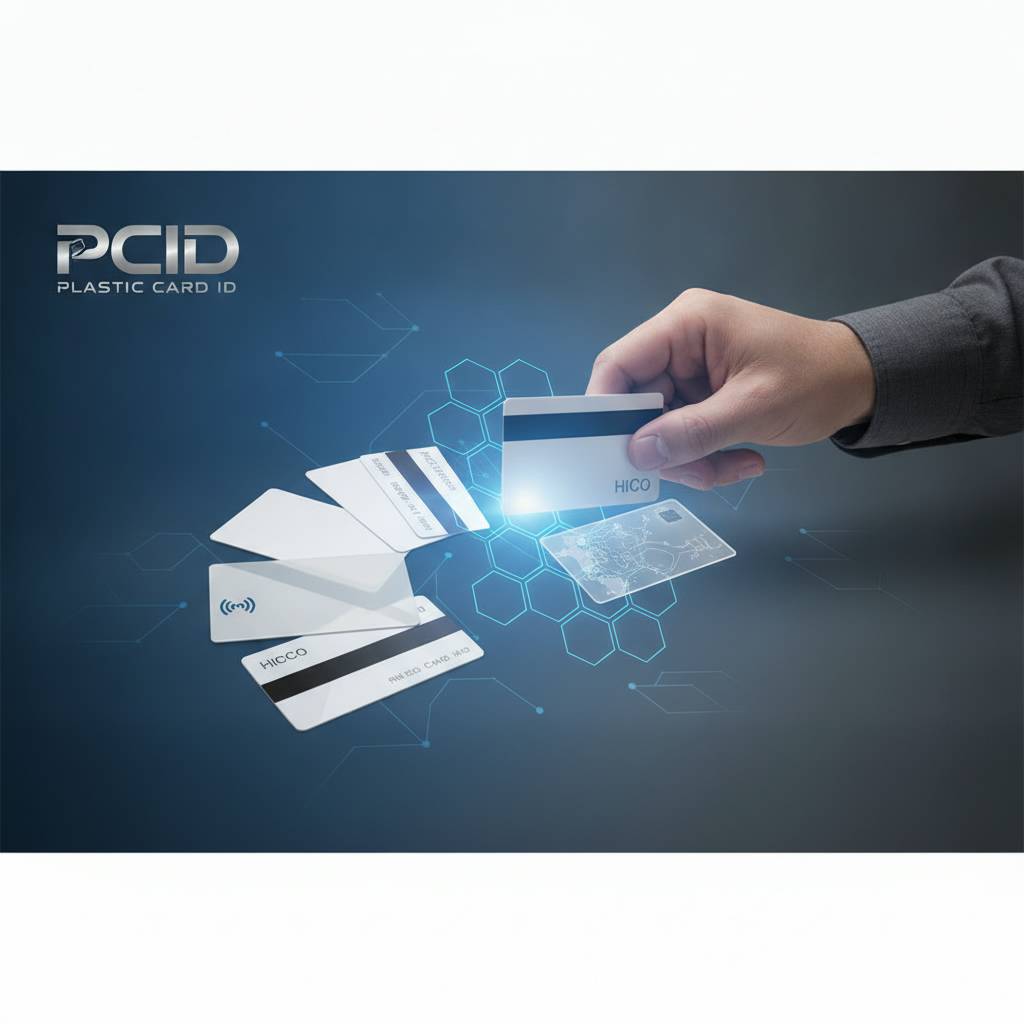 Proximity cards operate at 125kHz and have been the dominant technology in corporate and institutional access control for nearly three decades. They work simply: bring the card within a few inches of a reader and the door opens or the log entry is made. No swiping, no inserting, no fumbling. For high-traffic entry points - loading docks, turnstiles, elevator banks - that convenience translates directly into throughput efficiency.
Proximity cards are extraordinarily durable because the antenna and chip are fully encapsulated within the PVC card body. There are no exposed contacts to corrode, no magnetic stripe to scratch. A well-maintained proximity card can remain functional for five to ten years in daily use, which makes the per-use cost extremely low over the card's lifetime.
Smart Cards and Contactless Technology
Smart cards operating at 13.56MHz represent the next tier of access credential sophistication. Unlike proximity cards, which transmit a static ID number, smart cards can carry dynamic, encrypted data and support multi-application use. The same card can manage building access, time and attendance, cashless vending, and secure computer login - all from a single credential that fits in a wallet.
MIFARE technology, particularly MIFARE DESFire EV2 and EV3, is the current gold standard for high-security contactless access control. DESFire cards support AES-128 encryption, mutual authentication, and diversified key management - meaning even if a card is captured, cloning it is computationally infeasible without the facility's cryptographic keys. For data centers, pharmaceutical facilities, defense contractors, and financial institutions, this level of protection is not optional - it is expected.
Proximity vs. Smart Card: Picking the Right Technology Tier
- 125kHz proximity cards are ideal for general corporate access, parking, and environments where budget is a primary driver and cloning risk is manageable.
- 13.56MHz smart cards (MIFARE Classic) add a layer of credential security and support multi-application use at a moderate price increase.
- MIFARE DESFire EV2/EV3 is the choice for government, healthcare, and high-security commercial environments requiring encrypted, cloning-resistant credentials.
- Dual-interface cards combine contactless and contact smart chip technology for environments where both modes are required.
- Combo cards integrate proximity chip and magnetic stripe on a single card, bridging legacy and modern systems during infrastructure transitions.
Selecting the right technology tier is not just a technical decision - it is a cost, risk, and operational decision. CPE can help you map your security requirements to the right card specification before you commit to a card program at scale.
Hotel Key Cards: A Specialized Access Application
Hotel key cards are a specific and extremely common smart card application. They typically use RFID or magnetic stripe technology encoded at check-in with room number, access level (guest vs. staff vs. maintenance), and expiration parameters. The card grants access to the assigned room and potentially other amenities - fitness center, parking, executive lounge - based on the guest's reservation profile.
Blank hotel key cards are a core inventory item for hospitality clients working with Plastic Card ID. The ability to print and encode in-house - using a Zebra, Fargo, or Evolis card printer - means a property can customize every card at check-in with guest name, room number, and brand graphics without relying on pre-personalized stock. That is operational flexibility that pays dividends in both speed and guest experience.
Card Printers and In-House Credential Production
The decision to produce credentials in-house is a turning point for most organizations. It shifts the card program from a reactive, outsourced function to a proactive, controlled capability. With a desktop card printer from Evolis, Zebra, or Fargo, a mid-sized company can print, encode, and issue a new employee badge in under three minutes - from the HR desk, on the employee's first day.
In-house production eliminates minimum order quantities, eliminates vendor lead times, and eliminates the security risk of sending employee data to an outside print shop. The entire credential lifecycle - design, print, encode, issue, and deactivate - stays within the organization's four walls. For regulated industries, that data custody is not a preference; it is a compliance requirement.
Choosing the Right Card Printer for Your Security Program
Printer selection depends on volume, encoding requirements, and the complexity of the cards being produced. Single-sided direct-to-card printers handle visual ID programs efficiently and economically. Dual-sided models allow front and back printing in a single pass. Retransfer printers produce edge-to-edge, over-the-chip printing that is necessary for smart cards and produces a noticeably higher-quality finish.
For encoding, printers can be configured with magnetic stripe encoders, smart card contact station writers, and RFID/contactless encoders - sometimes in combination. A single printer can personalize a card visually and encode it across two or three data layers in one automated pass, which is exactly the kind of efficiency that makes in-house production compelling at scale. Reach out at 800.835.7919 to discuss which printer configuration matches your access control program's requirements.
Ribbons, Cleaning Kits, and Consumables
A card printer is only as reliable as its maintenance routine. Print head contamination is the leading cause of premature printer failure and degraded print quality. Cleaning kits - T-cards, cleaning rollers, isopropyl swabs - are not optional accessories; they are essential program infrastructure. Plastic Card ID supplies complete cleaning kit solutions matched to specific printer models so there is no guesswork about compatibility.
Printer ribbons are a recurring consumable that significantly affect total program cost. Full-color YMCKO ribbons are standard for photo ID cards, while monochrome ribbons in black, silver, gold, or white serve specialized printing needs. Buying ribbons in multi-pack quantities from CPE reduces per-card consumable cost and ensures you never face a credential production outage because you ran out of ribbon mid-shift.
Card Carriers, Sleeves, and Mailing Services
Issuing a card is only half the process. Getting it to the cardholder securely and professionally is the other half. Card carriers - branded paper or card stock sleeves that hold and present the credential - add a polished, intentional feel to the issuance process. For membership programs and loyalty programs, that presentation moment matters.
For organizations that mail credentials to remote employees, distributed membership bases, or event registrants, Plastic Card ID offers card affixing and mailing services. Cards are affixed to carriers, inserted into envelopes, and mailed directly to recipients - eliminating an entire fulfillment step for program administrators.
Specialty Cards for Advanced Access Scenarios
Standard CR80 PVC cards cover the majority of access control applications, but some programs require something beyond the standard. Casino player tracking programs use cards that survive high-humidity, high-traffic environments while maintaining precise encoding integrity. Government and contractor facilities may require cards that meet specific dimensional or encoding standards. Luxury membership programs may demand a credential that visually communicates premium status before a word is spoken.
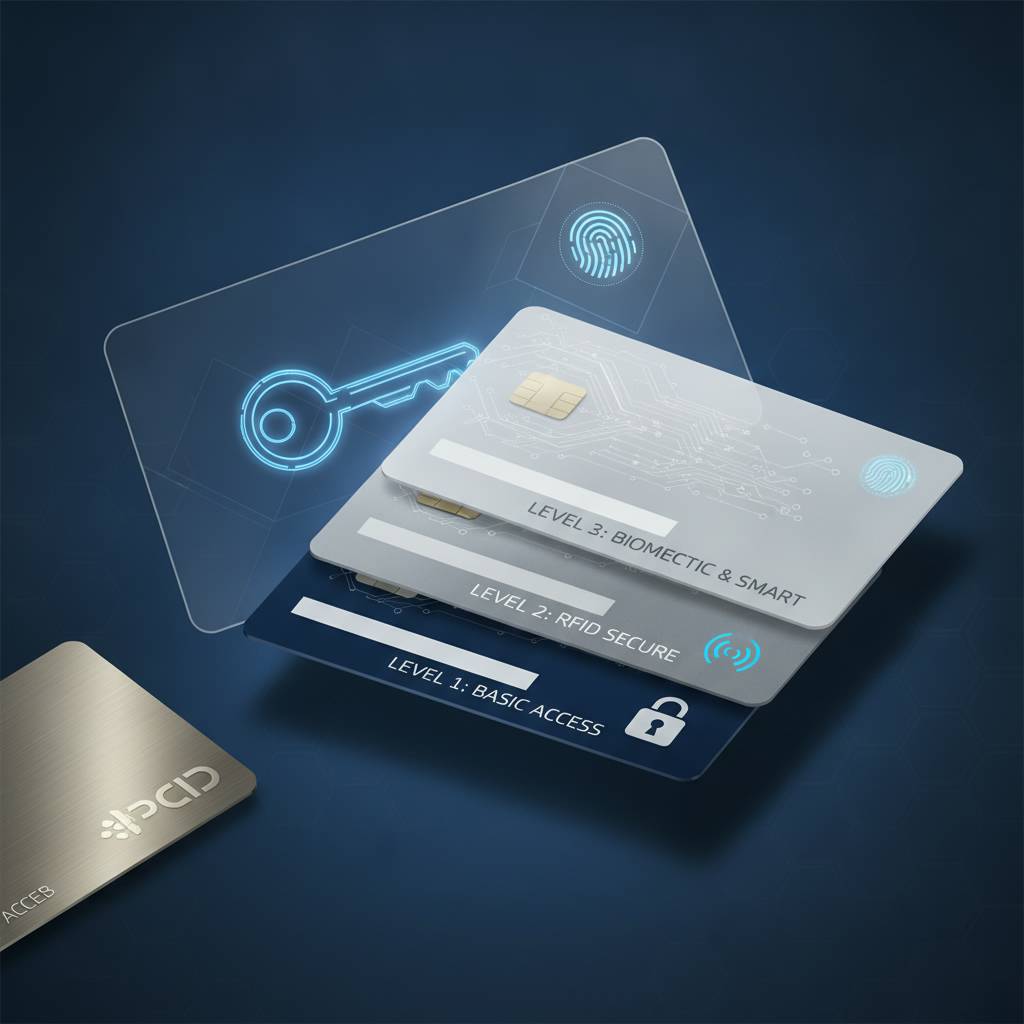
Specialty card options from Plastic Card ID include clear plastic cards, frosted translucent cards, custom die-cut shapes, and premium metal cards in stainless steel, brass, and gold finishes. Each of these formats serves a specific strategic purpose - not just aesthetic preference - in the right access control or membership context.
Clear and Frosted Cards in Access Programs
Clear PVC cards create a visually striking credential that stands out from a standard white card stack. In environments where card authenticity is validated visually - event venues, club entrances, executive floors - a clear card is inherently harder to counterfeit with desktop equipment because the substrate itself is distinctive. Frosted cards offer a similar differentiation with a softer, more sophisticated appearance.
Both clear and frosted formats are fully compatible with standard card printing and encoding processes. They accept printed graphics and magnetic stripe encoding just as standard white PVC does. The substrate becomes part of the credential's security story without requiring any change to the reader infrastructure.
Metal Cards for Executive and VIP Access Programs
Metal cards - available in stainless steel, brass, and gold finishes - occupy a specific niche in access control and membership programs. They are issued to C-suite executives, high-value club members, or VIP cardholders where the credential is meant to communicate status and permanence. The physical weight and feel of a metal card communicates something that plastic simply cannot.
Metal cards from CPE can incorporate RFID inlays for contactless access functionality, combining the tactile premium of metal with the functional capability of a smart credential. For organizations where the credential is both a security tool and a brand statement, metal cards deliver on both fronts simultaneously.
Casino Player Cards and Specialty Loyalty Programs
Casino player tracking cards have specific durability and encoding requirements that differ from standard corporate access cards. They are handled constantly, exposed to varied environmental conditions, and need to survive years of daily use while maintaining reliable magnetic stripe or RFID read performance. Standard card stock is often insufficient for this application.
Player cards also serve a dual function - they are both an access and loyalty credential, tracking play activity, comp points, and player tier status. This dual-function requirement mirrors what many non-gaming businesses need: a single card that manages both access privileges and loyalty program participation. Plastic Card ID supplies the card types and printer configurations to support both functions on a single credential platform.
Partnering With Plastic Card ID for Your Access Control Card Program
Building an access control program that actually works - one that scales with your organization, integrates with your reader infrastructure, and holds up under real-world conditions - requires more than just ordering cards online. It requires a partner who understands the full landscape: card technology, encoding standards, printer capabilities, consumable management, and the strategic logic of tiered credential design.
That is exactly the role Plastic Card ID has played for over 100,000 customers and more than 50 million cards supplied across the United States. From a 50-card-per-month employee badge program to a multi-site enterprise deployment in the tens of thousands of credentials, the depth of inventory, the breadth of technical knowledge, and the commitment to long-term client relationships set CPE apart from transactional card vendors who simply ship boxes.
Getting Started: What You Need to Know Before You Order
- Identify your access levels - how many tiers does your facility or organization require?
- Assess your reader infrastructure - are your readers magnetic stripe, proximity, smart card, or a mix?
- Determine your volume - monthly card issuance volume drives the right printer and consumable configuration.
- Decide on in-house vs. pre-encoded stock - some programs benefit from pre-encoded blank card inventory; others need on-demand encoding capability.
- Consider credential lifespan - access cards for permanent employees have very different durability requirements than short-term visitor badges.
Having clear answers to these questions before you engage a supplier significantly accelerates the program setup process and prevents costly specification mismatches. The most efficient card programs are designed before the first card is ordered, not revised after the first batch reveals a compatibility issue.
Volume, Pricing, and Program Flexibility
Card programs range enormously in cost depending on card type, encoding complexity, quantity, and whether printing is in-house or outsourced. Blank CR80 PVC cards are available at pricing that scales favorably with volume - programs ordering 1,000 or more cards per order will see meaningfully lower per-card costs than spot purchasers. Specialty cards - RFID, smart chip, metal - carry higher per-unit costs that reflect the embedded technology.
The total cost of a card program is best evaluated over a 12 to 24 month horizon, accounting for card cost, printer amortization, ribbon and consumable spend, and the administrative time saved by in-house production. When evaluated holistically, in-house card programs nearly always outperform outsourced production for organizations issuing more than a few hundred cards per year. Contact 800.835.7919 for a program cost estimate tailored to your specific volume and card type requirements.
Long-Term Support and Relationship Management
A card program is not a one-time purchase - it is an ongoing operational capability that evolves as an organization grows, relocates, restructures, or upgrades its security posture. Plastic Card ID is built for that long arc. Clients who started with a basic 125kHz proximity card program a decade ago are now being supported through transitions to MIFARE DESFire. Organizations that began with 50-card monthly runs are now ordering tens of thousands per month.
That kind of long-term continuity in a supplier relationship is genuinely rare and genuinely valuable. Knowing that the company supplying your access credentials understands your history, your infrastructure, and your future direction eliminates the friction and risk of constantly re-educating new vendors. CPE is not just a card supplier - it is a strategic partner in your organization's security and identity infrastructure.
Ready to design or upgrade your access control card program? Reach out today and put 25 years of expertise to work for your organization.
Plastic Card ID is your dedicated partner for access control cards, card printers, and credential program support across the United States. Call us now at 800.835.7919 and let's build something that actually works.
Previous Page