Preventing Counterfeit Plastic ID Cards: Proven Methods
Table of Contents []
- Why Plastic Card ID Takes Counterfeit Prevention Seriously
- Understanding the Anatomy of a Secure Plastic Card
- Encoding Technologies That Raise the Counterfeit Bar
- Choosing the Right Card Printer for Security-Grade Output
- Card Program Best Practices for Ongoing Counterfeit Prevention
- Specialty Card Options That Inherently Resist Duplication
- Frequently Asked Questions About Preventing Counterfeit Plastic ID Cards
Why Plastic Card ID Takes Counterfeit Prevention Seriously
Fake ID cards are not a theoretical problem. They show up at access-controlled doors, loyalty program counters, employee check-ins, and membership desks every single day across the United States. Organizations that rely on plastic cards for identification, access, or privilege management face real consequences when those cards can be duplicated with a home printer and a laminator. The difference between a card program that holds up and one that collapses under fraud often comes down to what the card is made of - and how it was manufactured.
Plastic Card ID has spent more than 25 years supplying plastic cards to over 100,000 businesses and organizations nationwide, moving more than 50 million cards in that span. That scale means one thing in practice: the team has seen what works and what fails. Understanding counterfeit risk is not a sales pitch here - it is pattern recognition built over decades of real-world card programs.
This page exists to help you think more clearly about counterfeit plastic ID card prevention, understand the technologies and materials that raise the barrier to duplication, and make smarter purchasing decisions for your card program - whether you are running 50 cards a month or tens of thousands.
The Real Cost of a Counterfeit Card Problem
Most organizations do not discover their card program has been compromised until someone flags an anomaly - an unfamiliar face at a door, a loyalty balance that does not add up, a membership card scanned that should not exist. By that point, the damage has already been done. Lost inventory, fraudulent access, diluted loyalty liability - these costs compound quietly.
Beyond the financial hit, there is a reputational dimension that is harder to quantify. When a card program is compromised, it signals to members, employees, and clients that the organization's security infrastructure is penetrable. That perception erosion is often more damaging than the incident itself, especially for membership clubs, corporate campuses, and hospitality environments.
Why Paper Alternatives Never Solve the Problem
Some organizations, after a counterfeit incident, consider retreating to paper-based credentials. This is counterproductive. Paper punch cards, printed membership slips, and laminated paper badges are dramatically easier to replicate than a properly manufactured plastic CR80 card. The visual fidelity of a home inkjet printer on cardstock is now high enough to fool untrained eyes.
Plastic cards - particularly those printed on dedicated card printers using dye-sublimation or retransfer technology - produce results that paper simply cannot match for durability, consistency, and tamper resistance. Retailers who switched from paper to plastic gift and loyalty cards saw sales increases of 35-50%, largely because customers trusted the format. Trust and security are not separate conversations.
How Plastic Card ID Functions as a Strategic Partner
The distinction between a supplier and a strategic partner sounds abstract until you are trying to solve a real problem under time pressure. A supplier ships you what you ordered. A partner asks why you ordered it, whether it is the right solution, and what you are trying to prevent. CPE operates in that second mode - the team brings product knowledge and application expertise together to help clients build card programs that do not develop vulnerabilities over time.
From blank PVC stock to encoded smart cards, from card printers to ribbons and cleaning kits, the catalog exists to support the full lifecycle of a card program. Counterfeit prevention is not a product category - it is an outcome achieved by selecting the right combination of materials, encoding, and printing technology. That is the conversation CPE is prepared to have with every client.
| Card Type | Counterfeit Risk | Primary Defense |
|---|---|---|
| Blank PVC (printed in-house) | Moderate | Card printer security features, holographic overlaminates |
| Magnetic Stripe HiCo | Moderate-High | Encoded data verification at point of scan |
| RFID / Proximity Card | Low-Moderate | Unique chip IDs, encrypted protocols |
| Smart Chip (MIFARE DESFire) | Very Low | Mutual authentication, encrypted data storage |
| Paper/Laminated Credential | Very High | Minimal - format is inherently vulnerable |
Understanding the Anatomy of a Secure Plastic Card
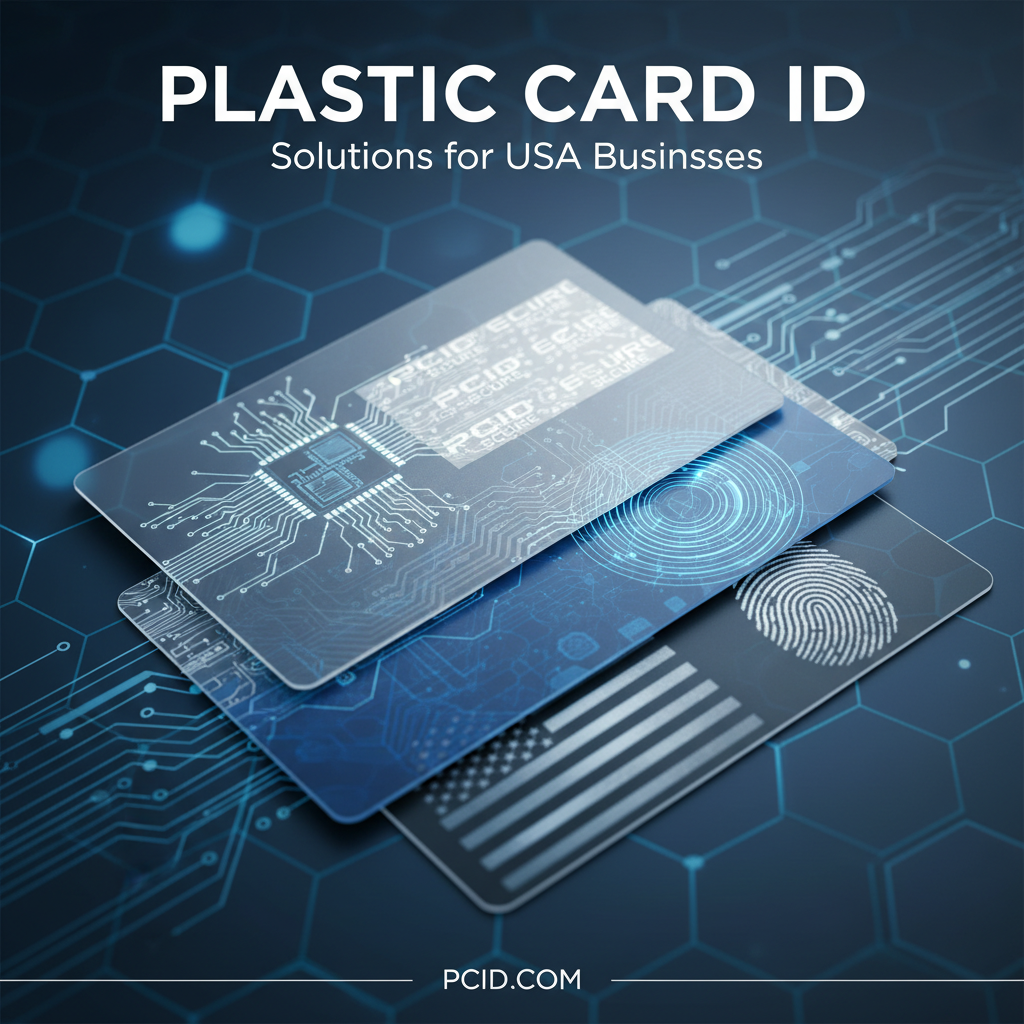 Not every plastic card is created equal. The CR80 format - 3.375 inches by 2.125 inches, 30 mil thick, ISO 7810 compliant - is the industry standard for good reason. It is the same size as a credit card, fits standard wallets, and is compatible with virtually all card printers and readers. But the format is just the starting point. What separates a counterfeit-resistant card from a vulnerable one is what is embedded in, printed on, or encoded within that card.
At Plastic Card ID, the product catalog is organized around this reality. Every card type in the lineup - from basic blank PVC to RFID smart cards - represents a different level of security capability. Choosing correctly means understanding your threat environment, your verification infrastructure, and your budget per card. These three variables almost always point toward a clear solution.
PVC Card Materials and Why Quality Matters
Blank PVC cards from CPE are manufactured to tight tolerances. Card thickness, surface smoothness, and material consistency all affect how well a card accepts dye-sublimation printing - and how well it resists tampering after it has been printed. A card printed on substandard PVC will show edge delamination, color inconsistency, and surface vulnerability that makes it easier to alter or replicate convincingly.
Premium PVC stock accepts print uniformly, bonds tightly with overlaminate security layers, and maintains physical integrity across the card's working life. For organizations running employee badges, event credentials, or membership cards, the physical card quality is not a cosmetic concern - it is a security concern. A card that looks authoritative and holds its finish over time is harder to replicate with consumer equipment.
Holographic Overlaminates and Visual Security
One of the most accessible and effective counterfeit deterrents available for in-house card programs is the holographic overlaminate. Applied during the printing process via compatible card printers, holographic overlaminates create a visual authentication layer that is nearly impossible to reproduce without professional equipment. The shifting, light-reactive pattern cannot be scanned and reprinted at home.
Card printers from Evolis, Zebra, and Fargo - all available through Plastic Card ID - support overlaminate application in single-pass workflows. This means the security feature adds minimal time and cost to the production process while delivering a measurable deterrent. Holographic overlaminates are among the highest-value counterfeit prevention investments available for organizations running their own card printing operations.
Ultraviolet (UV) and Microprint Features
UV-fluorescent inks and microprint elements are two additional layers commonly used in high-security card programs. UV features are invisible under normal light and only reveal themselves under ultraviolet illumination - a quick verification step that most counterfeit attempts will not bother to replicate. Microprint elements, too small to read without magnification, signal authenticity to trained inspectors without being obvious to casual observers.
These features are most effectively deployed through purpose-built card printers rather than ad hoc lamination setups. When CPE clients ask about building a more secure in-house card program, UV-capable ribbon configurations and microprint-enabled design workflows are standard talking points. The technology is accessible - it just requires knowing it exists and sourcing the right supplies to activate it.
Encoding Technologies That Raise the Counterfeit Bar
Visual security buys time. Encoding-based security raises a fundamentally different kind of barrier - one that requires not just duplicating a card's appearance but replicating its data layer. An encoded card that fails verification at a reader is useless regardless of how convincing it looks, and this is exactly why encoding technology is the backbone of any serious counterfeit prevention strategy.
Plastic Card ID supplies a full spectrum of encoding-ready card formats: magnetic stripe in both HiCo and LoCo configurations, RFID and proximity cards, and smart chip cards including MIFARE DESFire. Each technology operates differently, suits different applications, and delivers a different level of security against duplication.
Magnetic Stripe Cards: HiCo vs. LoCo
High-coercivity (HiCo) magnetic stripe cards use a stronger magnetic field to store data, making them more resistant to accidental erasure from everyday environmental exposure - wallets near smartphones, proximity to magnetic closures, and similar hazards. HiCo cards are the standard for applications where card longevity matters, including employee ID programs, hotel keys, and long-term loyalty programs.
Low-coercivity (LoCo) cards are appropriate for shorter-duration applications - event access, temporary credentials, single-use promotions. From a counterfeit perspective, both HiCo and LoCo formats require magnetic stripe encoding hardware to replicate, which raises the barrier substantially above visual-only cards. Verification at a mag-stripe reader adds another layer: even a visually convincing fake will fail if the data is not correctly encoded.
RFID and Proximity Cards for Access Control
Proximity cards operate via radio frequency identification - the card communicates with a reader without physical contact. Standard 125kHz proximity cards are widely deployed in access control environments because they are fast, reliable, and durable. Each card carries a unique identifier that the access control system recognizes or rejects. To counterfeit a proximity card, an attacker must clone the card's UID - a technical barrier that casual fraud attempts do not typically cross.
RFID technology in the 13.56MHz range supports more sophisticated encryption protocols, raising the bar further. For organizations managing access to sensitive areas, server rooms, restricted floors, or secure facilities, RFID cards from Plastic Card ID represent a significantly more robust solution than visual-only credentials. The combination of a professionally printed card surface and an RFID payload creates two independent verification layers.
MIFARE DESFire: The High-Security Standard
MIFARE DESFire EV2 and EV3 are among the most widely trusted smart card technologies available for non-financial card programs. These cards use AES encryption and mutual authentication protocols - meaning both the card and the reader must verify each other before any data exchange occurs. Cloning a DESFire card without the cryptographic keys is computationally infeasible with available consumer tools.
Casino player cards, hotel key systems, transit credentials, and high-value membership programs often rely on MIFARE DESFire precisely because the security profile is not a marketing claim - it is a mathematically enforced barrier. Plastic Card ID supplies DESFire-compatible cards for organizations that need this level of protection. If your card program carries significant access, privilege, or monetary value, DESFire technology is the most defensible choice available.
Choosing the Right Card Printer for Security-Grade Output
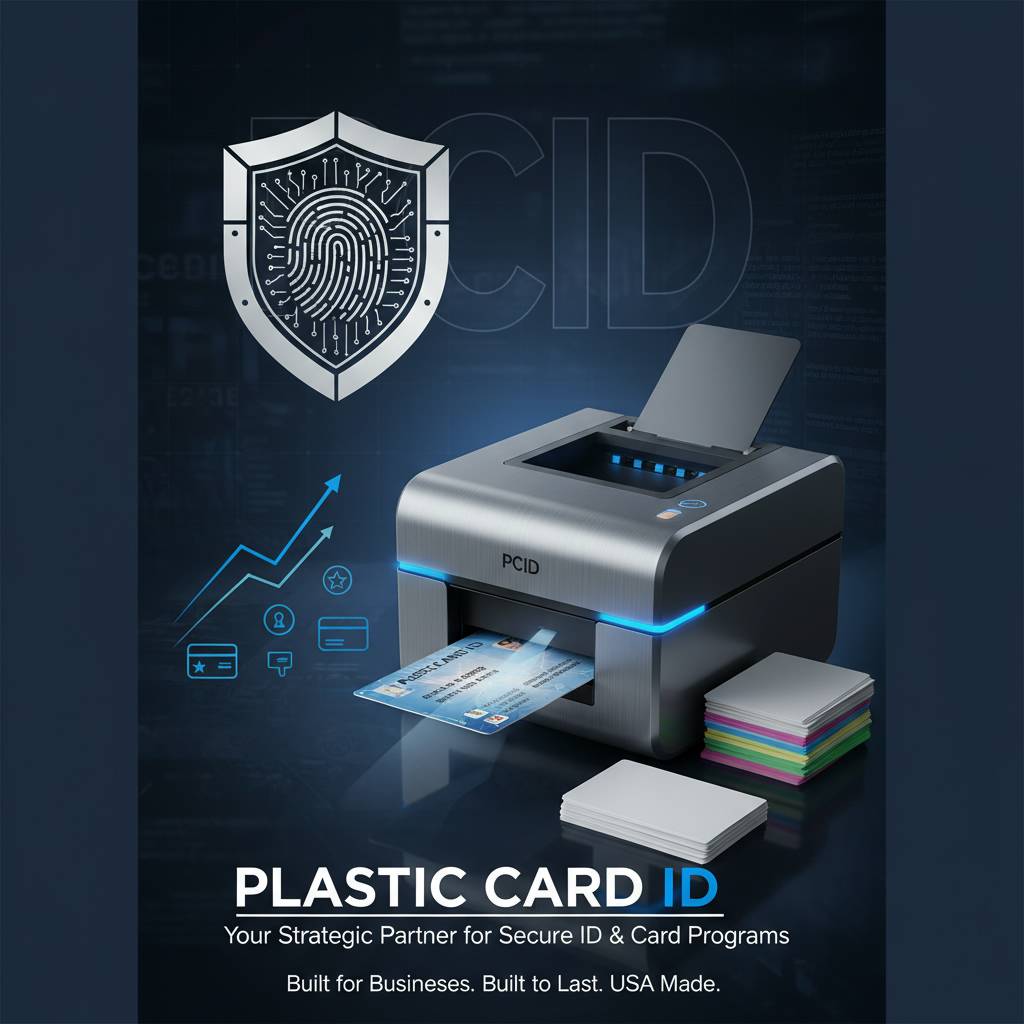 The card itself is only part of the equation. The printer that produces your credentials determines whether security features are properly applied, how consistent output quality is across a batch, and whether your program can scale without introducing quality gaps that counterfeiters can exploit. A premium blank card printed on an entry-level consumer printer is not a secure credential. The two components must be matched.
Plastic Card ID carries card printers from three of the most trusted names in the industry: Evolis, Zebra, and Fargo. Each brand brings distinct capabilities relevant to security applications, and the team can help organizations match the right printer model to their specific card program requirements - volume, security features, encoding needs, and budget.
Evolis Printers: Compact, Capable, and Security-Ready
Evolis printers occupy a strong position in the mid-range market - capable of producing high-quality dye-sublimation output with overlaminate support, encoding modules, and consistent results across long print runs. Models like the Primacy and the Zenius are deployed in everything from corporate HR departments to event credentialing operations. Evolis printers support holographic overlaminate ribbons, making them a natural fit for organizations building visual security into their card output.
The ribbon and consumable ecosystem for Evolis is well-supported through Plastic Card ID, including cleaning kits that maintain print head performance and output consistency over time. A well-maintained Evolis printer produces results that are visually distinct from anything a home inkjet can replicate - and that visual distinction is itself a security feature.
Zebra and Fargo: Industrial-Grade Security Printing
Zebra's ZC and ZXP series and Fargo's HDP line represent the upper tier of in-house card printing capability. Fargo's HDP (High Definition Printing) retransfer technology, in particular, prints onto a clear film that is then bonded to the card surface - resulting in edge-to-edge print coverage and a finish that is extremely difficult to replicate with standard printing equipment. Retransfer printing is one of the most effective in-house counterfeit deterrents available today.
Zebra printers bring enterprise-grade encoding support and high-volume throughput to organizations running large card programs. For a corporate campus issuing thousands of employee badges annually, or a hospitality group managing hotel key card production across multiple properties, Zebra's reliability and encoding capabilities represent serious infrastructure. Plastic Card ID supplies printers, ribbons, overlaminates, and replacement parts for both brands.
Matching Printer Capabilities to Your Threat Model
Selecting a card printer for a security application should start with a clear-eyed assessment of what you are defending against. An employee badge program at a small office faces a different threat profile than an access control system at a data center. A loyalty card program faces different risks than a casino player card system. The right printer for one application may be overkill - or insufficient - for another.
This is the type of conversation CPE is built for. Matching encoding modules, ribbon types, overlaminate options, and printer models to a specific use case is not guesswork - it is applied product knowledge. Reach out at 800.835.7919 to discuss your program requirements with someone who has seen thousands of similar setups and can point you toward the right configuration quickly.
Card Program Best Practices for Ongoing Counterfeit Prevention
Technology alone does not prevent counterfeiting. The strongest card in the world fails if the verification process is inconsistent, if issued cards are not tracked, or if expired cards are not deactivated. Counterfeit prevention is an operational discipline as much as it is a materials and technology question. The organizations that run the tightest programs combine good hardware with solid procedures.
The following practices are drawn from patterns observed across thousands of card programs - including programs that discovered vulnerabilities the hard way. Whether you are building a new program or auditing an existing one, these principles apply across card types and industries.
Card Issuance Controls and Inventory Management
Every card issued should be logged - who received it, when, for what purpose, and with what encoded data. This sounds obvious but is routinely neglected in smaller programs where card issuance feels informal. Without an issuance log, there is no baseline against which to detect anomalies. If you cannot account for every card in circulation, you cannot know whether unauthorized cards have entered the system.
Inventory management for blank card stock also matters. Blank cards that go missing from a storage room are potential counterfeit material - they carry the correct substrate, thickness, and surface properties to produce convincing fakes if someone has access to a compatible printer. Secured storage with access logging is a simple, low-cost control that closes this vulnerability.
Verification Procedures and Staff Training
A card reader that verifies encoding is only useful if it is actually being used for every transaction. Access doors that are held open, loyalty counters where cards are accepted by sight without scanning, event entrances where visual checks are rushed - these are the points where counterfeit cards successfully enter circulation. Verification technology works at 100% of its potential only when it is used 100% of the time.
Staff training is not a one-time event. It needs to include what authentic cards look and feel like, what the verification workflow is, and what to do when a card fails verification. Employees who have never held a fake card and compared it to a real one are less equipped to spot the difference quickly under real-world conditions. Periodic refreshers and sample comparisons strengthen this human layer of the security stack.
Card Lifecycle Management and Deactivation
- Set clear expiration periods for every card type in your program - employee badges, loyalty cards, membership credentials, and event passes should all have defined lifecycles.
- Deactivate cards promptly when employees leave, memberships lapse, or events conclude. A valid card in the wrong hands is as dangerous as a convincing counterfeit.
- Reissue on a scheduled cycle for high-value programs - rotating cards annually or biennially limits the window during which a cloned card can be used successfully.
- Implement card return protocols where possible, particularly for employee and access cards. Physical recovery closes the loop and prevents cards from circulating after their authorized use ends.
- Audit your active card database periodically against physical inventory and issued card logs to identify discrepancies early.
These practices are not burdensome to implement. Most can be managed with modest administrative tooling or built into existing HR, CRM, or access control software. The organizations that treat card lifecycle management as a continuous process rather than a periodic cleanup tend to catch problems significantly earlier - and resolve them with far less disruption.
Specialty Card Options That Inherently Resist Duplication
Beyond the mainstream catalog of PVC cards and standard encoding technologies, there are specialty card formats whose physical properties create natural barriers to counterfeiting. Some of these formats are so distinctive in appearance and feel that a convincing counterfeit requires equipment and materials that are effectively inaccessible to casual fraudsters. For programs where card prestige and security must coexist, these options are worth serious consideration.
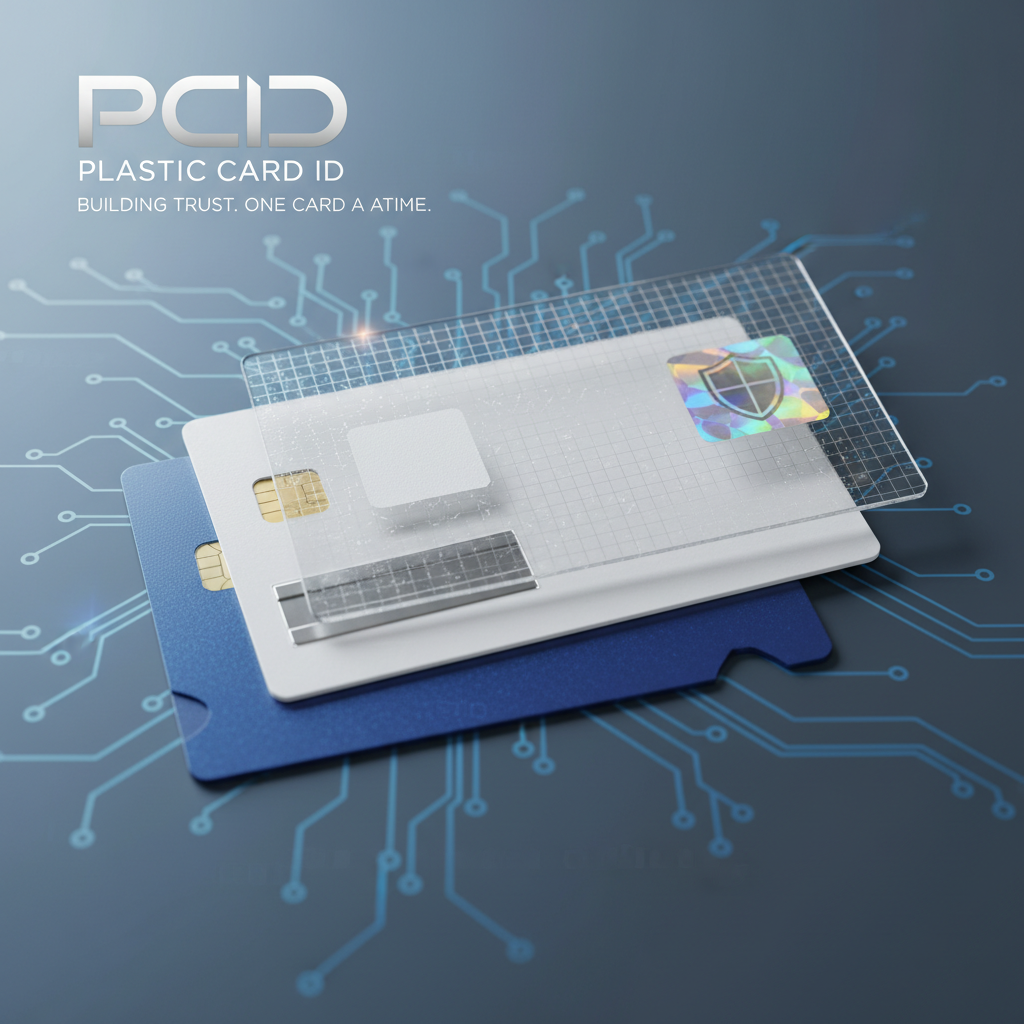
Plastic Card ID supplies several specialty formats that sit at the intersection of visual impact and security: clear and frosted PVC cards, custom die-cut shapes, and luxury metal cards in stainless steel, brass, and gold. Each format brings unique counterfeit-resistance properties alongside the brand impact that makes them appealing from a marketing standpoint.
Clear and Frosted PVC Cards
Transparent and semi-transparent card stock creates a visually distinctive credential that is immediately recognizable as different from a standard white PVC card. The printing characteristics of clear stock - particularly how color and background interact through the card's transparency - produce visual effects that are difficult to replicate without the same base material. A clear PVC membership or VIP card signals exclusivity and is intrinsically harder to fake convincingly.
Frosted cards add tactile differentiation - the slightly textured surface feels different from standard PVC and accepts print in ways that produce unique visual results. Both formats are available through CPE and are compatible with standard CR80 dimensions and most card printers in the Evolis, Zebra, and Fargo lineup, though ribbon selection matters for optimal results on specialty stock.
Luxury Metal Cards: The Ultimate Counterfeit Barrier
Stainless steel, brass, and gold metal cards represent the highest end of the specialty card spectrum. The manufacturing process, material cost, and physical weight of a genuine metal card create an immediate tactile authentication that no paper or standard PVC counterfeit can replicate. Someone holding a metal card knows instantly whether it is genuine - the heft and temperature response are unmistakable. Metal cards are effectively self-authenticating at the point of physical contact.
For premium membership programs, VIP access credentials, high-value loyalty programs, and corporate recognition applications, metal cards deliver both security and brand statement simultaneously. The cost per card is higher than standard PVC, but for programs where the card itself represents significant value or privilege, the counterfeit deterrent effect and the prestige factor both justify the investment. CPE can supply metal card options for programs ready to operate at this level.
Custom Die-Cut Shapes and Unique Form Factors
A card that is not a standard rectangle is harder to replicate with standard card printing equipment. Custom die-cut shapes - rounded corners beyond standard specifications, key fobs, irregular geometries, notched formats - all require specialized cutting equipment that casual counterfeiters typically do not have access to. The visual distinctiveness also makes authentication faster: the shape itself becomes a security signal.
Custom form factors are particularly effective for event credentials, casino player cards, and collector or fan-oriented membership programs where the card is itself a branded artifact. When the card format is unique, the counterfeit barrier rises significantly - and the brand value embedded in that unique format compounds over time as cardholders associate the distinctive shape with the quality of the program behind it.
Frequently Asked Questions About Preventing Counterfeit Plastic ID Cards
Organizations at every stage of card program development tend to arrive at similar questions when the topic of counterfeit prevention comes up. The following answers reflect the most common conversations Plastic Card ID has with clients navigating this challenge for the first time - or revisiting it after an incident.
What is the single most effective counterfeit prevention measure?
There is no single measure that stands alone. The most effective counterfeit prevention strategy layers visual security, encoding technology, and operational controls simultaneously. A holographic overlaminate deters visual replication. Magnetic stripe or RFID encoding prevents data layer cloning. Issuance controls and verification procedures catch anything that slips through the first two layers. Each layer addresses a different attack vector.
That said, if budget requires prioritization, encoding-based verification delivers the most reliable catch - because even a visually convincing counterfeit fails at a reader if the data is not correctly replicated. Investing in encoding and reader infrastructure first, then layering in visual security features as budget allows, is a pragmatic approach for organizations starting from a minimal security baseline.
How do I know which card technology is right for my program?
Start with the value at stake. What does a successfully counterfeited card unlock? Access to a facility? Loyalty points with real monetary redemption value? Membership privileges with significant economic worth? Higher-value programs justify more sophisticated encoding technology. A gym membership loyalty card and a data center access badge face fundamentally different threat profiles even though both are CR80 PVC cards.
Then consider your verification infrastructure. RFID cards provide no security benefit if you do not have RFID readers deployed at your verification points. Magnetic stripe encoding is useless without mag-stripe readers. The card technology you choose must match the verification technology you can realistically deploy. CPE can help you think through both sides of this equation before you commit to a card format.
Can I call to discuss my specific card program security needs?
Yes - and that conversation is genuinely useful, not a sales exercise. Call 800.835.7919 to speak directly with the CPE team about your program, your current setup, your concerns about counterfeiting, and the options available within your budget. The catalog is broad enough that there is almost always a combination of card type, encoding, and printing solution that fits the specific shape of your problem.
Whether you are running 50 cards a month or managing a program in the tens of thousands, the conversation is worthwhile. Programs at every scale have counterfeit exposure, and the solutions scale accordingly - from straightforward overlaminate additions to existing workflows all the way up to full smart card deployments with encrypted authentication.
Your card program is only as secure as the decisions behind it. Make them with the right partner.
Counterfeit plastic ID cards are a solvable problem. The materials, the technology, and the operational practices all exist - the question is whether they are assembled correctly in your program. Plastic Card ID has spent 25-plus years helping organizations across the United States build card programs that hold up under real-world conditions. Call 800.835.7919 today and put that experience to work for your organization.
Previous Page