PVC Plastic Card Environmental Considerations: What You Need to Know
Table of Contents []
- What Every Business Should Know About PVC Plastic Card Environmental Considerations - From Plastic Card ID
- Understanding PVC as a Card Material: Durability, Performance, and Longevity
- PVC Plastic Card Environmental Considerations: The Full Picture
- Running a Smarter Card Program: Reducing Waste Through Better Planning
- Card Program Applications and Why Physical Cards Still Outperform Alternatives
- Frequently Asked Questions: PVC Plastic Cards and Responsible Use
- Why Plastic Card ID Is the Right Partner for Your Card Program
What Every Business Should Know About PVC Plastic Card Environmental Considerations - From Plastic Card ID
There is a conversation happening in boardrooms, break rooms, and procurement meetings across the country - and it centers on a question that sounds simple but rarely is: what happens to plastic cards when their useful life ends? Before we get there, though, there is an equally important question most organizations forget to ask first: are you even getting the full use out of your cards in the first place? The answers to both questions shape smarter decisions.
At Plastic Card ID, we have spent over 25 years supplying blank and custom plastic cards to businesses across the United States. In that time, one pattern becomes undeniably clear - the organizations that think carefully about card materials, card longevity, card programs, and responsible end-of-life handling tend to run dramatically better programs than those that do not. This page is for those organizations.
| Card Type | Typical Lifespan | Primary Use Case | End-of-Life Option |
|---|---|---|---|
| Blank CR80 PVC Card | 3-7 years | Employee ID, Loyalty, Events | Specialty PVC Recycler |
| Magnetic Stripe Card (HiCo) | 5-10 years | Access Control, Gift Cards | Specialty PVC Recycler |
| RFID / Proximity Card | 5-10 years | Contactless Access, Smart ID | E-Waste or Specialty Recycler |
| Smart Chip Card | 5-10 years | Secure Access, Casino, Hotel | E-Waste or Specialty Recycler |
| Luxury Metal Card | 10 years | VIP Membership, Premium Brand | Metal Scrap / Recycler |
Understanding PVC as a Card Material: Durability, Performance, and Longevity
 PVC - polyvinyl chloride - is not glamorous. It is, however, extraordinarily effective. The CR80 standard card format (30 mil thickness, ISO 7810 compliant) was engineered specifically for durability, consistent dimensions, and reliable performance across printers, readers, and wallets alike. When a business commits to plastic cards, it is not choosing a material arbitrarily - it is choosing a material that has been validated by decades of real-world use.
The material characteristics that make PVC cards valuable are worth understanding. PVC resists moisture, bending, cracking under normal conditions, and surface wear far better than paper or cardstock alternatives. A well-made PVC card does not degrade on contact with sweat, humidity, or light. That durability is not incidental - it is the entire point. A card that lasts longer means fewer replacements, less waste, and lower per-use cost over the life of your program.
Why Longevity Is the Right Starting Point
Before any conversation about what happens to a card at the end of its life, there is a prior question worth asking: how long can this card actually last? PVC loyalty cards, employee badges, and membership cards that are properly handled and stored often last three to seven years - sometimes longer. That is a significant lifespan compared to paper alternatives that may need replacing monthly.
Longevity reduces the volume of cards that ever need disposal in the first place. For businesses running ongoing programs - whether that is a hotel issuing key cards, a gym maintaining membership cards, or a retailer managing a gift card program - investing in durable PVC cards upfront means the total number of cards produced over time is meaningfully lower than if you were cycling through paper or flimsy alternatives on a monthly basis.
CR80 Cards and the ISO Standard That Makes Them Universal
The ISO 7810 standard is not just a technical footnote - it is why your card works in every printer, every reader, and every cardholder on the market. CR80 cards at 30 mil thickness are the universal benchmark, and Plastic Card ID stocks them in bulk, in custom configurations, and in specialty formats precisely because that standard matters operationally.
When organizations understand that a single card format can serve as an employee badge on Monday, a conference credential on Wednesday, and an access token after a simple reprint, the operational and material efficiency becomes obvious. Blank CR80 cards give organizations total design control - you print what you need, when you need it, without waste from overprinting in advance.
Comparing PVC to Alternative Card Materials
Some organizations explore alternative card materials out of curiosity or procurement policy. The honest comparison: paper cards degrade quickly and require frequent reprinting. Composite cards (PVC-polyester blends) offer similar performance to pure PVC in most applications. Metal cards in stainless steel, brass, or gold offer the highest perceived value and near-indefinite durability but at higher cost. For most business applications, PVC remains the most practical and cost-effective card material available.
The question is not whether PVC is perfect - no material is - but whether it performs reliably over time, integrates with existing systems, and delivers the program outcomes your organization needs. By every practical measure, it does. That is why CPE has sold over 50 million cards to more than 100,000 customers across the United States.
PVC Plastic Card Environmental Considerations: The Full Picture
Let's talk plainly. PVC is a plastic. It does not disappear. It does not break down in a landfill over a reasonable timeframe. These are facts, and any responsible business thinking about its card program should have them on the table. But the environmental picture around PVC plastic cards is more nuanced than a single-sentence dismissal - and understanding that nuance leads to smarter purchasing decisions.
The environmental footprint of any card program is not just about what happens at disposal. It is about how many cards are produced, how long each card is used, whether reprinting waste is minimized, and whether cards are responsibly handled at end of life. Organizations that manage all four of these factors run cleaner, more efficient programs than those focused only on material composition.
End-of-Life Handling for PVC Cards
PVC plastic cards should not go into standard municipal curbside recycling. Standard recycling streams are not equipped to process PVC, and contamination of recycling batches is a real concern. The right path is specialty plastic recyclers who accept PVC material - and they exist in most major metro areas across the United States. Businesses with large card programs should identify a specialty recycler as part of their program planning.
Card shredding services that handle PVC are another option, particularly for organizations that need to destroy card data (magnetic stripes, chip data, printed information) before disposal. Responsible end-of-life card handling is a simple operational process once you have identified the right partner - and it is entirely consistent with running a high-performing, professional card program.
RFID and Smart Chip Cards: Additional Considerations
Cards containing embedded electronics - RFID chips, proximity inlays, smart chip modules - carry an additional end-of-life consideration. The electronic components within these cards qualify them as e-waste in most jurisdictions, meaning they should be processed through e-waste collection programs rather than general plastic recycling. Plastic Card ID supplies RFID and smart chip cards across a wide range of specifications, including contactless formats with MIFARE DESFire technology.
The good news is that RFID and smart chip cards also tend to have the longest useful lifespans of any card category - often five to ten years under normal use. That extended lifespan means the total volume of cards entering the waste stream from smart card programs is comparatively low. Fewer cards per year, properly handled at end of life, represents a genuinely responsible approach.
Metal Cards and End-of-Life Advantage
Luxury metal cards - stainless steel, brass, gold-finish - occupy a different end-of-life category entirely. Metal is among the most readily recyclable materials in modern waste streams. Metal scrap recyclers accept these cards straightforwardly, and the material retains value even at end of life. For organizations seeking the combination of maximum durability, maximum perceived value, and a straightforward end-of-life path, metal cards offer a compelling case.
Of course, metal cards are not appropriate for every application. They are best suited to VIP membership programs, premium brand experiences, and high-stakes loyalty environments where the card itself is a deliberate statement. For high-volume programs measured in thousands of cards, PVC remains the practical and cost-efficient standard.
| Program Stage | Best Practice |
|---|---|
| Purchasing | Buy quantities matched to actual program needs; avoid excess overstock |
| In-Program Use | Maximize card lifespan; provide card carriers and sleeves to reduce damage |
| End of Life | Route PVC cards to specialty PVC recyclers; route chip/RFID cards to e-waste |
| Data Security | Shred or destroy cards with encoded data before disposal |
Running a Smarter Card Program: Reducing Waste Through Better Planning
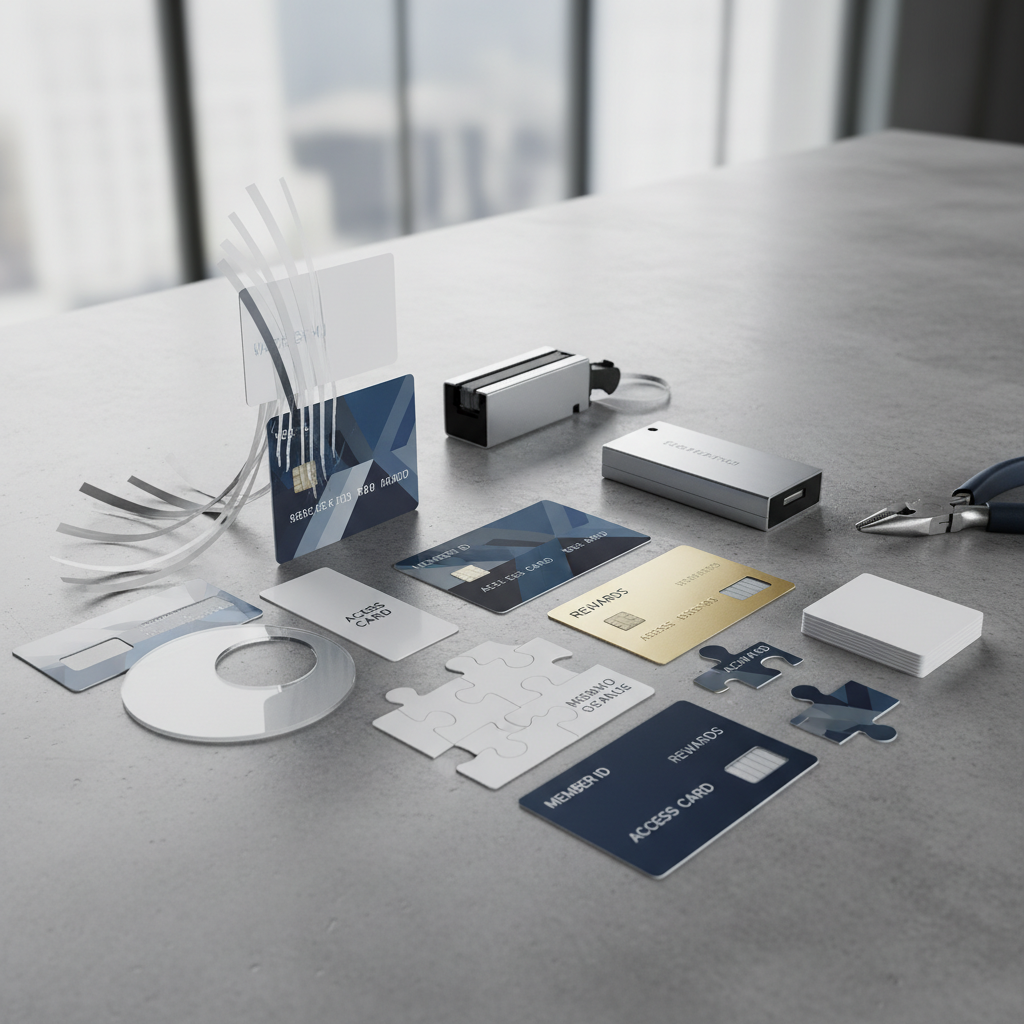 One of the most overlooked aspects of the PVC plastic card environmental conversation is the role of program design. Organizations that plan poorly end up ordering more cards than they need, printing more than they use, and discarding cards prematurely due to design changes or poor card management. Smart program design is, in practical terms, the single highest-impact thing a business can do to reduce unnecessary card waste.
Plastic Card ID works with clients as a strategic partner - not just a supplier - to help businesses design programs that match order quantities to actual usage, extend card life through protective accessories, and minimize reprinting waste by printing on demand with in-house printers. That partnership approach produces better programs and generates fewer cards that are never used.
On-Demand Printing: Print What You Need, When You Need It
One of the most effective ways to reduce card waste is to shift from pre-printed card orders to on-demand in-house printing. With a card printer from Evolis, Zebra, or Fargo - and a supply of blank CR80 PVC cards - organizations can print exactly the number of cards needed at exactly the right time. No overprinting. No cards sitting in storage going stale because an employee left or a program changed.
In-house printing with blank cards gives organizations precise control over production volume. The savings in reduced waste and reduced reprinting costs often offset the cost of the printer within the first year for mid-size programs. It is one of the most practical operational improvements a business can make, and CPE stocks the full printer lineup along with ribbons, cleaning kits, and supplies to keep printers running smoothly.
Card Accessories That Extend Useful Life
Card carriers, protective sleeves, and badge holders are not afterthoughts - they are tools that meaningfully extend card lifespan. A PVC card stored in a sleeve is protected from scratching, surface wear, and moisture in ways that an unprotected card simply is not. For loyalty cards, membership cards, and employee badges that see daily handling, protective accessories can easily double the functional lifespan of a card.
Longer card life means fewer replacement cards ordered, fewer cards disposed of, and lower total program cost. Plastic Card ID supplies card carriers, sleeves, and badge accessories as part of its full card program ecosystem. These are not luxury additions - for programs measured in cost-per-card over time, they are smart operational investments.
Matching Order Quantities to Real Needs
- Audit your current card inventory before placing any new order. Overstock is waste waiting to happen.
- Use in-house printers for variable data (names, IDs, dates) and order blank stock in bulk - the combination reduces both cost and waste.
- Set reorder triggers based on actual usage data, not guesswork. If your program issues 200 cards per month, order in 2-3 month batches - not 12-month batches that sit in storage.
- Retire outdated cards systematically. Schedule card collection and disposal events so retired cards are handled properly rather than accumulating in desk drawers.
- When program designs change, update the print template - not the blank stock. Blank PVC cards are universal; a design change does not make your card inventory obsolete.
These are simple operational disciplines that large organizations often get right by accident and small organizations often ignore entirely. Building them deliberately into your card program from the start produces measurable benefits - fewer wasted cards, lower cost, and a program that scales cleanly as your organization grows.
Card Program Applications and Why Physical Cards Still Outperform Alternatives
There is a narrative that physical cards are being replaced by apps and digital credentials. The reality in the field is more complicated. Physical plastic cards continue to outperform digital alternatives in specific, high-value use cases - and the data behind that performance is compelling. Retailers switching from paper punch cards to plastic loyalty cards see sales increases of 35-50%. That is not a minor uplift; that is program-defining performance.
The psychology is well documented: a physical card in a wallet is a persistent reminder. It occupies real estate in a cardholder's daily life. An app buried on page three of a smartphone is not. For loyalty programs, membership programs, and gift card programs, physical plastic cards drive cardholder behavior in ways that purely digital solutions simply do not replicate consistently.
Loyalty and Gift Card Programs
Loyalty programs built on plastic cards outperform their paper equivalents on virtually every metric - redemption rate, average transaction value, customer retention, and brand perception. A plastic loyalty card signals commitment from the issuing organization. It signals permanence. Customers who receive a professionally made loyalty card perceive the program as serious, which increases their likelihood of engaging with it consistently.
Gift cards on plastic PVC stock behave similarly. Plastic gift cards drive higher redemption rates and higher average purchase values than their paper counterparts - in part because they feel like real currency, in part because they survive in wallets and purses long enough to actually be used. Paper gift certificates get crumpled, lost, or forgotten within days.
Access Control and Employee ID Programs
For access control, proximity cards and RFID smart cards built on PVC substrates offer the combination of physical durability and electronic functionality that makes secure access programs work. A proximity card that has been through five years of daily badge-swipes is a testament to PVC durability. These cards do not fail from normal handling. They fail when they are damaged physically - and that failure rate is low for well-made cards in protected holders.
Employee ID programs built on PVC CR80 cards signal organizational legitimacy in ways that improvised paper badges do not. For industries where identity verification matters - healthcare, education, manufacturing, hospitality - a professional plastic ID card is not optional; it is baseline operational infrastructure.
Casino, Hotel, and Specialty Card Applications
Casino player cards and hotel key cards represent some of the most demanding card program environments in any industry. High transaction volume, high handling frequency, and high-stakes data encoding demand cards that perform consistently over time. Plastic Card ID supplies casino player cards and hotel key cards built to these specifications - PVC substrates with appropriate encoding, durable construction, and reliable performance across card reader systems.
Specialty formats - clear plastic cards, frosted cards, custom die-cut shapes - serve premium brand applications where the card itself is part of the brand experience. When a card is beautifully made, it is kept. And a card that is kept is a card that works. That intersection of aesthetics and function is where specialty card formats deliver their real value.
Frequently Asked Questions: PVC Plastic Cards and Responsible Use
Can PVC cards be recycled?
PVC plastic cards cannot go into standard municipal recycling. However, specialty PVC recyclers do accept them, and many areas have industrial recycling facilities that process mixed plastics including PVC. The key step is identifying the right recycling partner for your location and card volume. For businesses managing large card programs, this is worth building into your card program operations as a standard step.
Cards containing electronic components - RFID inlays, smart chips - should be routed to e-waste collection programs rather than plastic-only recyclers, since the electronic content requires different processing. Most e-waste collection programs accept these materials without issue.
How long should a PVC card last before it needs replacement?
Under normal use, a well-made PVC card lasts three to seven years. HiCo magnetic stripe cards and RFID smart cards typically last at least five years and often longer. Metal cards can last a decade or more. The single biggest factor in card longevity is how the card is stored and handled daily - a card protected in a sleeve or badge holder will outlast an unprotected card by a significant margin.
For programs where cards are issued and then forgotten in a drawer, the bigger concern is often obsolescence rather than physical wear. Cards that are no longer active in a program should be collected and properly disposed of rather than left circulating - both for data security and for basic program hygiene.
What is the most responsible way to dispose of old card inventory?
- Identify a specialty PVC recycler in your region - industrial waste brokers can often connect you with the right facility.
- For cards with encoded data (magnetic stripe, chip, RFID), shred or destroy the card before recycling to protect sensitive information.
- Coordinate card collection from employees and customers when issuing new cards - a simple exchange program ensures old cards are returned rather than discarded randomly.
- For RFID and smart chip cards, contact your local e-waste program or a certified electronics recycler.
- Metal cards can go directly to metal scrap recyclers, which accept them without special processing requirements.
Building a clear card disposal protocol into your program operations is straightforward and takes the guesswork out of end-of-life handling. Most organizations that do this once find it adds minimal operational overhead and significant peace of mind.
Why Plastic Card ID Is the Right Partner for Your Card Program
Twenty-five years. Over 100,000 customers. More than 50 million cards. Those numbers represent something more than a supply chain relationship - they represent the accumulated knowledge of what actually makes card programs work, at every scale, across every industry. From a small business issuing 50 loyalty cards a month to a regional chain managing tens of thousands of cards across multiple locations, Plastic Card ID has built programs at every level.
The Plastic Card ID catalog covers every card type your program might require: blank CR80 PVC cards, HiCo and LoCo magnetic stripe cards, RFID and proximity cards, smart chip cards with MIFARE DESFire technology, clear and frosted cards, custom die-cut formats, and luxury metal cards in stainless steel, brass, and gold. Beyond cards, CPE supplies the full printer lineup from Evolis, Zebra, and Fargo - along with ribbons, cleaning kits, card carriers, sleeves, and card affixing and mailing services. Everything your program needs, from a single source.
A True One-Stop Card Program Partner
The value of working with a single, experienced supplier for your entire card program cannot be overstated. When your card stock, your printer, your ribbons, and your accessories all come from one place - and that place has 25 years of program experience - the operational complexity of managing a card program drops significantly. No compatibility issues. No sourcing guesswork. No wondering whether your ribbon matches your printer model.
That operational simplicity translates directly into better program performance. Cards are issued on time. Printers run reliably. Reorders happen before stock runs out. Accessories arrive with the cards that need them. It is the difference between a card program that works and one that creates more problems than it solves. Contact Plastic Card ID at 800.835.7919 to speak with a card program specialist about the right setup for your organization.
Serving USA Businesses of Every Size and Sector
Retailers, hotels, casinos, healthcare organizations, schools, gyms, event companies, manufacturers, nonprofits - the range of organizations running card programs in the United States is as broad as American business itself. Plastic Card ID serves them all, from startups issuing their first batch of loyalty cards to established enterprises running multi-site access control programs with tens of thousands of cards in circulation.
Scale does not intimidate CPE - it is what the operation is built for. Whether you are ordering 50 blank cards for an in-house printing setup or sourcing a full custom-printed run of 50,000 cards for a national campaign, the expertise, inventory, and fulfillment capability are here to support you.
Getting Started Is Simple
The process of launching or improving a card program starts with a conversation. What type of cards does your program need? What volume? What encoding or printing capability do you already have? What accessories and supplies keep the program running? Those questions have answers, and Plastic Card ID has helped thousands of organizations work through them efficiently.
The right card program runs reliably, serves your customers or employees well, and manages its full lifecycle thoughtfully - from smart purchasing decisions up front to responsible end-of-life handling at the back end. That is the standard Plastic Card ID holds itself to, and the standard we help our clients meet.
Ready to build a card program that performs? Call Plastic Card ID today at 800.835.7919 and let our team help you design the right solution - from the first card to the last.
Previous Page
Next Page