Blank Proximity Cards Explained: How They Work
Table of Contents []
- Blank Proximity Cards Explained: What Every Business Should Know - Plastic Card ID
- What Are Blank Proximity Cards?
- 125 kHz Proximity Cards: The Legacy Standard Still Running Millions of Doors
- 13.56 MHz Smart Cards and MIFARE DESFire: Proximity Cards for the Modern Era
- Printing on Blank Proximity Cards: Building Your Complete Card Program
- Buying Blank Proximity Cards: What to Look For and What to Ask
- Why Plastic Card ID Is the Right Partner for Your Proximity Card Program
Blank Proximity Cards Explained: What Every Business Should Know - Plastic Card ID
Walk into almost any modern office building, hotel corridor, or university campus and you will encounter them without thinking twice. A quick tap or wave near a reader, a soft beep, a green light - access granted. Proximity cards are the invisible backbone of physical access control, and the blank versions of these cards represent one of the most flexible, cost-effective investments a business can make in its security and identity infrastructure. But what exactly are blank proximity cards, how do they work, and when does choosing them over pre-programmed alternatives actually make sense? The answers matter more than most buyers realize before they place their first order.
Plastic Card ID has spent over 25 years supplying businesses of every size across the United States with blank and custom plastic cards - including a comprehensive lineup of proximity and RFID cards. With more than 100,000 customers served and over 50 million cards shipped, CPE understands the nuances of card technology that can make or break an access control program. This page is a deep dive into blank proximity card technology, written for decision-makers who want to understand what they are buying before they buy it.
| Card Type | Frequency | Read Range | Common Use |
|---|---|---|---|
| 125kHz Proximity (HID-Compatible) | 125 kHz | 2-6 inches | Door access, time & attendance |
| 13.56 MHz Smart Card (MIFARE) | 13.56 MHz | 1-4 inches | Secure access, campus IDs, transit |
| MIFARE DESFire (High Security) | 13.56 MHz | 1-3 inches | Government, healthcare, enterprise |
| Dual-Frequency Cards | 125 kHz 13.56 MHz | Varies | Migration, mixed-reader environments |
What Are Blank Proximity Cards?
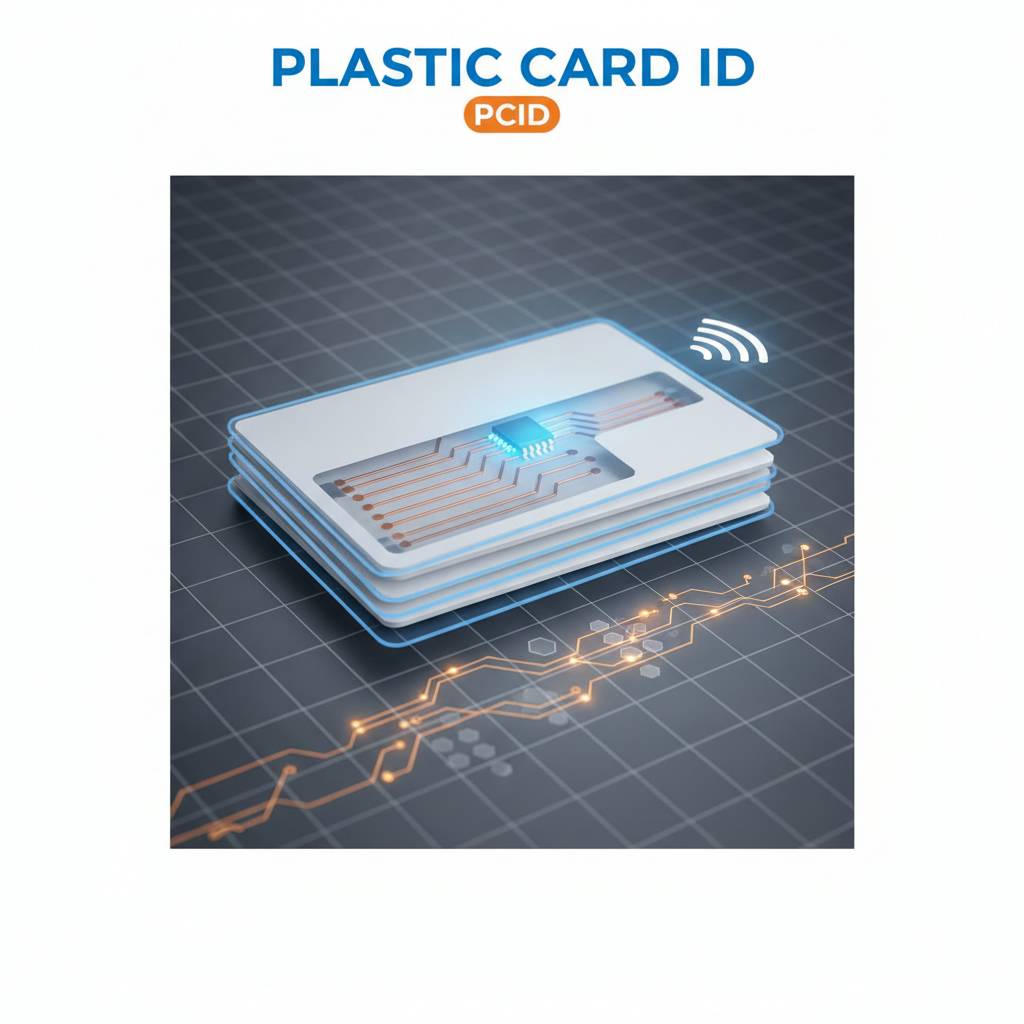 A blank proximity card is a standard CR80-size PVC card - the same dimensions as a credit card, governed by the ISO 7810 standard at 30 mil thickness - that contains an embedded antenna and microchip capable of communicating wirelessly with a compatible reader. The word "blank" refers to the card's visual surface: there is no printed artwork, name, employee photo, or branding on it yet. The electronics inside, however, are fully functional or ready to be programmed. Blank does not mean non-functional; it means non-personalized.
Organizations purchase blank proximity cards precisely because they want total control over what gets printed or encoded onto them in-house. A card printer - such as models from Evolis, Zebra, or Fargo - handles the visual personalization. The access control software handles the credential encoding. The result is a single card that serves as a photo ID badge, an access token, and sometimes a time-and-attendance record all at once. Buying blank gives you flexibility; buying pre-printed takes that flexibility away.
How Proximity Technology Actually Works
The magic inside a proximity card is a loop antenna printed or wound into the card laminate, connected to a tiny integrated circuit. When the card enters a reader's electromagnetic field, the antenna harvests enough energy from that field to power the chip - no battery required, ever. The chip transmits its stored data back to the reader in a fraction of a second. This passive, contactless exchange is what makes proximity cards so durable and maintenance-free.
At 125 kHz (the frequency used by legacy proximity cards including many HID-compatible formats), the read range typically falls between two and six inches depending on reader power and card placement. At 13.56 MHz (used by MIFARE, DESFire, and ISO 14443 smart cards), the interaction is shorter in range but vastly richer in data capacity and security features. Knowing which frequency your existing readers support is the single most important factor in choosing the right blank card.
The CR80 Form Factor and Why It Matters
All proximity cards sold by CPE conform to the CR80 standard: 3.375 inches wide, 2.125 inches tall, 30 mil thick. This is the universal form factor for ID badges, corporate credentials, and access cards worldwide. It fits every standard card holder, lanyard slot, badge reel, and card printer on the market without modification. Standardization is not a limitation - it is a guarantee of compatibility.
The 30 mil PVC construction surrounding the embedded electronics is rigid, scratch-resistant, and built to survive daily handling, pocket friction, and the occasional unfortunate encounter with a washing machine. These cards are designed for serious, repeated use across years of service. Organizations running card programs for 50 employees or 5,000 employees benefit from the same baseline durability.
Blank vs. Pre-Encoded Proximity Cards
Pre-encoded cards arrive with a manufacturer-assigned facility code and card number already written to the chip. Blank proximity cards arrive with either no data written or factory default data that your access control system can overwrite. For organizations with in-house card printers and enrollment software, blank cards offer a lower per-unit cost and complete programming flexibility. For very small deployments managed entirely by an integrator, pre-encoded cards might simplify setup.
For most USA-based businesses managing their own card programs - which is the overwhelming majority of Plastic Card ID's 100,000-plus customers - blank proximity cards are the smarter long-term buy. You control the facility code assignment, the card number sequence, and the personalization workflow from day one through the final card in the program's lifespan.
125 kHz Proximity Cards: The Legacy Standard Still Running Millions of Doors
Despite being decades-old technology, 125 kHz proximity cards remain the dominant format in commercial access control installations across the United States. Tens of millions of HID-compatible readers are already deployed in office buildings, industrial facilities, schools, and government properties. Replacing that infrastructure is expensive and disruptive. For organizations with existing 125 kHz readers, blank 125 kHz cards are simply the right tool for the job.
These cards operate on the Wiegand protocol in most deployments, transmitting a facility code and card ID number to the reader, which then passes the data to an access controller for decision-making. The simplicity of this architecture is both its strength and its limitation. It works reliably with virtually any compatible reader, but it offers limited encryption or mutual authentication compared to modern 13.56 MHz smart card platforms.
HID-Compatible Proximity Cards Explained
HID Global is the dominant brand name in proximity card manufacturing, and the term "HID-compatible" has become shorthand for any 125 kHz card that works with HID readers. Blank HID-compatible proximity cards from CPE are engineered to the same electrical specifications as branded HID cards, meaning they communicate correctly with HID ProxPro, HID MaxiProx, and thousands of other deployed reader models. Compatibility is built in - no reader reconfiguration required.
These cards are available in standard white PVC ready for full-color printing, in clamshell (thick card) formats for rugged environments, and in key fob form factors for users who prefer not to carry a wallet-size card. For most corporate access programs, standard 30 mil white PVC is the correct choice: printable, durable, and universally compatible.
Facility Codes and Card Numbering: Programming Your Blank Cards
Every proximity card program requires a facility code - a number between 0 and 255 in standard 26-bit Wiegand format - that identifies your organization's card set within the reader's permission logic. Choosing and documenting your facility code is one of the most important administrative decisions in launching an access control program. Once set in your access controller, all blank cards programmed to that facility code will work with your readers.
Card numbers within the facility code range from 0 to 65,535 in standard 26-bit format, giving most organizations more unique credential slots than they will ever need. Larger organizations requiring more than 65,535 unique cards can opt for 34-bit, 37-bit, or Corporate 1000 formats, all of which are supported by blank proximity cards available from Plastic Card ID. Your access control software determines which format your system uses.
When to Choose 125 kHz Over Newer Smart Card Options
The decision is almost always driven by existing infrastructure. If your readers are 125 kHz, your blank cards should be 125 kHz. Period. Upgrading card technology without upgrading readers accomplishes nothing. Budget wisely: if a planned reader upgrade is 12-24 months away, continuing to purchase 125 kHz blank cards in modest quantities makes more financial sense than over-investing in a format your current infrastructure cannot utilize.
That said, if you are building a new access control system from the ground up, 125 kHz is rarely the right starting point in today's market. New installations benefit enormously from 13.56 MHz smart card technology, which offers encryption, mutual authentication, and the ability to store multiple applications on a single card. A fresh deployment deserves a future-ready foundation.
13.56 MHz Smart Cards and MIFARE DESFire: Proximity Cards for the Modern Era
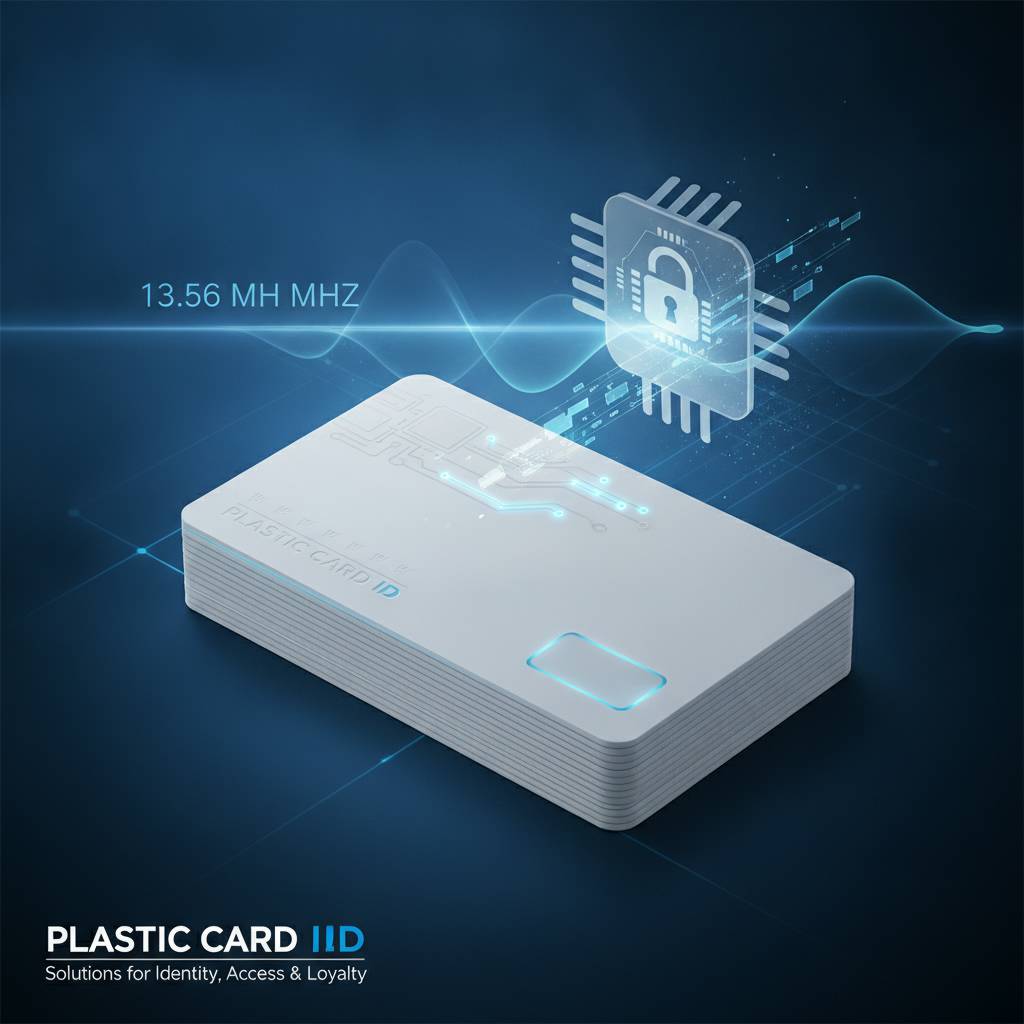 MIFARE is the family of 13.56 MHz smart card standards developed by NXP Semiconductors and deployed in hundreds of millions of access control, transit, and campus identity applications worldwide. Within the MIFARE family, MIFARE Classic offers basic sector-based memory storage, MIFARE Plus adds AES encryption to a cost-effective platform, and MIFARE DESFire EV2 and EV3 represent the gold standard for secure, multi-application contactless credentials.
Blank MIFARE DESFire cards sold by Plastic Card ID arrive as blank slates in the truest sense: the chip is factory-default, awaiting application-layer programming by your access control software or card management system. DESFire's segmented file structure allows a single card to carry separate, independently secured applications - door access, cashless vending, parking, gym check-in - without any application knowing what the others are doing. This architecture is why universities, hospitals, and enterprise campuses increasingly choose DESFire as their credential platform.
Security Features That Set DESFire Apart
MIFARE DESFire EV3 supports AES-128 encryption for both stored data and communication between card and reader. Every transaction involves mutual authentication: the reader verifies the card, and the card verifies the reader. This bidirectional trust eliminates a class of attacks that can defeat simpler proximity card systems. For organizations where physical security is non-negotiable, DESFire is the defensible choice.
Additionally, DESFire supports diversified keys - meaning each card carries a unique cryptographic key derived from a master key, rather than sharing a single key across all cards in the program. If one card is compromised, revoked, or cloned by a sophisticated attacker, the rest of your credential population remains secure. This is the kind of architecture that satisfies enterprise IT security requirements and government procurement standards.
Multi-Application Cards: One Card, Many Uses
One of the most compelling arguments for deploying blank DESFire cards is the multi-application capability described above. Consider a corporate campus scenario: an employee's single card grants building access, starts their computer login session via PACS integration, loads value for the cafeteria, and registers their arrival at a secure lab. Four separate systems, one card, seamless experience.
This consolidation reduces card issuance costs, simplifies employee onboarding, and eliminates the wallet clutter that comes with carrying separate credentials for separate systems. For CPE, supplying blank DESFire cards to organizations embarking on campus card consolidation projects is a straightforward process - the cards arrive ready for your card management system to initialize and personalize.
Choosing Between MIFARE Classic and MIFARE DESFire
- MIFARE Classic 1K/4K: Suitable for low-security environments with legacy MIFARE Classic readers. Lower cost per card. Not recommended for new high-security deployments due to known cryptographic vulnerabilities.
- MIFARE Plus: A direct upgrade path from Classic, adding AES encryption while maintaining backward compatibility with existing reader infrastructure in some modes. Good mid-range option.
- MIFARE DESFire EV2: Strong security, widely supported, excellent for most enterprise and campus deployments today.
- MIFARE DESFire EV3: The current generation. Adds Secure Dynamic Messaging (SDM), enhanced privacy features, and improved transaction speed. The best available blank proximity card technology for demanding applications.
- Dual-Frequency Cards: Carry both 125 kHz and 13.56 MHz chips. Ideal for organizations mid-migration, allowing a single card to work with old and new readers simultaneously during transition periods.
Printing on Blank Proximity Cards: Building Your Complete Card Program
A blank proximity card's electronic functionality is only half the story. The visual surface - what the cardholder sees, what a security guard checks, what a visitor reads - communicates your organization's identity and the card's purpose at a glance. A proximity card that also carries a professional printed photo ID is dramatically more useful than a blank white card with a handwritten name. The right card printer turns blank proximity cards into complete, professional credentials in minutes.
Plastic Card ID carries a full lineup of card printers from Evolis, Zebra, and Fargo, along with the ribbons, cleaning kits, and consumables needed to keep production running smoothly. Whether your program issues 50 cards a month or thousands, there is a printer model calibrated to your volume, desired print quality, and budget. The printers are designed to handle PVC proximity cards without damaging the embedded antenna - a detail that matters when you are investing in RFID-enabled cards.
Card Printer Compatibility with Proximity Cards
Not every printer handles every card type equally. Proximity cards - particularly clamshell-format or dual-frequency cards - are thicker than standard 30 mil PVC cards, and some older printer models cannot accommodate the increased card thickness. Before purchasing a printer for a proximity card program, confirming the printer's accepted card thickness range is essential. Printers from Evolis, Zebra, and Fargo sold by CPE are specified for compatibility with standard proximity card thicknesses.
Print quality on proximity cards is the same as on standard PVC: full-color dye-sublimation printing delivers photo-realistic employee portraits, crisp logos, and clean barcodes or QR codes. Adding a laminate overlay during printing provides additional surface protection, extending the visual life of the card significantly in high-wear environments.
Adding Magnetic Stripes to Your Proximity Card Program
Many organizations layer a magnetic stripe onto their proximity cards to support secondary applications that rely on swipe-based readers. Time clock terminals, parking gate systems, and point-of-sale integrations often use magnetic stripe data. Blank proximity cards with co-located magnetic stripes are available from Plastic Card ID in both HiCo (high-coercivity, more durable) and LoCo (low-coercivity) configurations.
HiCo magnetic stripes are the right choice for most access and ID programs: they resist accidental erasure from proximity to common magnetic sources and hold their data reliably through years of use. LoCo stripes are appropriate for short-term or disposable cards where long data retention is not a priority. Combining proximity chip technology with a magnetic stripe gives your card program maximum versatility without increasing card size.
Phone Support for Card Program Setup
Setting up a proximity card program involves more variables than most buyers anticipate on first encounter - frequency selection, facility code management, reader compatibility, printer selection, ribbon choice, and personalization workflow all require coordinated decisions. The team at Plastic Card ID is available to help you navigate every step. Call 800.835.7919 to speak directly with a knowledgeable card program specialist who has helped thousands of organizations launch and scale successful card programs across the United States.
Whether you are issuing 100 access cards for a new office or scaling an existing program from hundreds to thousands of credentials, CPE has the inventory, expertise, and partnership orientation to make the process straightforward. Long-term relationships with clients are the foundation of how Plastic Card ID operates - not one-time transactions.
Buying Blank Proximity Cards: What to Look For and What to Ask
Purchasing blank proximity cards for the first time - or switching suppliers after a disappointing experience - raises practical questions that deserve direct answers. Card quality varies more than buyers expect across the market, particularly in antenna construction and chip consistency. A card that reads reliably at two inches in testing may fail intermittently at one inch after six months of use if antenna quality control is poor. Sourcing from a supplier with 25-plus years of verified performance history matters.
Beyond chip quality, consider packaging, minimum order quantities, and fulfillment speed. Plastic Card ID serves programs ranging from 50 cards per month to mass production in the tens of thousands, which means the ordering process is designed to accommodate both the small business issuing employee badges one at a time and the enterprise refilling a high-volume credential inventory on a monthly purchase schedule.
Minimum Orders, Pricing, and Volume Breaks
Blank proximity cards typically carry a higher per-unit cost than standard blank PVC cards due to the embedded electronics. Entry-level 125 kHz proximity cards in small quantities may range from $1.50-$4.00 per card depending on format and volume. MIFARE DESFire EV3 cards in small quantities may range from $3.00-$8.00 per card, with meaningful volume breaks available as order sizes increase. Buying in larger quantities almost always delivers significant per-card savings, and organizations with predictable ongoing demand are well served by committing to volume orders.
For organizations uncertain about volume needs, starting with a smaller quantity to validate reader compatibility and workflow is perfectly reasonable. Plastic Card ID supports this exploratory approach - it is better to test properly before committing to a large inventory than to discover a compatibility issue after the fact.
Validating Reader Compatibility Before You Order
The single most common source of frustration in proximity card purchasing is ordering cards that do not communicate correctly with existing readers. Compatibility is determined by frequency, protocol, and in some cases manufacturer-specific encoding formats. Before placing any order, gather the model numbers of your existing card readers and access control panels. This information allows CPE to confirm card compatibility with confidence before your order ships.
If you are not certain what readers are deployed in your facility, your access control system integrator or the building management team should have documentation. For multi-site organizations inheriting access systems from prior tenants or acquisitions, a brief physical audit of reader model numbers is worth the time investment. Compatibility confirmed upfront saves significant cost and delay downstream.
Specialty Proximity Card Options
Beyond standard white PVC proximity cards, Plastic Card ID offers several specialty configurations worth knowing about. Clear proximity cards - fully transparent PVC with the same embedded electronics - allow organizations to showcase a printed design without any white card background showing through. This is popular in hospitality and premium membership programs where aesthetics carry real weight with cardholders.
Hotel key cards represent a major deployment segment for 13.56 MHz smart cards, typically using proprietary encoding formats managed by the property management system. Casino player cards often combine proximity chip technology with magnetic stripes and high-quality full-color printing to support both access and loyalty tracking simultaneously. For specialized deployments, Plastic Card ID has the catalog depth and expertise to match the right blank card to the right application.
Why Plastic Card ID Is the Right Partner for Your Proximity Card Program
There is a meaningful difference between a commodity card vendor and a strategic partner who understands that your card program is a business-critical infrastructure element. Plastic Card ID has built its reputation across more than 25 years and 100,000-plus customer relationships by operating as the latter. Every card program is different, and the ability to access genuine expertise - not a chatbot or a generic FAQ - when you have a specific question is worth more than a few cents per card in savings from a discount supplier.
The combination of broad catalog depth (blank PVC, proximity, RFID, magnetic stripe, smart chip, clear, frosted, specialty formats), hardware (Evolis, Zebra, Fargo printers), and consumables (ribbons, cleaning kits, card carriers, sleeves, affixing and mailing services) means that organizations can source their entire card program infrastructure from a single trusted relationship. Fewer vendors, less complexity, more confidence.
Supporting Every Scale of Card Program
A nonprofit issuing volunteer ID badges twice a year has legitimately different needs from a regional healthcare network issuing proximity-enabled employee credentials to 3,000 staff members across 12 facilities. Plastic Card ID serves both - and every scale in between - with the same quality of product and the same commitment to getting the order right. Scale does not determine the quality of service you receive; it simply determines which products and quantities make the most sense for your program.
For growing organizations, having a supplier who can scale with the program is strategically valuable. Starting with 200 blank proximity cards and a single desktop printer today does not lock you into that scale permanently. As card program volume grows, CPE can support the transition to higher-capacity printers, larger card inventory orders, and expanded card types without requiring a supplier change mid-program.
Value-Added Services That Simplify Card Program Operations
Beyond cards and printers, Plastic Card ID offers a suite of services that address the operational reality of running a card program. Card affixing and mailing services allow organizations to outsource the physical distribution of personalized cards to remote employees, members, or program participants - a significant time saver for HR and operations teams managing large issuance events. Card carriers and sleeves protect finished cards during mailing and first-day handling.
Printer maintenance consumables - cleaning kits specifically - are one of the most under-appreciated elements of a successful card program. A dirty printer produces inconsistent print quality and eventually damages both the print head and the cards themselves. Plastic Card ID supplies the correct cleaning kits for every printer model in its lineup, making it easy to maintain print quality and extend equipment life without guesswork.
Getting Started: Your Next Steps
If you have reached this point in the page, you have a solid foundational understanding of blank proximity card technology, the differences between 125 kHz and 13.56 MHz formats, how blank cards become complete credentials with the right printing equipment, and what to look for when selecting a card supplier. The next step is practical: identify your existing reader infrastructure, clarify your card volume needs, and reach out to Plastic Card ID to confirm compatibility and get accurate pricing for your specific program requirements.
Starting a new program or transitioning an existing one does not need to be complicated. With the right supplier relationship, the process from initial consultation to receiving your first order of blank proximity cards can be accomplished quickly and with confidence.
Call Plastic Card ID today at 800.835.7919 - your proximity card program deserves a partner who has been doing this right for over 25 years and is ready to bring that experience to work for your organization.
Previous Page