Blank Plastic Cards for Employee ID Badges: A Guide
Table of Contents []
- Blank Plastic Cards for Employee ID Badges - Plastic Card ID
- Why Blank CR80 Cards Are the Workhorse of In-House ID Programs
- Magnetic Stripe Cards: Encoding Identity and Access Together
- RFID and Proximity Cards: Contactless Access Control for Modern Workplaces
- Card Printers: The Engine Behind Your In-House Badge Program
- Building a Scalable Employee Badge Program: Practical Guidance
- Your Next Step Starts with Plastic Card ID
Blank Plastic Cards for Employee ID Badges - Plastic Card ID
Walk into almost any mid-sized company and you will find them everywhere - clipped to lanyards, swiped at entry doors, handed to visitors at the front desk. Employee ID badges are the quiet infrastructure of workplace identity. Yet many organizations are still printing on paper, laminating flimsy sheets, or ordering pre-printed cards from vendors who take weeks to deliver. There is a better way, and it starts with a single decision: switch to blank plastic cards and print in-house.
Plastic Card ID has supplied blank and custom plastic cards to businesses across the United States for over 25 years. More than 100,000 customers have trusted us with their card programs - from small nonprofits issuing 50 staff badges a month to large enterprises printing tens of thousands of credentials annually. The result? Faster turnaround, lower per-card costs, and complete design control from day one.
| Card Type | Best Use Case | Standard Size | Key Feature |
|---|---|---|---|
| Blank White PVC CR80 | Employee ID, membership | 3.375" x 2.125" | Universal printer compatibility |
| HiCo Magnetic Stripe | Access control, time-keeping | CR80 / 30 mil | High-coercivity, long-lasting data |
| LoCo Magnetic Stripe | Short-term badges, events | CR80 / 30 mil | Lower coercivity, easy encoding |
| Proximity / RFID Card | Contactless access control | CR80 / 30 mil | Tap-and-go convenience |
| Smart Chip Card | High-security environments | CR80 / 30 mil | Encrypted data storage |
Why Blank CR80 Cards Are the Workhorse of In-House ID Programs
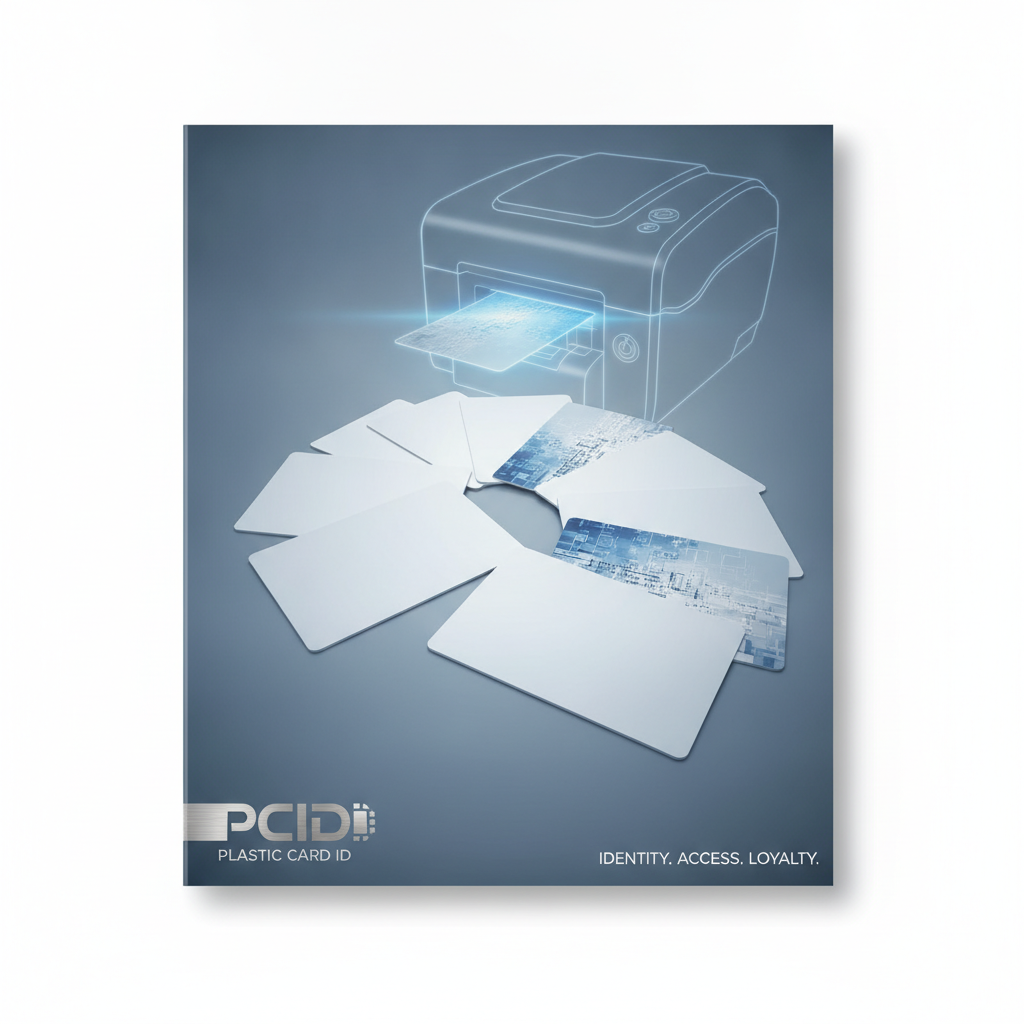 The CR80 standard is not arbitrary. It matches the exact dimensions of a standard credit card - 3.375 inches by 2.125 inches, 30 mil thick - which means it fits every badge holder, card printer, and wallet slot your team already uses. Blank CR80 PVC cards are the starting point for nearly every successful in-house ID program in the country, and for good reason: they give organizations total creative control at a fraction of the cost of outsourcing card production.
When a blank card arrives at your facility, it is a clean canvas. Print a full-color photo ID on it. Encode it with employee data. Add a magnetic stripe for time-and-attendance systems. The card becomes whatever your organization needs it to be - and that flexibility is precisely what makes the blank card format so powerful for growing businesses.
The CR80 Dimension Standard Explained
ISO 7810 defines the CR80 card as the international standard for identification documents, and every major card printer on the market is built around it. That uniformity eliminates guesswork when you are purchasing supplies, upgrading equipment, or training new staff. Consistency in card dimensions means consistency in your entire badge program, from printer settings to badge reel compatibility.
At 30 mil thickness, these cards are rigid enough to survive daily handling - lanyard clips, door reader swipes, wallet storage - without bending, creasing, or delaminating. Paper-based alternatives simply cannot compete with that durability in real-world workplace conditions.
White vs. Colored Stock: Which Should You Order?
Most organizations default to white blank cards, and there is logic to that choice: white accepts full-color dye-sublimation printing with vivid, accurate results. But colored stock - available in a range of solid hues - opens design possibilities for organizations that color-code departments, security clearance levels, or visitor versus employee access tiers.
Colored blank cards can create an immediate visual cue that security personnel recognize across a room. Combine colored stock with a printed overlay and you have a badge that communicates access level before anyone reads the text. CPE stocks a solid lineup of colored card options to support these tiered badge strategies.
Frosted and Clear Plastic Cards for Specialty Badging
Not every ID program calls for a standard white card. Frosted and clear plastic cards offer a distinctive, professional look that many organizations - tech companies, design studios, hospitality brands - prefer for their staff credentials. The translucency creates a visual effect that standard white cards cannot replicate.
Clear cards are particularly effective when the badge holder or lanyard clip becomes part of the design aesthetic. Specialty card stock makes an impression that plain white never could, and CPE carries both frosted and clear options in CR80 format, ready to run through your existing card printer.
Magnetic Stripe Cards: Encoding Identity and Access Together
A blank white card handles visual identity beautifully. But the moment an organization needs that same card to open a door, log a clock-in, or trigger a system event, the conversation moves to magnetic stripe technology. Magnetic stripe cards - both HiCo and LoCo - remain one of the most widely deployed technologies in workplace access and time-tracking systems across the United States.
The stripe on the back of the card holds encoded data that readers interpret in milliseconds. It is fast, reliable, and compatible with a staggering range of legacy and modern systems. For organizations already running mag-stripe readers at their doors or time clocks, adding a magnetic stripe to your blank employee ID card is the obvious path forward.
HiCo vs. LoCo: Making the Right Choice
High-coercivity (HiCo) magnetic stripes resist accidental erasure from everyday magnetic fields - phone cases, security tags, proximity to other cards. They are the right choice for long-term employee badges that need to survive months or years of daily use. HiCo cards are the professional standard for permanent employee credentials and access control environments.
Low-coercivity (LoCo) stripes are easier to encode and perfectly suited for short-lived applications: visitor badges, temporary event credentials, or contractor passes that will be deactivated within weeks. The distinction matters because using the wrong stripe type in the wrong context leads to premature data failure or unnecessary encoding expense.
Integrating Magnetic Stripe into Your Badge Program
Adding mag-stripe encoding to your in-house card program requires a printer with an integrated encoding module - a feature available across the Evolis, Zebra, and Fargo printer lines that Plastic Card ID carries. The workflow is straightforward: design your card layout, queue your print job, and the printer handles both the visual print and the stripe encoding in a single pass.
Call 800.835.7919 to speak with a CPE specialist about which printer configuration handles mag-stripe encoding for your specific access control system. Not every reader uses the same data format, and getting that right at the equipment selection stage saves significant headaches later.
Time-and-Attendance Applications for Magnetic Stripe ID Cards
Beyond door access, magnetic stripe employee ID badges are the backbone of swipe-based time-and-attendance systems at manufacturing facilities, healthcare organizations, and multi-location retail operations. Each swipe creates a timestamped data event tied to the encoded employee ID on the card's stripe.
These systems depend on cards that encode consistently and read reliably day after day. High-quality blank HiCo magnetic stripe cards from a trusted supplier mean fewer failed reads, fewer frustrated employees, and fewer IT support tickets - a simple operational win that compounds over time across a large workforce.
RFID and Proximity Cards: Contactless Access Control for Modern Workplaces
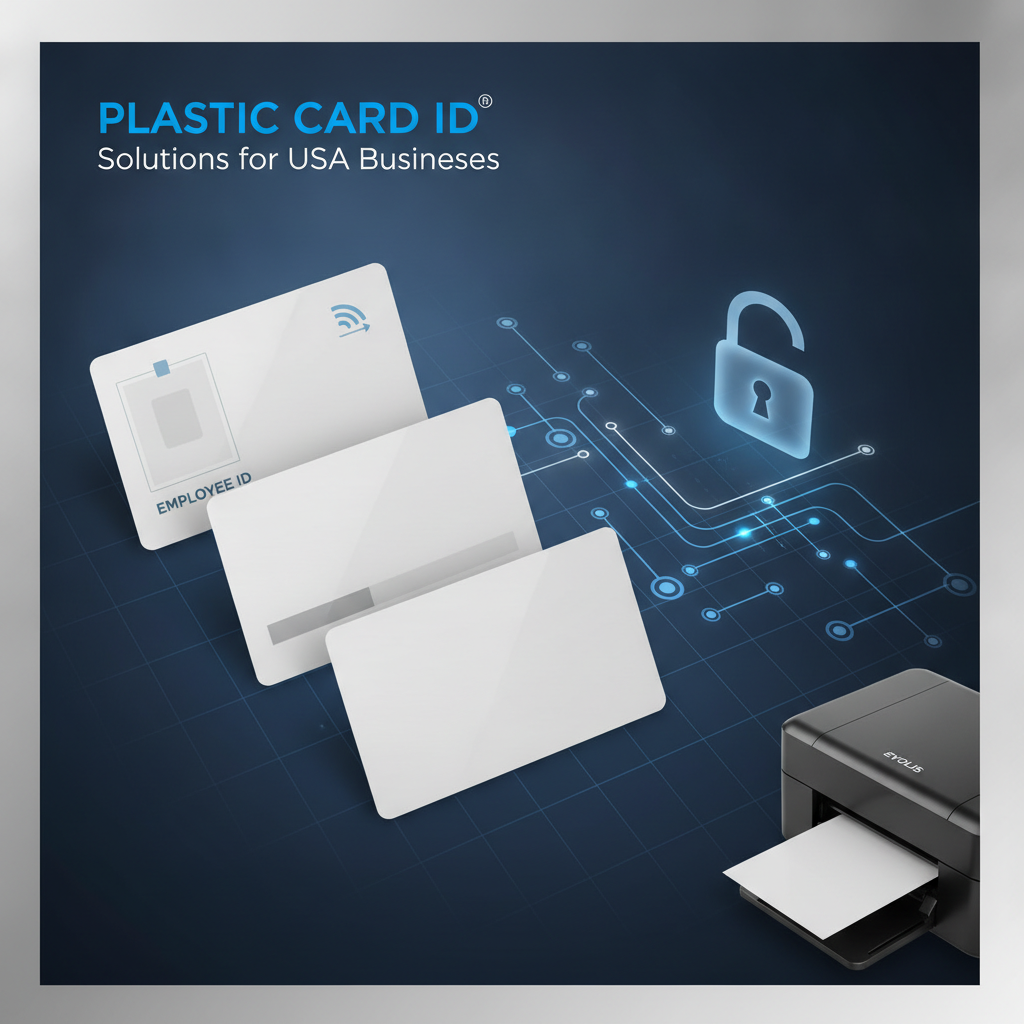 Contactless technology has moved from cutting-edge to expected in the past decade, and for good reason. Proximity cards and RFID smart cards offer faster throughput at entry points, reduced wear on card readers, and support for high-security encryption standards that magnetic stripes cannot match. For organizations building or upgrading an access control infrastructure, these cards represent a genuine step forward.
The experience is simple for the end user: hold the card near the reader, the door opens. No swipe, no insertion, no alignment required. But behind that effortless tap is a sophisticated exchange of encrypted data - particularly in advanced formats like MIFARE DESFire - that makes these cards considerably harder to clone or compromise than older technologies.
Proximity Cards for Standard Access Control
Proximity cards operate at 125 kHz and are compatible with the access control systems deployed in the majority of commercial buildings, office parks, and campuses across the United States. If your building already runs a proximity-based door system, these cards will slot directly into your existing infrastructure.
Blank proximity cards can be printed with full-color ID artwork on the front - name, photo, department, logo - while the embedded antenna and chip handle the contactless communication on the back end. The card does double duty: a visual employee ID and a functional access credential in a single CR80 card.
RFID Smart Cards and MIFARE DESFire Technology
For high-security environments - government contractors, data centers, healthcare facilities with controlled medication storage - standard proximity technology may not meet the security policy requirements. MIFARE DESFire smart cards operate at 13.56 MHz and support AES-128 encryption, making them one of the most secure contactless card formats commercially available.
These cards support multiple applications on a single card: one sector for door access, another for cafeteria payments, another for system login. CPE carries RFID smart cards suited for organizations with complex, layered access control requirements that go beyond simple door open/close functionality.
Choosing the Right Contactless Format for Your Organization
- 125 kHz proximity cards - Best for standard commercial access control, compatible with most legacy systems, cost-effective for large deployments
- 13.56 MHz RFID cards - Suitable for modern multi-application environments, faster read speeds, higher data storage capacity
- MIFARE DESFire - Recommended for high-security applications requiring AES encryption and mutual authentication between card and reader
- Combo cards - Magnetic stripe plus RFID in a single card for organizations running parallel legacy and modern systems simultaneously
- Smart chip cards - Contact-based chip cards for environments requiring ISO 7816 compliance and secure data transactions
Selecting the wrong technology at procurement time is an expensive mistake. Reach out to the CPE team before placing a large order - matching card technology to your reader infrastructure is exactly the kind of consultation that prevents costly re-orders and system incompatibilities.
Card Printers: The Engine Behind Your In-House Badge Program
Blank plastic cards are only half of the equation. Without the right card printer, those cards stay blank. Plastic Card ID carries the full lineup from three of the industry's most respected printer brands: Evolis, Zebra, and Fargo. Each brand brings distinct strengths, and the right choice depends on your print volume, encoding needs, and budget.
In-house printing transforms your card program operationally. Need a replacement badge for a new hire starting Monday? Print it Friday afternoon. Need to issue temporary contractor credentials at 7 AM? Done before the first shift starts. The speed and control of in-house printing is one of the most underappreciated advantages in facilities management.
Evolis Card Printers: Precision for Every Volume
Evolis printers are known for their clean design, reliable performance, and intuitive software. The Primacy 2 handles single- and dual-sided printing with impressive speed, making it an excellent choice for HR departments issuing new employee badges on a regular cadence. The Zenius handles smaller volumes with equal print quality at a more accessible price point.
All Evolis models support optional encoding modules - magnetic stripe, smart chip, and contactless RFID - allowing organizations to configure the printer to match exactly their card program requirements. CPE carries Evolis printers, ribbons, and cleaning kits to keep your equipment running at peak performance.
Zebra and Fargo: High-Volume and High-Security Options
Zebra card printers are engineered for demanding, high-volume environments. The ZC300 and ZC500 series deliver consistent results across large production runs, making them the go-to choice for enterprise HR teams, large healthcare systems, and educational institutions issuing thousands of credentials per year. Zebra's reliability under sustained production loads is genuinely difficult to match.
Fargo printers - now part of the HID Global family - are the preferred platform for high-security government and corporate identity programs. The HDP series uses high-definition printing technology that produces exceptional image quality, and the security feature options on Fargo printers are unmatched for organizations that need holographic overlaminates, UV-reactive printing, or custom security elements on their employee ID badges. Call 800.835.7919 to discuss which printer best fits your production volume and security requirements.
Printer Supplies: Ribbons, Cleaning Kits, and Card Carriers
A card printer is only as good as the supplies running through it. Genuine OEM ribbons from Evolis, Zebra, and Fargo produce print quality and color accuracy that third-party ribbons rarely match. Using the correct ribbon for your specific printer model also protects the printhead - a component that, if damaged by incompatible consumables, can cost more to replace than the printer originally cost.
Regular cleaning with manufacturer-approved cleaning kits prevents dust contamination, streaking, and premature printhead wear. Plastic Card ID stocks the full range of cleaning supplies, card carriers for protecting finished badges during distribution, and card sleeves for everyday badge protection - everything your card program needs beyond the card itself.
Building a Scalable Employee Badge Program: Practical Guidance
Organizations that run successful long-term card programs share a few common practices. They standardize on a card format early. They invest in the right printer for their actual volume - not their aspirational volume, and not a printer so underpowered it creates a bottleneck. They maintain a supply buffer so they are never scrambling for cards when a new employee starts or a card is lost.
Scale matters too. A company issuing 50 employee badges per month has different needs than a logistics operation onboarding 500 seasonal workers every quarter. Plastic Card ID works with organizations across the full spectrum of those volumes, and the advice we provide is calibrated to your actual program - not a generic one-size-fits-all recommendation.
Calculating Your True Per-Card Cost
The sticker price of a blank card is only part of the cost equation. Add ribbon cost per card, cleaning supply amortization, and printer depreciation, and you get the true cost per issued badge. For most mid-sized organizations running a modern card printer, that number lands well below what outsourced card printing charges - and that gap widens as volume increases.
Understanding your real cost-per-card empowers better budget conversations with finance leadership and makes the ROI case for in-house printing concrete rather than theoretical. CPE can walk you through a cost comparison based on your specific volume and card type at any time.
Common Mistakes to Avoid When Ordering Blank Cards
- Ordering LoCo magnetic stripe cards for a permanent employee badge program - use HiCo for long-term credentials
- Purchasing generic blank cards that are not calibrated to your specific printer brand, leading to feed errors and printhead jams
- Ordering in quantities too small to benefit from volume pricing while still carrying the operational overhead of in-house printing
- Failing to account for card losses and reprints when estimating monthly card consumption
- Using incompatible ribbon types on colored card stock, resulting in washed-out or inaccurate color reproduction
From 50 Cards a Month to Mass Production
One of the clearest advantages of working with Plastic Card ID is that the program support does not change based on your order size. A nonprofit issuing 50 staff credentials per month receives the same product quality and supplier expertise as a national retailer running tens of thousands of loyalty and ID cards per quarter. That consistency is what building a long-term supplier relationship actually looks like.
As your organization grows - new locations, seasonal hiring surges, expanded access control rollouts - your card program needs to scale without friction. Having a supplier who understands your program's history and requirements makes that scaling faster and less error-prone than starting the sourcing process from scratch each time.
Your Next Step Starts with Plastic Card ID
Twenty-five years and more than 50 million cards supplied gives a company a particular kind of insight into what makes ID badge programs succeed - and what makes them fail. The organizations that run the smoothest programs share one trait: they chose a supplier who functions as a partner, not just a box shipper. That is what Plastic Card ID has always been built to do.
Whether you are launching a brand-new employee badge program, replacing a vendor who has been letting you down, or scaling an existing operation to meet growth demands, the starting point is the same: the right blank plastic card, matched to the right printer, backed by a team that knows the difference between a HiCo and LoCo stripe and exactly when each one matters.
Ready to build a badge program that works as hard as your team does? Call Plastic Card ID today at 800.835.7919 and speak directly with a card program specialist. From blank CR80 cards to full RFID access solutions, we have the products, the expertise, and the commitment to make your employee ID badge program run without a hitch - from day one and every day after.
Previous Page