Blank Plastic Cards for School ID Cards: Complete Guide
Table of Contents []
- Blank Plastic Cards for School ID Cards - Plastic Card ID
- Why Schools Choose Blank PVC Cards Over Pre-Printed Alternatives
- The Full Lineup of Blank Cards Available for School Programs
- Choosing the Right Card Printer for Your School's ID Program
- Common School Card Program Applications and Use Cases
- Buyer Tips: Getting the Most From Your School's Blank Card Purchase
- Frequently Asked Questions About Blank Plastic Cards for School ID Programs
- Start Your School ID Program the Right Way With Plastic Card ID
Blank Plastic Cards for School ID Cards - Plastic Card ID
School ID programs have quietly become one of the most important administrative investments a district, college, or private institution can make. And yet, so many programs struggle - not because of bad intentions, but because they started with the wrong materials. Blank plastic cards built to the CR80 standard change that equation entirely. They give schools the foundation to print professional, durable ID cards in-house, on demand, without outsourcing every batch to a third party.
Plastic Card ID has been supplying blank and custom plastic cards to schools, universities, and educational organizations across the United States for over 25 years. More than 100,000 customers. More than 50 million cards sold. That kind of experience is not accidental - it reflects a deep understanding of what institutions actually need when they commit to running a card program that works year after year.
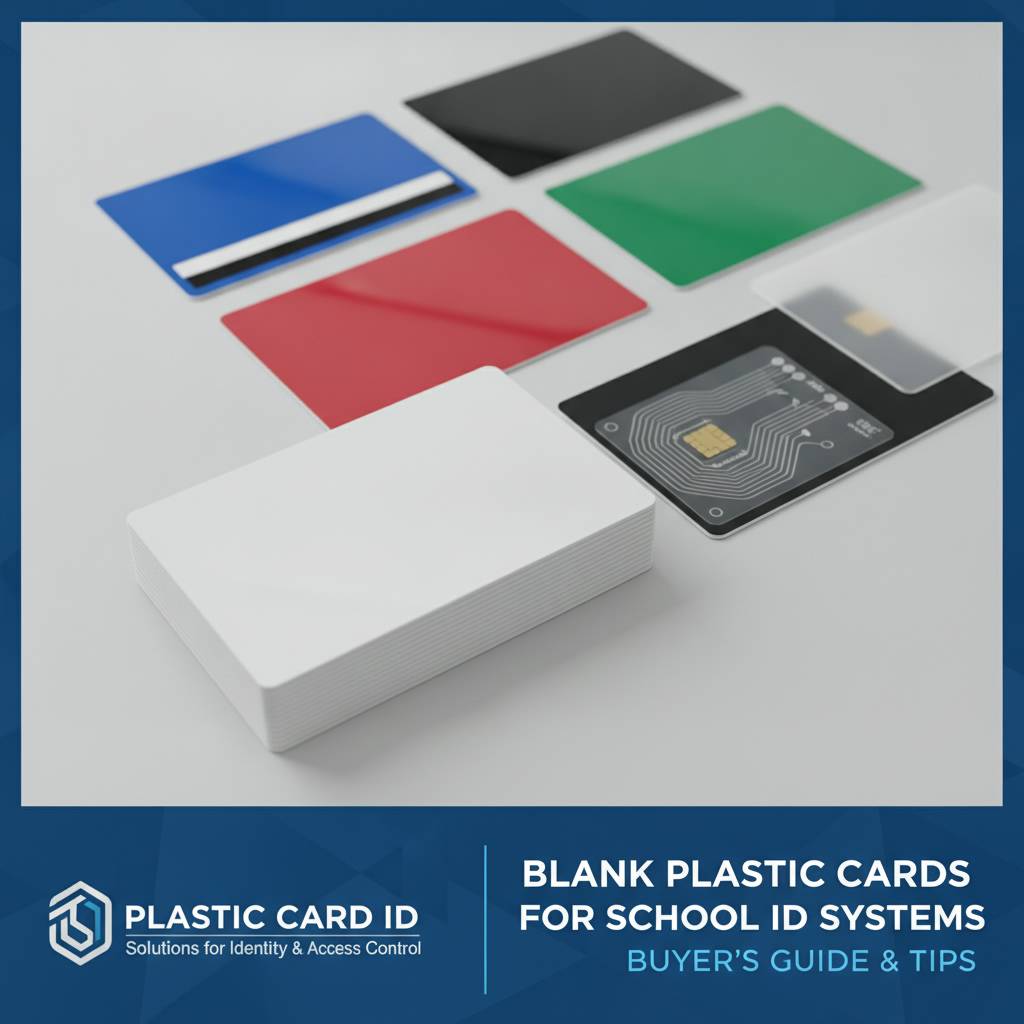
| Card Type | Best Use in Schools | Key Feature |
|---|---|---|
| Blank PVC CR80 Cards | Student and Staff ID Cards | Full-surface printable, 30 mil thickness |
| Magnetic Stripe Cards (HiCo) | Library Cards, Meal Programs | High-coercivity, long data retention |
| RFID Proximity Cards | Access Control, Building Entry | Contactless, fast authentication |
| Smart Chip Cards | Multi-function Campus Cards | Stores data, supports multiple applications |
| Colored PVC Stock | Department or Grade Differentiation | Instant visual identification by color |
Why Schools Choose Blank PVC Cards Over Pre-Printed Alternatives
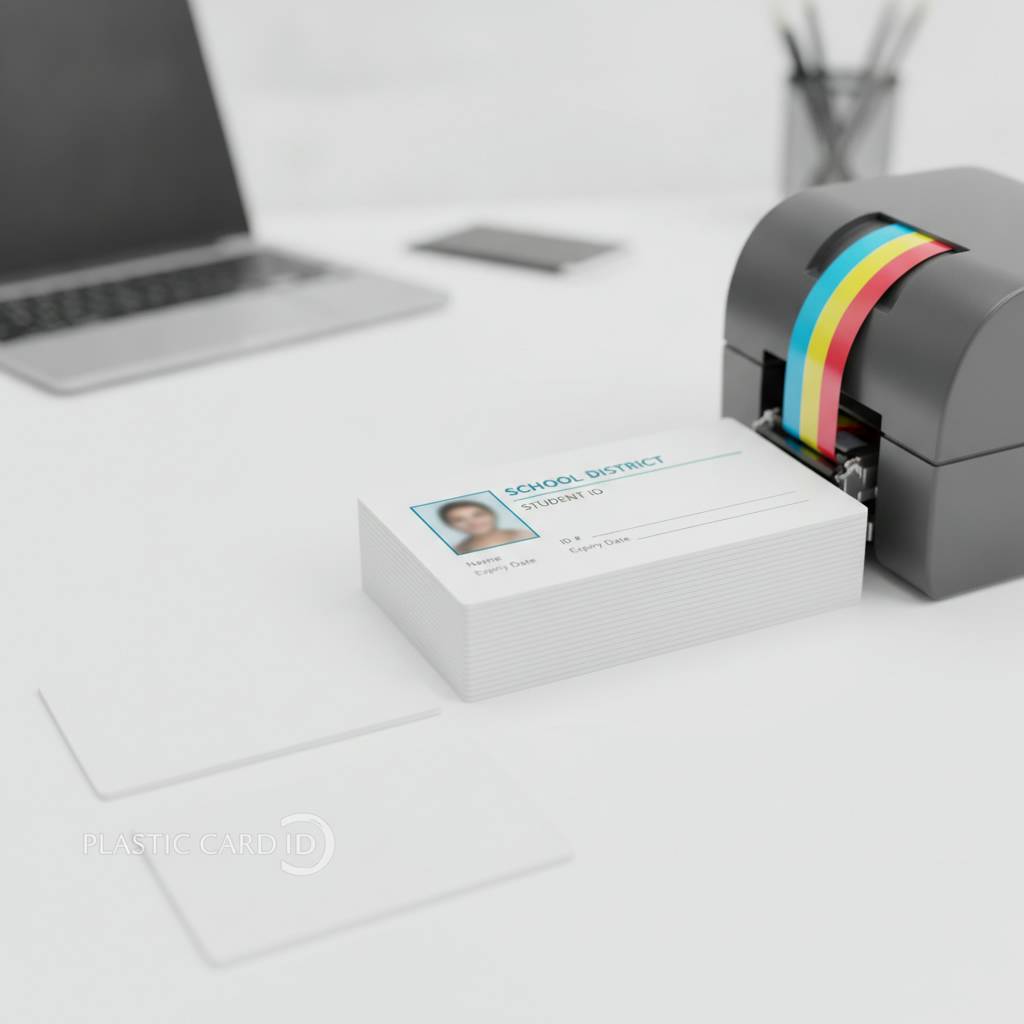 Here is the thing about pre-printed ID cards: you are always waiting on someone else. Minimum order requirements, turnaround windows, shipping delays - every variable is out of your control. Blank plastic cards flip that dynamic. With blank cards and an in-house card printer, your school's ID program runs on your schedule. A new student enrolls on a Tuesday? Their card is ready by Tuesday afternoon.
The cost advantages become obvious quickly. Pre-printed cards from an outside vendor cost more per unit once you factor in design fees, setup charges, and shipping. Blank CR80 cards from CPE carry a significantly lower per-card cost, and that gap widens as your program scales. Schools printing 500 or 5,000 cards a year find that blank cards paired with an in-house printer deliver a return on investment within the first academic year, often sooner.
The CR80 Standard and Why It Matters for School Cards
CR80 is not just an industry term - it is the global standard for plastic card dimensions. At 3.375 inches by 2.125 inches and 30 mil thick, a CR80 card fits every standard card printer, wallet slot, badge holder, and card reader on the market. Choosing CR80-compliant blank cards means total compatibility with every piece of hardware your school already owns or plans to purchase.
That standardization matters enormously in an educational setting. Students carry these cards in their wallets, backpacks, and lanyards. Staff swipe them at readers dozens of times a day. A card that warps, cracks, or degrades quickly creates headaches for administrators and students alike. PVC plastic at the 30 mil standard holds up to that kind of daily handling in ways that paper and laminate alternatives simply cannot.
In-House Printing Versus Outsourcing: A Practical Breakdown
Many schools start by outsourcing their ID card printing, then switch to in-house production once they see the math. Control, speed, and long-term cost savings are the three factors that drive this shift most consistently. When a card is lost, stolen, or damaged, reprinting in-house means a two-minute task rather than a two-week wait.
Outsourcing also creates data security concerns. Student photos, names, grades, and ID numbers are sensitive information. Transmitting that data to a third-party printer introduces risk. Running your card program internally with blank PVC cards and a dedicated printer keeps that data where it belongs - inside your institution's systems and under your direct control.
Volume Flexibility From Small Schools to Large Districts
CPE serves educational institutions of every size, from single-campus private schools printing 50 cards a semester to large public school districts running tens of thousands of student IDs annually. There is no order too small and no volume too large for the programs they support. Flexible ordering means schools can stock up for back-to-school season or replenish mid-year without penalties or lengthy lead times.
This scalability is a genuine advantage. A middle school growing its enrollment does not need to redesign its card program - it simply orders more blank stock. A university expanding its campus access system can add RFID-enabled cards to its existing setup without disrupting the broader program. The infrastructure grows with the institution, not against it.
The Full Lineup of Blank Cards Available for School Programs
Not every school card program needs the same card. A kindergarten student carrying a basic ID for school bus identification has very different requirements than a university student whose card doubles as a dormitory access credential and campus meal account. Plastic Card ID carries the full spectrum of blank plastic card options so that institutions can match the right card to the right application without overspending or settling for less than they need.
Understanding what is available is the first step in designing a card program that actually works long-term. Too many schools default to the most basic option without knowing that a modest upgrade - adding a magnetic stripe, for instance - can unlock a whole layer of functional capability without dramatically changing the per-card cost.
Standard Blank PVC Cards for Student and Staff IDs
The standard blank white CR80 PVC card is the workhorse of school ID programs. It is clean, smooth, and ready to receive any print from a dye-sublimation or direct-to-card printer. Both sides print beautifully, allowing schools to use one side for the student's photo and identifying information and the other for school policies, barcodes, or emergency contact information.
These cards accept overlaminates for added durability - a particularly important consideration for ID cards that will be carried by younger students who are harder on their belongings. A properly overlaminated PVC card can withstand years of daily use without fading, cracking, or losing the clarity of the printed image. For schools that want professional results without an enormous budget, standard blank PVC cards are almost always the right starting point.
Magnetic Stripe Cards for Library, Cafeteria, and Attendance Systems
Magnetic stripe cards - available in both HiCo (high-coercivity) and LoCo (low-coercivity) formats - add a layer of functional data storage that transforms a simple ID card into a multi-use campus tool. HiCo cards are the preferred choice for school programs because they are far more resistant to accidental demagnetization from proximity to other magnetic sources, including the types of magnets commonly found in backpack closures and locker doors.
Schools that run library checkout systems, cafeteria point-of-sale systems, or automated attendance tracking find that magnetic stripe student ID cards simplify daily operations significantly. One card handles check-in, lunch account access, and book borrowing. Students benefit from carrying fewer things; administrators benefit from cleaner, faster data collection tied directly to each student's ID.
Reach out to CPE at 800.835.7919 to discuss which magnetic stripe specification best matches your school's existing reader infrastructure before placing your first order.
RFID and Proximity Cards for Campus Access Control
Secondary schools, colleges, and universities with controlled-access buildings increasingly rely on RFID and proximity card technology. Blank proximity cards embed an antenna and a chip inside a standard CR80 card body. When held near a compatible reader, the card transmits a unique identifier that either grants or denies access - without the student needing to swipe, insert, or even remove the card from their wallet or badge holder.
For larger campuses managing access to dormitories, labs, athletic facilities, and administrative offices, proximity cards offer a security upgrade that pays for itself quickly in reduced lock-and-key management and cleaner access audit trails. Cards can be deactivated and reissued instantly when a student graduates or a staff member departs, with no physical rekeying required anywhere on campus.
Choosing the Right Card Printer for Your School's ID Program
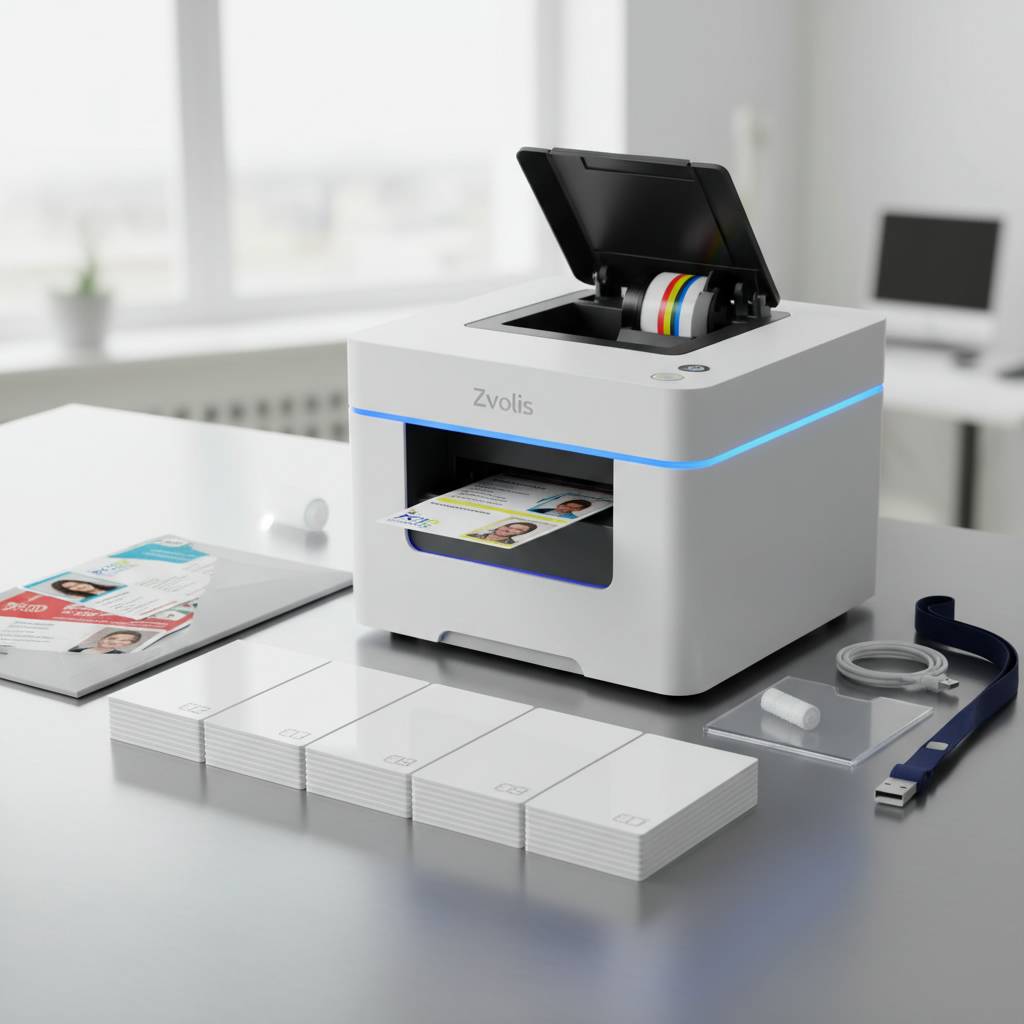 A blank plastic card is only as capable as the printer behind it. Plastic Card ID carries a curated lineup of card printers from three of the industry's most respected manufacturers - Evolis, Zebra, and Fargo - each offering different balances of print speed, image quality, encoding capability, and budget fit. Choosing the right printer is just as important as choosing the right cards, and the two decisions should be made together.
Schools should consider total annual card volume, whether they need single-sided or dual-sided printing, and whether they require built-in encoding for magnetic stripe or smart chip cards. CPE helps institutions work through these decisions based on real-world usage scenarios, not just spec sheets.
Entry-Level Printers for Small Schools and Limited Budgets
A small private school or charter school printing 200 to 500 cards per year does not need an industrial-grade printer running at enterprise speeds. Entry-level single-sided printers from the Evolis lineup deliver sharp, professional-quality results at a price point that fits tighter administrative budgets. Many schools find that a single printer purchase pays for itself within one academic year when compared against the ongoing cost of outsourced printing.
These compact printers fit easily on an administrator's desk and require minimal training to operate. Ribbons and cleaning kits - both available through CPE - are simple to replace, keeping the printer running reliably without the need for outside technical support in most cases.
Mid-Range and High-Volume Printers for Districts and Universities
Larger institutions with hundreds or thousands of cards to produce during back-to-school periods need a printer that can sustain that workload without bottlenecks. Mid-range and high-volume models from Zebra and Fargo offer faster print speeds, larger ribbon capacities, and built-in encoding options that cover magnetic stripe, smart chip, and proximity card programming in a single pass. The efficiency gains at scale are substantial - a high-volume printer can process an entire grade's worth of student IDs in a fraction of the time it would take on an entry-level model.
Dual-sided printing capability is particularly valuable at this level. Both sides of the card are printed in a single pass, cutting production time in half and ensuring consistent alignment between front and back artwork. For schools running complex card designs with full-bleed photography on one side and encoded data on the other, dual-sided high-volume printers are often the only sensible choice.
Ribbons, Cleaning Kits, and Supplies That Keep Programs Running
A card printer without the right consumables is quickly an expensive paperweight. Plastic Card ID stocks the full range of printer ribbons - full-color YMCKO, monochrome, and specialty overlaminates - along with cleaning kits that protect print heads and maintain image quality over the long life of the printer. Consistent maintenance is the single most important factor in getting maximum lifespan from any card printer investment.
Schools that stock ribbons and cleaning supplies alongside their blank card inventory never face a situation where the printer is ready but the consumables are not. Ordering through a single supplier for both cards and supplies simplifies procurement, consolidates invoices, and reduces the administrative overhead of managing multiple vendor relationships.
Common School Card Program Applications and Use Cases
The blank card sitting in a box on a shelf is just a piece of plastic. What happens when it goes through a printer, gets encoded, or receives a student's photograph is where the real value emerges. Schools across the United States use blank plastic cards as the foundation for a remarkably wide range of programs, each solving a specific operational challenge.
Understanding the breadth of applications helps administrators think bigger about what a well-designed card program can accomplish, beyond the basic ID-in-a-lanyard use case that most people picture first.
Student and Staff Identification
The most fundamental use of blank plastic cards in schools is, of course, student and staff identification. A properly printed plastic ID card communicates legitimacy and professionalism in a way that a laminated paper card never will. Visitors, substitutes, and emergency responders can immediately identify students and staff members by their clearly printed, durable plastic cards - a genuine safety benefit that school administrators consistently cite as the primary driver of upgrading from paper to plastic.
Staff cards serve an additional security function by distinguishing authorized personnel from visitors at a glance. Combined with a colored lanyard or badge holder system, plastic staff IDs create a visual security layer that paper simply cannot replicate. Schools operating in multiple buildings or across multiple campuses find this visual differentiation particularly valuable.
Library Cards, Meal Cards, and Multi-Function Campus IDs
- Library checkout cards printed on magnetic stripe stock allow barcode or swipe-based check-in and check-out without manual look-up processes.
- Cafeteria meal cards with magnetic stripes or barcodes integrate directly with POS systems for faster lunch lines and accurate account management.
- Multi-function campus IDs combine photo ID, library access, meal account, and building access on a single card, reducing what students need to carry.
- Activity and event passes can be printed on colored PVC stock for quick visual identification during school events, field trips, or extracurricular activities.
- Parent volunteer and visitor badges printed on-demand from blank stock provide a professional temporary credentialing solution for anyone entering the building.
The consolidation of multiple functions onto a single plastic card is not just convenient - it reduces card loss rates, simplifies administration, and creates a more cohesive institutional identity. Students who carry one card that does many things tend to take better care of it than students managing a collection of single-purpose passes.
Access Control and Building Security
Schools increasingly face pressure to tighten building security without creating environments that feel institutional or unwelcoming. Proximity card access control systems strike that balance well. A student or staff member simply presents their card to a reader and moves on - no PIN codes to remember, no keys to lose, no signatures required. The experience is smooth, fast, and natural.
Administrative offices, computer labs, server rooms, athletic facilities, and after-hours entrances are all common access control points in modern school buildings. RFID-enabled blank cards that are programmed and printed in-house give schools full control over who has access to what, with audit logs that provide accountability without invasiveness.
Buyer Tips: Getting the Most From Your School's Blank Card Purchase
Buying blank plastic cards for a school ID program is not complicated, but a few smart decisions upfront can save meaningful time and money over the life of the program. The administrators who run the smoothest card programs tend to share a few common habits - and all of them are learnable.
How to Estimate Your Annual Card Volume Accurately
Start with your total enrollment and staff count, then add a buffer for replacements. Most schools find that 15 to 20 percent of their cards need to be replaced annually due to loss, damage, or changes in enrollment. Ordering slightly ahead of projected need is almost always better than running short mid-year, especially during high-demand periods like back-to-school registration or new staff onboarding cycles.
Consider whether your program will expand over time. A school adding a new grade level or a university opening a new dormitory will need additional card stock sooner than their baseline numbers suggest. Building that growth trajectory into initial volume estimates helps avoid the scramble of emergency mid-year reorders.
Matching Card Specifications to Your Existing Hardware
Before ordering blank cards with magnetic stripes or RFID capabilities, confirm the specifications your existing reader hardware requires. Not all magnetic stripe readers handle both HiCo and LoCo cards interchangeably, and RFID readers are frequency-specific - a 125 kHz proximity reader will not communicate with a 13.56 MHz smart card, and vice versa. A five-minute conversation with CPE before placing your order can prevent a costly specification mismatch that results in cards that do not work with your infrastructure.
Call 800.835.7919 with your reader model numbers and current card specifications, and the team at CPE will quickly confirm compatibility or recommend the correct card type for your setup. This is the kind of hands-on guidance that distinguishes a strategic partner from a simple card vendor.
Storing and Managing Blank Card Inventory
Blank PVC cards should be stored flat, away from direct heat sources and out of prolonged direct sunlight. Proper storage keeps cards flat and free of warping, ensuring they feed smoothly through your printer and produce consistently clean printed results. Most schools find that a standard office supply cabinet or a dedicated drawer in the ID workstation area works perfectly well.
Tracking inventory against projected usage helps avoid both over-stocking and running short. A simple spreadsheet logging monthly usage and remaining stock is often all a school needs to maintain a smooth, uninterrupted card supply throughout the academic year.
Frequently Asked Questions About Blank Plastic Cards for School ID Programs
Schools considering a move to in-house plastic card printing consistently ask the same core questions before committing. The answers are usually simpler than they expect, which is part of why so many institutions make the switch and never look back. Here are the questions CPE hears most often from school administrators, along with straightforward, practical answers.
What is the difference between HiCo and LoCo magnetic stripe cards?
High-coercivity (HiCo) magnetic stripes store data at a higher magnetic field strength, making them far more resistant to accidental erasure from everyday exposure to magnets. Low-coercivity (LoCo) stripes are easier to encode but demagnetize more readily. For school ID cards that will be carried daily by students, HiCo is almost always the correct choice - the added data retention reliability is well worth the negligible difference in per-card cost.
Hotel key cards are a common LoCo application because they are issued for short stays and then discarded. School IDs, by contrast, are intended to last an entire academic year or longer. That longevity requirement makes HiCo the obvious and appropriate choice for any school considering magnetic stripe student ID cards.
Can blank cards be printed with a standard office printer?
No. Blank PVC plastic cards require a dedicated card printer that uses dye-sublimation or direct-to-card printing technology. Standard inkjet and laser printers are designed for paper and will damage both the card and the printer if used together. A dedicated card printer is a one-time investment that quickly pays for itself in print quality, durability, and per-card cost savings over outsourced alternatives.
The good news is that entry-level card printers are more accessible than many school administrators expect. Budget-friendly models from Evolis, Zebra, and Fargo produce professional results without requiring specialized technical expertise to operate or maintain. CPE can recommend the right model based on your specific volume and feature requirements.
How quickly can blank cards be delivered after ordering?
Standard blank PVC CR80 cards ship quickly from Plastic Card ID's USA-based supply chain. Most standard orders are processed and shipped within one to two business days. Planning ahead and maintaining a modest standing inventory of blank cards is the most reliable way to ensure your school's card program never faces a supply interruption at a critical time, such as at the start of a new semester or during enrollment drives.
For specialty cards - including RFID proximity cards, smart chip cards, or custom-colored stock - lead times may be slightly longer depending on specifications. Reach out to CPE early in your planning cycle when ordering specialty products, especially for back-to-school programs with firm date requirements.
Start Your School ID Program the Right Way With Plastic Card ID
 Schools that invest in a proper blank plastic card program - the right cards, the right printer, the right supplies - find that the entire experience of managing student and staff identification becomes significantly simpler and more professional. The shift from paper to plastic is not just an aesthetic upgrade; it is a functional one that touches everything from security and access control to attendance systems and library management.
Plastic Card ID has built more than 25 years of expertise helping educational institutions across the United States design and run card programs that actually work. From a single-campus school printing 100 cards a year to a multi-building district managing tens of thousands, CPE brings the product depth, the technical knowledge, and the partnership mindset that makes card programs succeed over the long term.
Ready to build or upgrade your school's ID card program? Contact Plastic Card ID today at 800.835.7919 and discover how easy it is to get professional blank plastic cards, the right card printer, and everything your program needs - all from one trusted USA supplier.
Previous Page