How Holographic Overlaminates Protect Plastic Cards
Table of Contents []
- How Holographic Overlaminates Protect Plastic Cards - Plastic Card ID
- Why Card Durability and Security Go Hand in Hand
- Types of Holographic Overlaminates Available
- Card Programs That Benefit Most From Holographic Protection
- Common Questions About Holographic Overlaminates
- Building Your Card Program Around Long-Term Security
- Take the Next Step With Plastic Card ID
How Holographic Overlaminates Protect Plastic Cards - Plastic Card ID
Walk into any secure facility, hand over a membership card, or flash a corporate badge - and buried within that card's surface is often a layer of protection most people never think about. Holographic overlaminates are one of the most powerful, most underutilized tools in the plastic card industry. They sit quietly on the card surface, doing serious work: defeating counterfeiters, resisting wear, and broadcasting legitimacy to everyone who handles the card.
At Plastic Card ID, after more than 25 years and over 50 million cards shipped to businesses across the United States, we've seen what separates card programs that last from those that fall apart. Holographic overlaminates come up constantly - and for good reason. If your organization issues ID cards, loyalty cards, membership cards, access credentials, or event passes, understanding this technology isn't optional. It's essential.
What Exactly Is a Holographic Overlaminate?
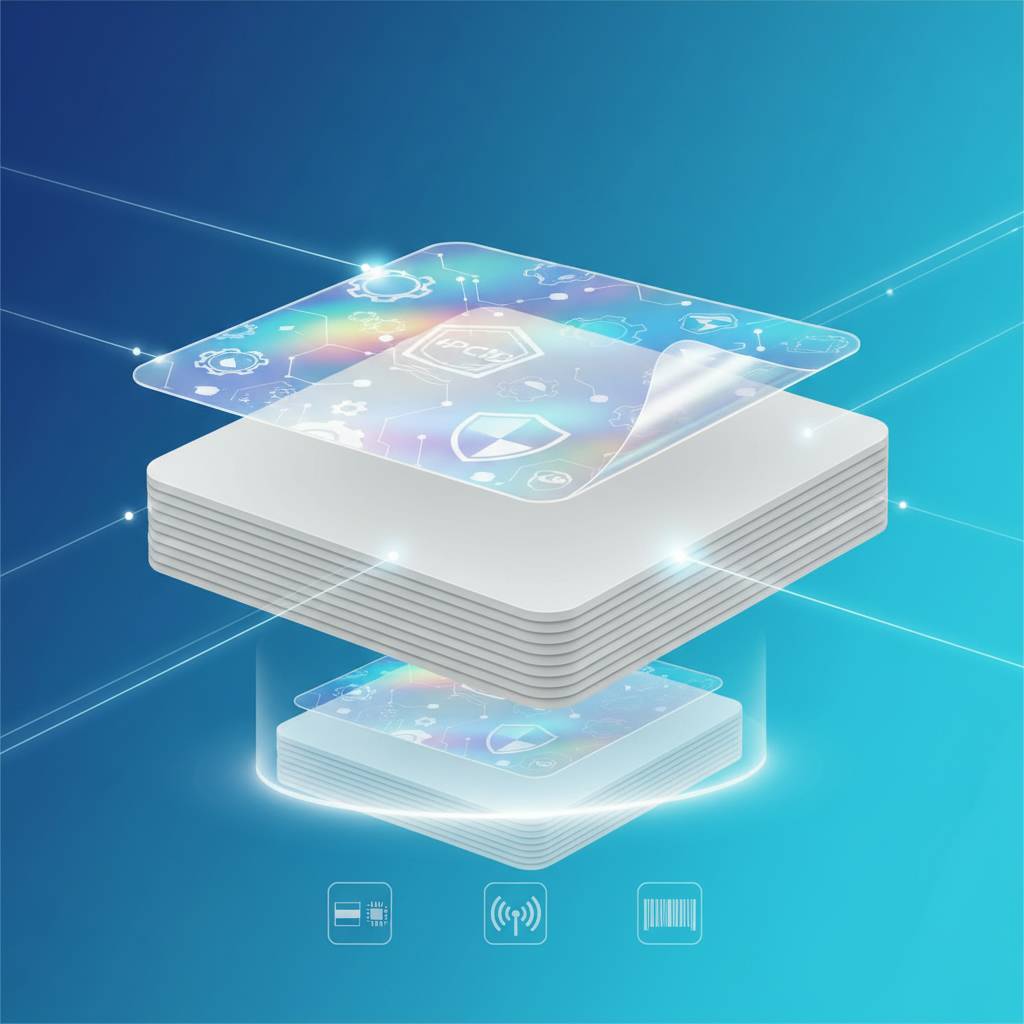
A holographic overlaminate is a thin, optically complex film bonded to the printed surface of a plastic card. Unlike a standard clear laminate - which simply seals the print - a holographic version contains a diffraction grating pattern that scatters light into a shifting, iridescent display. That pattern is nearly impossible to reproduce without specialized manufacturing equipment.
The film itself is typically applied using heat and pressure, fusing directly to the card surface and the printed ink beneath it. Once bonded, it becomes structurally part of the card. You cannot peel it cleanly. You cannot replicate it with a scanner. Any tampering attempt leaves visible evidence - which is precisely the point.
The Layers of Protection Working Together
What makes holographic overlaminates so effective is that they operate on multiple levels simultaneously. On the surface, they create a visual authentication cue that anyone can verify at a glance - no scanner required. Internally, the adhesive bond acts as a tamper-evident seal. Physically, the film dramatically increases the card's resistance to abrasion, UV exposure, chemical contact, and everyday handling.
Security isn't just about keeping bad actors out - it's about making card programs run reliably over time. A card that fades, cracks, or peels looks unprofessional and often gets replaced at real cost. Overlaminates solve both the security problem and the durability problem in one step. That's a meaningful operational win, especially for organizations managing thousands of cards.
Standard Clear vs. Holographic - A Real Comparison
Standard clear overlaminates do extend card life. They protect printed surfaces from moisture, friction, and minor chemical exposure. But they offer zero visual authentication. A counterfeiter with a decent card printer and basic laminate film can reproduce a standard-laminated card convincingly enough to fool a distracted employee at a front desk.
Holographic overlaminates change that equation entirely. The shifting optical pattern - whether it's a company logo, a security seal, a repeating geometric design, or a custom hologram - is a live, visible proof of authenticity that can't be faked with off-the-shelf equipment. The cost difference between standard and holographic laminate is often surprisingly modest, while the security difference is enormous.
| Feature | Standard Clear Overlaminate | Holographic Overlaminate |
|---|---|---|
| Surface Protection | Yes | Yes |
| UV Resistance | Partial | Strong |
| Tamper Evidence | Minimal | High |
| Visual Authentication | None | Immediate |
| Counterfeit Resistance | Low | Very High |
| Card Lifespan Extension | Moderate | Significant |
Why Card Durability and Security Go Hand in Hand
 It's tempting to think of card security and card durability as separate concerns - one a matter of fraud prevention, the other a matter of materials engineering. But in practice, they're deeply intertwined. A card that degrades quickly becomes unreliable, and an unreliable card creates gaps in any card program. Holographic overlaminates close both gaps simultaneously.
Consider a corporate campus with hundreds of employee ID cards cycling through access control readers dozens of times a day. Without adequate surface protection, cards begin showing wear within months. Printed photos fade. Barcodes misread. Text blurs. Replacing cards constantly is expensive, disruptive, and a sign of a card program that wasn't built to last. Holographic overlaminates dramatically reduce replacement frequency while adding a layer of visual security that employees and security teams can verify instantly.
Physical Wear Resistance You Can Measure
The abrasion resistance of holographic overlaminate film is substantially higher than unprotected card surfaces. In standard durability testing, laminated cards withstand tens of thousands of swipe or insertion cycles without significant surface degradation. That matters enormously for loyalty cards, access cards, and ID badges that see daily use over months or years.
Chemical resistance is equally important and often overlooked. Cards encounter hand lotions, cleaning agents, printer chemicals, and sweat - all of which can break down unprotected PVC surfaces and the inks printed on them. Holographic overlaminate creates a chemically inert barrier that keeps those contaminants away from the print layer, preserving card appearance and readability across the card's full lifespan.
How UV Protection Extends Card Life
UV exposure is a slow, invisible threat to plastic card programs. Cards worn on lanyards outdoors, displayed in windows, or carried in transparent cardholders are constantly hit by light that gradually degrades printed colors. Yellowing, fading, and image ghosting are the visible results - none of which project the professional image a card program is designed to create.
Holographic overlaminates with UV-inhibiting properties act as a filter, absorbing damaging wavelengths before they reach the print layer. Cards protected this way can maintain print quality for three to five times longer than unprotected equivalents - a significant return on what amounts to a modest per-card investment when sourced through an experienced supplier like CPE.
Magnetic Stripe and Chip Compatibility
One concern that comes up often: will a holographic overlaminate interfere with magnetic stripes, smart chips, or RFID antennas? The answer, when the right product is specified, is no. Properly formulated overlaminate films are applied at controlled temperatures that do not affect HiCo or LoCo magnetic stripe performance, and the films themselves are non-conductive and do not interfere with contactless chip communication.
At Plastic Card ID, our catalog includes HiCo magnetic stripe cards, LoCo magnetic stripe cards, RFID proximity cards, MIFARE DESFire smart chip cards, and more - all of which can be specified with compatible overlaminate options. The key is selecting the right combination from the start, which is exactly the kind of guidance our team provides to every customer building or upgrading a card program. Reach us at 800.835.7919 to discuss your specific requirements.
Types of Holographic Overlaminates Available
Not all holographic overlaminates are the same. The market offers a range of options that differ in pattern complexity, adhesive formulation, thickness, and intended use case. Understanding the differences helps organizations select the right specification for their card program - avoiding both over-engineering and under-protection.
The most common formats are patch laminates - pre-cut panels applied to specific zones on a card, such as over a photo or signature panel - and full-surface overlaminates, which cover the entire card face. Each has its place. Patch laminates offer targeted security at lower material cost; full-surface overlaminates provide comprehensive protection and a more visually consistent finish.
Generic vs. Custom Holographic Patterns
Generic holographic overlaminates feature pre-manufactured patterns - rainbow foil, geometric grids, repeating dots, or abstract optical designs - that are widely available and offer solid baseline security. They're cost-effective for organizations that need authentication capability without the budget or volume to justify custom tooling.
Custom holographic overlaminates take security to an entirely different level. These films are manufactured with a pattern unique to your organization - your logo, a proprietary design, or a security seal that only your cards carry. Replicating a custom holographic pattern requires access to the original master plate, which exists only at the manufacturer. For high-security ID programs, casino player card systems, government credentials, or premium membership cards, custom holograms are the gold standard.
Thickness Specifications and What They Mean
Holographic overlaminate films are typically specified in microns, with common thicknesses ranging from 0.6 mil to 1.0 mil. Thicker films offer more abrasion resistance and a more pronounced optical effect but require calibrated printer settings to apply correctly. Thinner films laminate more easily and work well in standard card printer configurations.
Most desktop card printers from Evolis, Zebra, and Fargo - all brands carried by CPE - are compatible with standard overlaminate thickness ranges when properly configured. Running the wrong film thickness through an unconfigured printer is the most common source of lamination errors, which is why proper setup and supplier guidance matter so much at the program level.
Selecting the Right Format for Your Card Printer
- Ribbon-based laminate modules: Built into certain card printer models, applying overlaminate from a ribbon cartridge in the same pass as printing - ideal for high-volume, consistent production.
- Separate laminator units: Standalone machines that accept pre-printed cards and apply overlaminate as a secondary process - flexible and compatible with a wider range of card printers.
- Pre-laminated card stock: Cards manufactured with holographic overlaminate already applied - used in specialty applications where post-print lamination isn't feasible.
- Patch laminate cartridges: Targeted application over specific card zones, available in various holographic patterns and compatible with select Evolis and Fargo printer models.
- Full-panel laminate cartridges: Cover the entire card face in a single pass - the highest-coverage option for programs prioritizing both appearance and comprehensive protection.
Card Programs That Benefit Most From Holographic Protection
 Every card program benefits from overlaminate protection, but certain use cases see particularly high returns on that investment. These are programs where cards carry real value - financial, operational, or reputational - and where fraud, wear, or failure has measurable consequences. Knowing where holographic overlaminates make the biggest impact helps organizations prioritize accordingly.
Employee ID and Access Control Cards
Corporate and institutional ID cards are handled constantly - swiped at readers, dropped, stuffed into wallets, clipped to lanyards. An unprotected ID card in an active workplace may look worn within 60 to 90 days. Holographic overlaminates extend that lifespan dramatically while adding a visual security feature that makes counterfeit badges immediately detectable to any employee who knows what to look for.
For facilities with strict security requirements, holographic IDs serve a dual purpose: they communicate authority and signal that your organization takes physical security seriously. That signal matters - to employees, to visitors, and to anyone who might consider testing your card-based access controls.
Loyalty and Membership Cards
Loyalty cards that live in wallets get handled hundreds of times over their lifespan. A card that degrades quickly gets discarded - and with it, the brand impression it was supposed to sustain. Holographic overlaminates give loyalty cards the surface durability to survive years of wallet life while adding a premium visual quality that customers notice and retain.
Research consistently shows that retailers switching from paper-based loyalty programs to plastic cards see significant increases in program engagement and per-visit spending. A holographic overlaminate on that plastic card amplifies the effect by increasing the card's perceived value - it looks like something worth keeping. That perception drives retention and repeat visits in ways that bare plastic or paper simply cannot match.
Casino Player Cards and Premium Membership
Casino player cards and high-tier membership cards operate in environments where authenticity and prestige are non-negotiable. Holographic overlaminates are practically standard in casino environments precisely because they provide instant visual verification that floor staff can confirm at a glance, even in low-light conditions where other security features might be harder to read.
For premium membership programs - private clubs, hospitality groups, professional associations - the holographic overlaminate also serves a brand function. The shifting, iridescent surface communicates quality and care. It tells the cardholder that membership in this organization carries real weight. That's a message that plain plastic, no matter how well printed, simply doesn't send as effectively.
Common Questions About Holographic Overlaminates
Organizations exploring holographic overlaminates for the first time often have similar questions. Here are the ones CPE hears most often - answered clearly, without the technical jargon that tends to cloud these conversations.
Does Holographic Overlaminate Work With Color Printing?
Yes - and in most cases, it enhances it. Modern holographic overlaminates are designed to be optically clear in transmitted light, meaning the printed image beneath remains fully visible and accurate in color. The holographic effect is a surface phenomenon: it appears as shifting light when viewed at an angle, while straight-on the card looks essentially like a standard laminated card with excellent print clarity.
The one exception to watch for is very dark or heavily inked card designs, where certain holographic patterns may slightly affect the perception of deep black areas in bright lighting. This is a spec conversation worth having with your supplier before committing to a particular overlaminate pattern - and one the team at Plastic Card ID is well-equipped to guide you through.
What Is the Cost Impact on a Card Program?
Holographic overlaminate adds cost at the per-card level - there's no point in pretending otherwise. But the full financial picture looks quite different when you account for the costs it offsets. Reduced card replacement frequency, lower fraud-related losses, and longer card program lifespans all work in the other direction. For most programs, the net financial case for holographic overlaminate is positive.
Volume also matters significantly. At higher production quantities, per-card laminate costs drop substantially. Organizations running card programs of several thousand cards or more per year will find holographic overlaminate to be a very accessible option - especially when sourced through a supplier with the purchasing scale and supplier relationships that CPE has built over 25 years and more than 100,000 customers served.
Can We Add Holographic Overlaminate to Existing Cards?
In most cases, no - not cleanly or reliably. Holographic overlaminates are designed to bond during printing or immediately after, as part of the card production process. Attempting to apply overlaminate to already-printed, already-issued cards is unlikely to yield acceptable adhesion or appearance results and can damage both the card and the laminator.
The better approach is to redesign the production workflow going forward. If your organization is currently printing cards without overlaminate and wants to add holographic protection, the transition point is the next card refresh or the next printer upgrade. Planning overlaminate into the production process from the beginning is always cleaner and more cost-effective than retrofitting it later. Contact us at 800.835.7919 and we'll help you build the right workflow from the ground up.
Building Your Card Program Around Long-Term Security
A plastic card program is a long-term operational commitment. The cards you issue today will be in wallets, badge holders, and card readers for months or years. Decisions made at the program design stage ripple outward across every card issued, every reader interaction, and every security audit your organization goes through. Holographic overlaminates are one of those foundational decisions - and the organizations that get it right from the start rarely regret it.
At Plastic Card ID, we've helped organizations of every size - from small businesses issuing 50 cards a month to enterprises managing tens of thousands of credentials - build card programs that work reliably, look professional, and resist the threats that matter most. Our catalog spans blank PVC cards, magnetic stripe cards, RFID and smart chip cards, hotel key cards, specialty cards, card printers from Evolis, Zebra, and Fargo, printer ribbons, cleaning kits, card sleeves, and complete card mailing services. Whatever your program needs, we have the product and the experience to match.
Strategic Partnership vs. Transactional Purchasing
There's a fundamental difference between buying cards from a catalog and building a card program with a strategic partner. Transactional purchasing gets you product. Strategic partnership gets you product plus expertise, plus a supplier that understands your program's context, your volume trajectory, and the security requirements that will matter to your organization three years from now - not just today.
That long-term partnership model is exactly what CPE has delivered to more than 100,000 customers across the United States since our founding. We ask the right questions, recommend the right specifications, and flag issues before they become problems. If holographic overlaminate is the right fit for your card program, we'll tell you - and we'll help you implement it correctly the first time.
Getting Started: What to Bring to the Conversation
When you reach out to Plastic Card ID about adding holographic overlaminates to your card program, a few pieces of information will help us get you to the right solution quickly. Know your approximate monthly or annual card volume. Know what printer model you're currently using, if any. Know whether your cards carry magnetic stripes, chips, or RFID technology. And have a sense of your primary goal - whether it's security, durability, aesthetics, or all three.
With that information, our team can quickly identify compatible overlaminate formats, recommend appropriate printer configurations or upgrades, and provide accurate pricing for your program scale. No organization is too small to benefit from holographic overlaminate, and no program is too complex for us to support. The conversation is always worth having.
Take the Next Step With Plastic Card ID
Holographic overlaminates are one of the most effective investments a card program can make - protecting cards from wear, defeating counterfeiters, and projecting the kind of professional credibility that keeps card programs running smoothly for years. The technology is proven, the application is well-understood, and the return on investment is real. What's needed is a supplier who can match the right specification to your program and support you through every stage of implementation.
That's exactly what Plastic Card ID does - and has done, for over 25 years, across more than 100,000 customers and 50 million cards. Your card program deserves a partner who takes it as seriously as you do. Whether you're starting from scratch, upgrading an existing program, or simply looking for a better source for cards, ribbons, printers, and expert guidance, we're ready to help.
Contact Plastic Card ID today at 800.835.7919 and let's build a card program that works - protected, professional, and built to last.
Previous Page