Blank PVC Cards Explained: Your Complete Beginners Guide
Table of Contents []
- Blank PVC Cards Explained: What Every Business Should Know Before Ordering
- Magnetic Stripe Cards: HiCo vs. LoCo and Why the Difference Matters
- RFID, Proximity, and Smart Chip Cards: Contactless Technology Explained
- In-House Card Printing: Building Your Program Around Blank Stock
- Loyalty Cards, Membership Cards, and the Measurable Business Case for Plastic
- Specialty Cards: Clear PVC, Metal Cards, and Custom Formats
- Why Plastic Card ID Is the Right Partner for Your Card Program
Blank PVC Cards Explained: What Every Business Should Know Before Ordering
Walk into almost any organization running a card program - a gym, a hotel, a corporate office, a school - and somewhere behind the front desk sits a stack of small white rectangles. Unremarkable at first glance. But those blank PVC cards are, in many ways, the backbone of modern identity, access, and loyalty programs across America. Plastic Card ID has spent over 25 years helping businesses understand exactly what those cards are, what they can become, and how to choose the right ones.
The terminology alone can stop a first-time buyer cold. HiCo or LoCo? CR80 or CR79? 30 mil or 20 mil? RFID or proximity? The decision tree branches fast, and making the wrong call early - buying the wrong magnetic stripe coercivity, for example - means cards that don't work with your existing hardware. This page exists to cut through that confusion completely.
The CR80 Standard: Why Almost Everything Is This Size
The CR80 designation comes from ISO 7810, the international standard that defines the dimensions of an identification card: 3.375 inches by 2.125 inches, or roughly the size of a credit card. That is not a coincidence - wallets, cardholders, badge holders, and card printer input hoppers are all engineered around this footprint. When someone says "blank PVC card," they almost always mean a CR80.
Thickness matters too. The standard is 30 mil (0.030 inches), which gives a card enough rigidity to feel substantial in hand while remaining thin enough to slide through printer rollers without jamming. Thinner options like 20 mil exist for specific applications - overlaminates, for instance - but for most business card programs, 30 mil CR80 is the right answer and the industry default.
Deviations from CR80 exist and serve real purposes. CR79 cards, slightly smaller, are designed for adhesive-backed applications where the card gets mounted to another surface. CR100 cards are the size of a folded check, common in some healthcare and government contexts. But if you're launching a standard employee badge, loyalty card, or membership credential, CR80 30 mil is your starting point - every time.
PVC vs. Other Card Materials: Why PVC Wins for Most Programs
PVC - polyvinyl chloride - earns its place as the dominant card material through a combination of printability, durability, and cost. It accepts dye-sublimation and thermal transfer printing with exceptional color fidelity. It flexes without cracking under normal handling stress. It resists moisture and most common chemicals. And it is available at a price point that makes large card programs economically viable.
Composite cards, which blend PVC with polyester (PET), are worth knowing about. They're significantly more durable under flexion and thermal stress, making them preferred for smart chip cards and certain RFID credentials where the embedded inlay must survive millions of read cycles. Standard blank PVC handles most applications beautifully, but composite is the professional choice when longevity under physical stress is the priority.
What "Blank" Actually Means in a Card Program Context
A blank card is a canvas, nothing more. It carries no printing, no personalization, no encoded data. That blankness is the feature - it means your organization controls every variable. You choose the printer, the software, the design, the encoding, the timing of issuance. Total in-house control over your card program is something pre-printed cards can never give you.
Blank cards enable on-demand issuance. A new employee starts Monday morning; the badge is printed Monday morning - not three weeks after a print vendor fulfilled an order. A loyalty cardholder walks in; the card is personalized at the point of enrollment. In programs where personalization, timing, or flexibility matters, blank stock combined with an in-house card printer is simply the better architecture.
| Card Type | Key Feature | Common Application | Typical Coercivity |
|---|---|---|---|
| Plain White PVC | Clean print surface | ID, loyalty, membership | N/A |
| LoCo Magnetic Stripe | 300 Oe coercivity | Gift cards, hotel keys | Low (300 Oe) |
| HiCo Magnetic Stripe | 2750 Oe coercivity | Access, ID, loyalty | High (2750 Oe) |
| RFID / Proximity | Contactless read | Access control, time/attendance | N/A |
| Smart Chip (Contact) | Embedded IC chip | Secure ID, campus programs | N/A |
| Clear / Frosted PVC | Transparent substrate | Premium membership, VIP | N/A |
Magnetic Stripe Cards: HiCo vs. LoCo and Why the Difference Matters
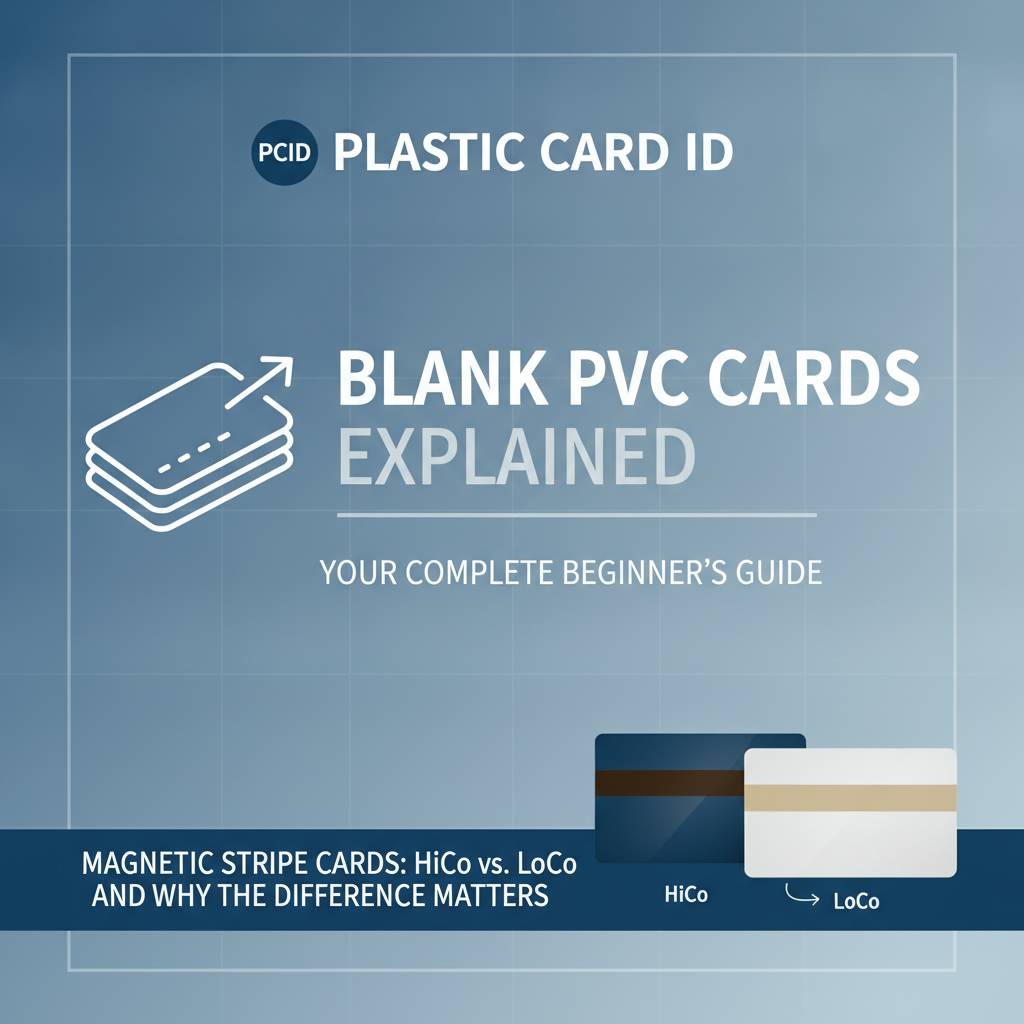 Choosing the wrong magnetic stripe coercivity is one of the most common and most preventable mistakes in card program setup. Coercivity refers to the magnetic field strength required to write data to the stripe - and by extension, how resistant that stripe is to being corrupted by external magnetic fields. Get it wrong and your cards simply won't work with your readers.
High coercivity (HiCo) stripes operate at 2750 Oersteds. They are significantly more resistant to accidental erasure from everyday magnetic sources - bag clasps, magnetic closures on wallets, even some phone cases. Low coercivity (LoCo) stripes operate at 300 Oe, are easier to write data to, and are appropriate for short-term use applications where magnetic interference is not a real-world concern. Hotel key cards are the classic LoCo use case; they're programmed for a specific stay and discarded afterward.
When to Specify HiCo Magnetic Stripe Cards
For any card that will live in a wallet or badge holder for months or years - employee ID cards, loyalty cards, membership credentials, access control cards - HiCo is almost always the correct specification. The incremental cost difference between HiCo and LoCo stock is minimal, and a card that stops working because its stripe was corrupted is a card that costs you a replacement, a service interaction, and potentially a customer relationship.
Corporate campuses, fitness clubs, libraries, transit programs, and employer identification systems all benefit from HiCo specification. If your card will be used repeatedly over a long program lifecycle, spend the extra fraction of a cent per card and get HiCo. CPE carries both formats in large and small quantities, ready to ship across all 50 states.
LoCo Cards: The Right Tool for Short-Cycle Programs
LoCo magnetic stripe cards are not inferior - they're appropriate for specific applications. Hotel key cards are programmed per stay; the data only needs to survive a few days. Parking validation cards, single-event credentials, and certain gift card issuance programs follow similar logic. The lower coercivity makes them faster and easier to encode with standard magnetic stripe writers, which matters in high-throughput environments like front desks and event registration tables.
Some legacy card reader systems were calibrated for LoCo stripe input - in those environments, using HiCo cards can actually cause read failures because the reader's write head lacks the field strength to properly encode the card. Always verify your reader's coercivity specifications before ordering stripe stock in volume.
Three-Track vs. Single-Track Stripes
Magnetic stripes on standard CR80 cards contain up to three data tracks, each with defined encoding standards. Track 1 carries alphanumeric data (names, account numbers) at 210 bits per inch. Track 2 is the financial track - numeric only, 75 bits per inch - used in most retail point-of-sale and loyalty applications. Track 3 is less commonly used but supports read-write operations at higher bit densities.
Most business card programs only use Tracks 1 and 2, or Track 2 alone. Understanding which track your software and hardware are configured to read prevents encoding errors that show up only after you've already issued cards to hundreds of members. Confirm your system's track requirements before finalizing card specs.
RFID, Proximity, and Smart Chip Cards: Contactless Technology Explained
Contactless card technology has moved well beyond the novelty stage. Proximity cards and RFID smart cards now power access control systems, campus identification programs, transit passes, casino player tracking, and healthcare credentialing across the country. Understanding the differences between proximity, RFID, and contact smart chip formats is essential for any organization making a long-term infrastructure investment.
The umbrella term "contactless" covers several distinct technologies operating at different frequencies with different data capacities and security profiles. Choosing the right contactless format for your program determines not only what your cards can do today but what your system can support as your program scales.
125 kHz Proximity Cards: Access Control's Workhorse
Proximity cards - often called "prox cards" - operate at 125 kHz and have been the standard in physical access control for decades. They carry a fixed identification number that the card reader captures and passes to the access control software, which then determines whether to grant entry. The data capacity is modest, the technology is mature, and the hardware ecosystem - readers, panels, controllers - is vast and well-supported.
Blank proximity cards are available in standard CR80 30 mil format and are printed on with the same card printers used for any other PVC card. The proximity inlay is embedded inside the card's laminate layers, invisible and protected. For organizations running existing 125 kHz infrastructure, proximity card stock from CPE drops into existing programs without any reader upgrades required.
13.56 MHz RFID Smart Cards: Higher Security, Greater Data Capacity
At 13.56 MHz, RFID smart cards offer significantly higher data capacity and cryptographic security compared to proximity cards. MIFARE Classic, MIFARE DESFire, MIFARE Plus, and ICODE are all 13.56 MHz standards, each with distinct security architectures. MIFARE DESFire EV3, the current premium standard, supports AES-128 encryption and is the specification of choice for programs that must meet stringent security requirements - government ID, campus multi-application credentials, high-security corporate access.
These cards support multiple applications on a single card: one sector for access control, another for cashless vending, another for time and attendance. A single smart card can replace what used to require two or three separate credentials, reducing cardholder friction and lowering long-term program costs. That level of capability requires proper system planning, but the payoff for mid-to-large organizations is significant.
Hotel Key Cards and Specialty Contactless Applications
Hotel key cards represent a specialized subset of the LoCo magnetic stripe world, though properties running newer door lock systems may deploy RFID-based key cards instead. Both formats are available as blank stock, ready for issuance programming at the property level. Casino player cards - another specialty segment - often combine magnetic stripe encoding with printed graphics and may incorporate basic RFID elements depending on the property's tracking infrastructure.
Clear PVC cards and frosted translucent cards add a visual premium layer to any of these applications. A frosted card with a crisp printed logo and an embedded proximity inlay communicates a level of program investment that opaque white stock simply cannot. For VIP membership tiers, executive access credentials, and premium loyalty programs, specialty card substrates are worth the modest additional cost per unit.
In-House Card Printing: Building Your Program Around Blank Stock
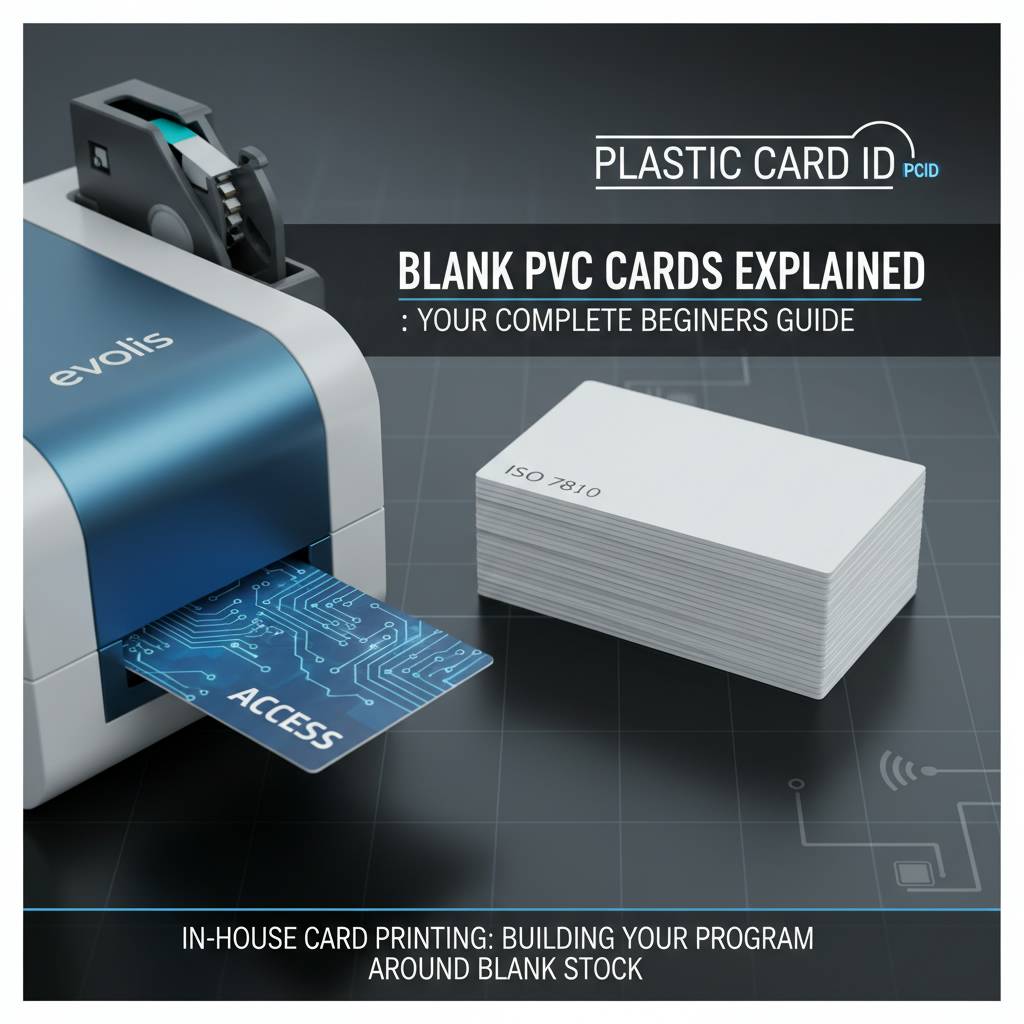 The strategic case for in-house card printing is straightforward: blank card stock combined with a reliable desktop card printer gives your organization complete control over design, personalization, timing, and volume. No minimum order quantities per design run. No weeks-long lead times. No dependency on an outside vendor every time a card needs to change.
The economics make sense at surprisingly modest volumes. Organizations issuing as few as 50 cards per month often find that in-house printing pays for the printer investment within the first year when compared against outsourced custom printing costs per card. At 200 or more cards monthly, the savings are substantial and the operational advantages compound.
Card Printer Options: Evolis, Zebra, and Fargo
The three dominant brands in desktop and mid-volume card printing are Evolis, Zebra, and Fargo (an HID Global brand). Each manufacturer offers a tiered product line running from single-sided entry-level printers to dual-sided, laminating, and encoding-capable models. Plastic Card ID carries hardware across all three brands alongside the ribbons, cleaning kits, and blank card stock required to keep programs running.
Evolis printers are known for their compact footprint and user-friendly software, making them well-suited for reception desks and small HR departments. Zebra's ZC and ZXP series target mid-volume users and enterprise deployments, with robust encoding options. Fargo printers, particularly the HDP series, use a high-definition retransfer printing process that produces exceptional image quality on uneven card surfaces - ideal for smart chip and proximity cards where the embedded component creates a slight surface irregularity that direct-to-card printers occasionally struggle with.
Ribbons, Supplies, and the Cost-Per-Card Calculation
Blank card stock cost is only one component of the true cost-per-card in an in-house program. Ribbon yield - how many cards a given ribbon cartridge can print before it's exhausted - directly affects your per-card economics. YMCKO ribbons (yellow, magenta, cyan, black resin, overlay) are the standard for full-color single-sided printing. YMCKOK adds a second black resin panel for back-side monochrome text. Understanding ribbon specifications before purchasing a printer prevents the unpleasant surprise of ribbon costs exceeding card costs in low-yield configurations.
Cleaning kits are the often-overlooked maintenance supply that keeps print heads performing and extends printer lifespan. Dirty rollers transfer contamination to card surfaces, causing print defects that waste both ribbon and card stock. A consistent cleaning schedule - typically every ribbon change - costs almost nothing and pays back in reduced defect rates and longer hardware life. Card carriers and sleeves round out the supply ecosystem for programs that mail or distribute cards to cardholders.
Designing for In-House Print: Practical Buyer Tips
- Always leave a print safety margin of at least 1/8 inch from card edges to prevent color bleeding at the card perimeter.
- Use card design software that exports to the correct card dimension (3.375 x 2.125 inches at 300 DPI minimum) rather than adapting general graphic design files.
- Matte overlaminates reduce glare and fingerprint visibility on frequently handled cards; glossy overlaminates maximize color vibrancy.
- For cards with magnetic stripes, place critical design elements away from the stripe area to maintain encoding accessibility and visual clarity.
- Test print a small batch on blank stock before committing a full ribbon cartridge to a new design - ribbon is the consumable you cannot reuse.
- When encoding cards, always verify encoded data against your system database before issuing cards to ensure no mismatches between printed and encoded identity information.
Ready to set up your in-house card program? Call Plastic Card ID at 800.835.7919 and speak with a card program specialist today.
Loyalty Cards, Membership Cards, and the Measurable Business Case for Plastic
Paper punch cards are a charming artifact of retail history. They are also significantly less effective than their plastic counterparts by every measurable metric. Retailers and service businesses that switch from paper to plastic gift and loyalty cards consistently report sales increases in the range of 35-50%. The reason is behavioral: a card that lives in a wallet gets used. A paper card lives in a junk drawer or a forgotten pocket until it's laundered into illegibility.
Plastic loyalty cards signal program permanence and organizational legitimacy in ways that paper never will. When a customer receives a well-designed plastic card with your brand printed cleanly on it, the implicit message is that your program is serious, ongoing, and worth participating in. That signal has real commercial value - and it costs a fraction of what most businesses spend on digital advertising that gets scrolled past in seconds.
Membership Programs: Why Card Quality Reflects Organization Quality
For associations, clubs, gyms, professional organizations, and nonprofits, the membership card is often the primary physical touchpoint between the organization and its members. A card that feels substantial, looks professional, and includes relevant identifying information projects organizational credibility. A flimsy, poorly printed card projects the opposite - and first impressions in membership contexts tend to be sticky.
Blank CR80 PVC stock printed in-house gives small-to-mid-size organizations the ability to produce membership cards that look identical to those issued by much larger, well-resourced institutions. The democratization of card printing technology means that a regional professional association with 400 members can issue cards that are visually and physically indistinguishable from those of a national organization - at a cost that fits modest program budgets.
Gift Card Programs: The Retail Revenue Multiplier
Gift card programs consistently outperform expectations as revenue generators, and the mechanism is well understood: a significant percentage of gift card value goes unredeemed, and redeemers almost always spend beyond the card's face value. For small and mid-size retailers, launching a gift card program on blank PVC stock with an in-house printer is one of the highest-return marketing investments available.
The operational requirement is a LoCo magnetic stripe card, a card printer with encoding capability, and point-of-sale software that supports gift card balance tracking. CPE supplies both the card stock and compatible printer hardware, making program setup straightforward. Volume pricing on blank LoCo magnetic stripe cards makes per-card costs low enough to treat cards as a marketing expense rather than a significant capital outlay.
Specialty Cards: Clear PVC, Metal Cards, and Custom Formats
Standard white PVC does the job for the vast majority of card programs. But the landscape of available card formats extends well beyond the white rectangle - and for programs where differentiation, premium positioning, or specific technical requirements matter, specialty card options deliver value that standard stock cannot.
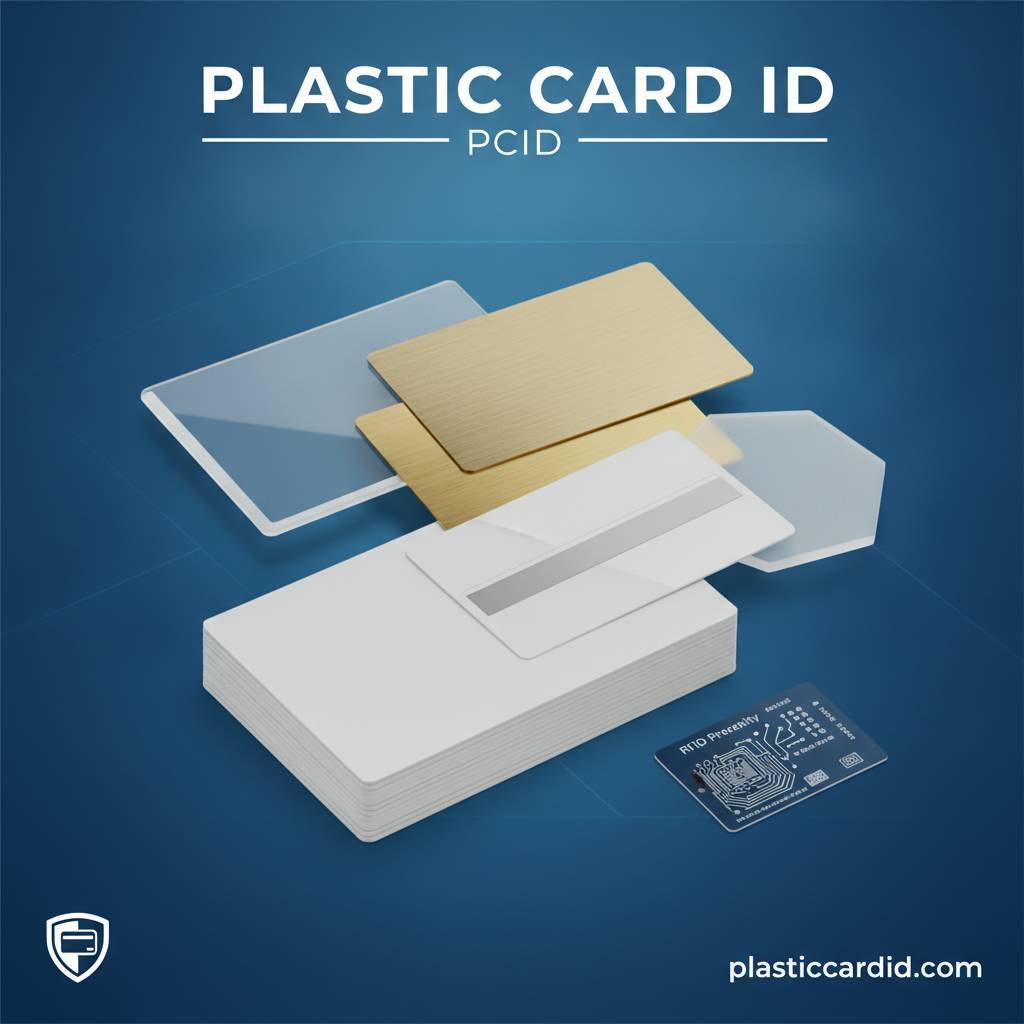
Clear and frosted PVC cards create visual impact through transparency effects that interact with printed graphics in ways that opaque stock cannot replicate. Metal cards - available in stainless steel, brass, and gold finishes - occupy the luxury tier of the card market, communicating exclusivity and premium value in VIP membership, executive credentials, and high-end loyalty programs. The tactile experience of receiving a metal card is genuinely different from any paper or plastic alternative - it is a physical signal that immediately communicates premium status.
Clear and Frosted Cards: Visual Differentiation Without Premium Complexity
Clear PVC cards maintain the same CR80 30 mil dimensions and print compatibility as standard white cards. The visual difference is substantial: a well-designed clear card with strategically placed printed elements appears to float, creating a modern aesthetic that stands apart in any wallet. Frosted cards offer a softer translucency that diffuses light elegantly and provides a distinctive surface texture.
Both formats work with standard dye-sublimation card printers, though color calibration may require minor adjustments to account for the transparent substrate. White ink is sometimes used to create opacity in specific design areas on clear cards, adding a layer of design complexity that produces striking results for premium program aesthetics.
Custom Die-Cut and Non-Standard Card Shapes
Die-cut custom card shapes - key tags, rounded rectangles, unusual aspect ratios - serve specific program needs. Loyalty key fobs are popular in retail and automotive service contexts where a customer is more likely to keep a key tag on their keyring than carry a full-size card in their wallet. Custom shapes can reinforce brand identity when the card's physical form reflects the organization's visual language.
Non-standard shapes require different handling and are not printed on standard desktop card printers, making them better suited to higher-volume programs where the production economics justify the format. For programs issuing thousands of cards per run, the visual and brand differentiation value of a custom shape can meaningfully outperform standard format stock.
Metal Cards: Luxury Credentials for Premium Programs
Stainless steel, brass, and gold finish metal cards represent the apex of the physical card market. They are heavier, more durable, and categorically more memorable than any plastic alternative. A metal card is kept - rarely discarded - which means extended brand visibility and cardholder retention that translates into measurable program engagement metrics over time.
Applications include executive membership tiers, VIP loyalty programs, high-value client relationship tools, and corporate gifting programs where the physical credential is part of the value proposition. Metal cards can be laser-engraved for personalization with a permanence and precision that printing cannot match. For the right program, the cost premium per card is trivially small compared to the relationship value the card represents.
Why Plastic Card ID Is the Right Partner for Your Card Program
More than 100,000 businesses across the United States have trusted Plastic Card ID to supply blank and custom plastic cards, printers, ribbons, and program support over a span of more than 25 years. That scale of customer experience generates a depth of practical knowledge that no catalog-only vendor can match. When you call CPE, you're reaching a team that has seen virtually every card program configuration, troubleshot virtually every encoding challenge, and helped organizations at every scale build programs that actually work.
The product range spans every meaningful card format and technology available in the market today - from plain white CR80 stock by the case to MIFARE DESFire smart cards, from entry-level Evolis printers to high-throughput Fargo retransfer systems, from basic card sleeves to full card affixing and mailing services for programs that distribute cards by mail. Everything your card program needs ships from a single source, which simplifies ordering, reduces shipping complexity, and builds the kind of account relationship where your program's history and specifications are understood rather than re-explained on every order.
Volume Flexibility: From 50 Cards to 50,000
One of the practical advantages of working with Plastic Card ID is volume flexibility. Whether your organization issues 50 cards per month to new employees or processes tens of thousands of cards per production run for a national loyalty rollout, the same team, the same product quality, and the same service commitment apply. Small programs are not treated as low-priority accounts; large programs are not charged premium prices for ordinary stock.
This flexibility matters most during program growth phases. An organization that starts with a modest in-house printer and 500 blank cards per month may scale to 5,000 cards monthly within two years as its program matures. Having a supplier that can scale alongside that growth - without requiring a switch to a different vendor at each volume threshold - is a genuine operational advantage.
Card Affixing and Mailing Services
For programs that distribute cards by mail - welcome kits, renewal mailings, mass issuance campaigns - Plastic Card ID offers card affixing and mailing services that handle the physical distribution logistics. Cards are affixed to mailers or carriers and processed for delivery, eliminating the in-house labor burden that can make large mailing campaigns operationally challenging for organizations without dedicated fulfillment resources.
Card carriers and sleeves are also available for programs that prefer to handle their own mailing but want professional-grade packaging materials. A card presented in a branded carrier communicates more professionalism than a card dropped loose into an envelope - and that first impression, as noted above, has real program participation implications.
Getting Started: How to Place Your First Order
- Identify your card application: ID, loyalty, access control, gift card, membership, or event credential.
- Determine whether you need magnetic stripe encoding (and if so, HiCo or LoCo), RFID/proximity, smart chip, or plain PVC.
- Decide between in-house printing (blank stock plus a card printer) or pre-printed custom cards depending on your volume and personalization needs.
- Select your card quantity - volume pricing tiers reward larger orders with lower per-card costs.
- Call or contact Plastic Card ID to confirm your specifications and get a quote - the team can verify coercivity compatibility with your existing hardware before you commit.
Reaching the right team early prevents the most common and costly setup mistakes. A five-minute conversation before your first order can save hours of troubleshooting after the fact.
Contact Plastic Card ID at 800.835.7919 - your dedicated card program partner for programs of every size, backed by 25 years of expertise and over 50 million cards shipped across the USA.
Previous Page