What Are Blank Plastic Cards? Everything You Need to Know
Table of Contents []
- What Are Blank Plastic Cards? Your Complete Guide from Plastic Card ID
- The Full Spectrum of Blank Plastic Card Types
- Why Businesses Choose Blank Cards Over Pre-Printed Stock
- Specialty Blank Cards for Specific Industries and Applications
- Frequently Asked Questions About Blank Plastic Cards
- Value-Added Services That Complete Your Card Program
- Ready to Start or Upgrade Your Card Program? Contact Plastic Card ID
What Are Blank Plastic Cards? Your Complete Guide from Plastic Card ID
Walk into any office, gym, hotel, or retail store and you will likely hand over - or receive - a plastic card of some kind. But what happens before those cards get printed, encoded, or personalized? That is where blank plastic cards enter the picture, and understanding them changes the way organizations think about their card programs entirely.
Blank plastic cards are the foundation of nearly every professional card program in the United States. They are the raw material that becomes an employee ID badge, a loyalty reward card, a hotel key, a membership credential, or an access control token. CPE has spent over 25 years helping businesses across the country understand exactly what these cards are, what they can do, and how to choose the right type for any application.
The Basic Definition: More Than Just a Blank Piece of Plastic
At their most fundamental level, blank plastic cards are unprinted, unencoded cards manufactured to a standardized size and thickness. The dominant standard is CR80, which measures 3.375 inches by 2.125 inches at 30 mil thickness - exactly the same dimensions as a standard credit card. This is not a coincidence; the CR80 format was codified under ISO 7810 specifically so that cards would fit universally in wallets, cardholders, and processing equipment.
The term "blank" refers to the absence of personalization - no names, no logos, no barcodes - but these cards are far from unfinished. They are precision-manufactured from PVC (polyvinyl chloride) or composite materials, with consistent thickness, smooth surfaces, and formulations designed for specific print technologies. A card that looks plain to the naked eye may already contain an embedded RFID chip, a magnetic stripe, or a smart card module.
Why the CR80 Standard Matters So Much
The CR80 dimension is not just a convenience - it is a specification that governs compatibility with card printers, card readers, access control panels, wallet slots, and badge holders. Choosing a card that deviates from CR80 without deliberate reason can create headaches across an entire infrastructure. Standardization at the card level protects your investment in hardware and systems.
There are variations - CR79 cards are slightly smaller for overlay laminates, and CR100 cards are larger for special applications - but the overwhelming majority of blank plastic card purchases are CR80. Plastic Card ID stocks CR80 cards in dozens of configurations, ensuring that whatever print system or card program you operate, the physical card will perform correctly from day one.
The Material Science Behind Durable PVC Cards
PVC plastic cards are built for daily handling. Unlike paper-based alternatives, they resist moisture, bending, and surface abrasion. A well-made PVC card can survive years of wallet friction, scanner passes, and temperature fluctuations without fading or delaminating. This durability is precisely why switching from paper to plastic delivers such dramatic program improvements.
The manufacturing process involves laminating multiple layers under heat and pressure - creating a card that is structurally cohesive rather than layered in a way that can peel. Premium blank cards also feature treated surfaces that accept dye-sublimation and thermal transfer inks with exceptional color fidelity, which matters enormously when your brand image is printed onto each card.
The Full Spectrum of Blank Plastic Card Types
 One of the most common misconceptions is that "blank plastic card" means a single, uniform product. In reality, the category encompasses a wide variety of card types, each engineered for specific functions. Choosing the wrong type is a costly mistake that CPE helps clients avoid every day.
The differences between card types go far beyond surface appearance. Encoding technology embedded in the card, the formulation of the PVC substrate, and the surface treatment all vary significantly depending on the intended use. Here is an overview of the major categories available from Plastic Card ID.
Plain PVC Cards: The Workhorse Option
Plain white CR80 PVC cards are the most purchased blank plastic card on the market, and for good reason. They offer a clean, receptive surface for full-color card printing, accept a wide range of printer ribbon types, and cost less per card than any encoded or specialty variant. Organizations running in-house badge programs, event credentialing, membership cards, or loyalty programs rely on these by the thousands.
The per-card cost advantage of plain PVC cards becomes significant at scale. A business printing 200 employee ID cards per month will spend dramatically less over a year using blank stock and an in-house printer than outsourcing every print run. Total design control combined with lower long-term costs makes plain PVC the smart starting point for almost any card program.
Magnetic Stripe Cards: HiCo vs. LoCo Explained
Magnetic stripe blank cards include a black or brown stripe along the back of the card - the same stripe you see on hotel key cards and loyalty cards. The critical distinction is between HiCo (High Coercivity) and LoCo (Low Coercivity) stripes. HiCo stripes are encoded at 2750 Oersteds and are far more resistant to accidental erasure from everyday magnetic fields. LoCo stripes operate at 300 Oersteds and are suitable for short-term applications like event passes or hotel room keys where longevity is not a priority.
For loyalty programs, membership cards, employee access, and any card expected to survive more than a few weeks of use, HiCo is the correct choice. CPE advises clients on this distinction specifically because it is one of the most frequent sources of card program failures - organizations buy LoCo cards for long-term applications and then wonder why their cards are demagnetizing after a month in someone's wallet near a smartphone.
RFID, Proximity, and Smart Chip Cards
The blank card category extends well into contactless and chip-based technology. Proximity cards - often called prox cards - use 125 kHz radio frequency to communicate with access control readers without physical contact. They are the backbone of building entry systems, parking access, and time-and-attendance systems across commercial real estate and corporate environments. RFID cards operating at 13.56 MHz offer higher data capacity and are used in more sophisticated access control and identification applications.
Smart chip cards take this further by embedding an integrated circuit capable of storing and processing data. Options like MIFARE DESFire chips offer encrypted, multi-application capability used in transit systems, secure facilities, and campus card programs. These blank smart cards arrive unencoded - ready for your system to write the appropriate data - giving organizations complete control over their credential infrastructure.
| Card Type | Technology | Best Use Case | Durability |
|---|---|---|---|
| Plain PVC CR80 | None | ID badges, loyalty, membership | High |
| HiCo Magnetic Stripe | 2750 Oe Mag Stripe | Long-term loyalty, access cards | Very High |
| LoCo Magnetic Stripe | 300 Oe Mag Stripe | Hotel keys, short-term events | Moderate |
| Proximity (125 kHz) | RFID | Building access, parking | Very High |
| Smart Chip (13.56 MHz) | IC Chip RFID | Campus, transit, secure access | Very High |
| Clear / Frosted PVC | None (specialty) | Luxury branding, VIP cards | High |
Why Businesses Choose Blank Cards Over Pre-Printed Stock
There is a fundamental difference between ordering pre-printed cards from an outside vendor each time you need a batch, and maintaining a supply of blank cards that your team can print on demand. Both approaches have legitimate use cases, but the economics and operational flexibility of blank card programs are compelling - often overwhelmingly so.
Consider a healthcare organization onboarding 15 new employees in a given week and 3 the next. With a blank card inventory and an in-house printer, badges are ready same day. With a pre-print outsourcing model, you are waiting on turnaround times, minimum orders, and shipping windows. Operational agility is one of the most underappreciated benefits of a well-stocked blank card program.
Cost Economics of Blank Card Programs
The per-card cost of blank PVC cards is substantially lower than pre-printed, personalized cards ordered in small batches from a third party. When you factor in the cost of a desktop card printer - a one-time capital purchase - and printer ribbons, the break-even point typically arrives within the first few months of operation. After that, the savings accumulate with every card printed.
For organizations running programs of 50 cards per month up into the tens of thousands, CPE works with clients to model out the actual economics of their specific situation. The variables are real: card volume, design complexity, frequency of updates, and whether encoding is required all factor into the total cost of ownership. What rarely changes is the conclusion - blank cards plus in-house printing almost always wins on cost at any meaningful scale.
Call Plastic Card ID today at 800.835.7919 to discuss the right blank card program for your organization's size and budget.
Design Control and Brand Consistency
When you control the printing, you control the brand. Pre-printed card vendors introduce variability - color calibration differences between print runs, delays in updating logos or contact information, and the inability to make last-minute changes without incurring reprint costs. Blank cards eliminate all of that friction. Your designer creates the template once, and every card that comes off your printer is pixel-perfect consistent.
This matters significantly for organizations where card aesthetics carry brand weight. A luxury spa issuing membership cards, a casino operating a player rewards program, or a hotel chain distributing key cards to guests - in each case, the physical card is a brand touchpoint. Blank cards give you the freedom to make that touchpoint exactly what it should be, every single time.
Scalability Without Vendor Dependency
Relying on an external vendor for every card run creates a structural dependency that can cause real operational problems. Vendor pricing changes, production delays, minimum order requirements, and supplier transitions are all risks that in-house blank card programs eliminate. Organizations that stock blank cards and control their own printing are genuinely self-sufficient in a way that vendor-dependent programs simply cannot be.
Scalability works in both directions. If your card volume spikes - a new product launch, a grand opening, an acquisition that doubles your employee count - you order more blank cards and run your printers harder. If volume drops, you are not locked into minimum purchase commitments. The program scales with your actual operational reality rather than your projected estimates from six months ago.
Specialty Blank Cards for Specific Industries and Applications
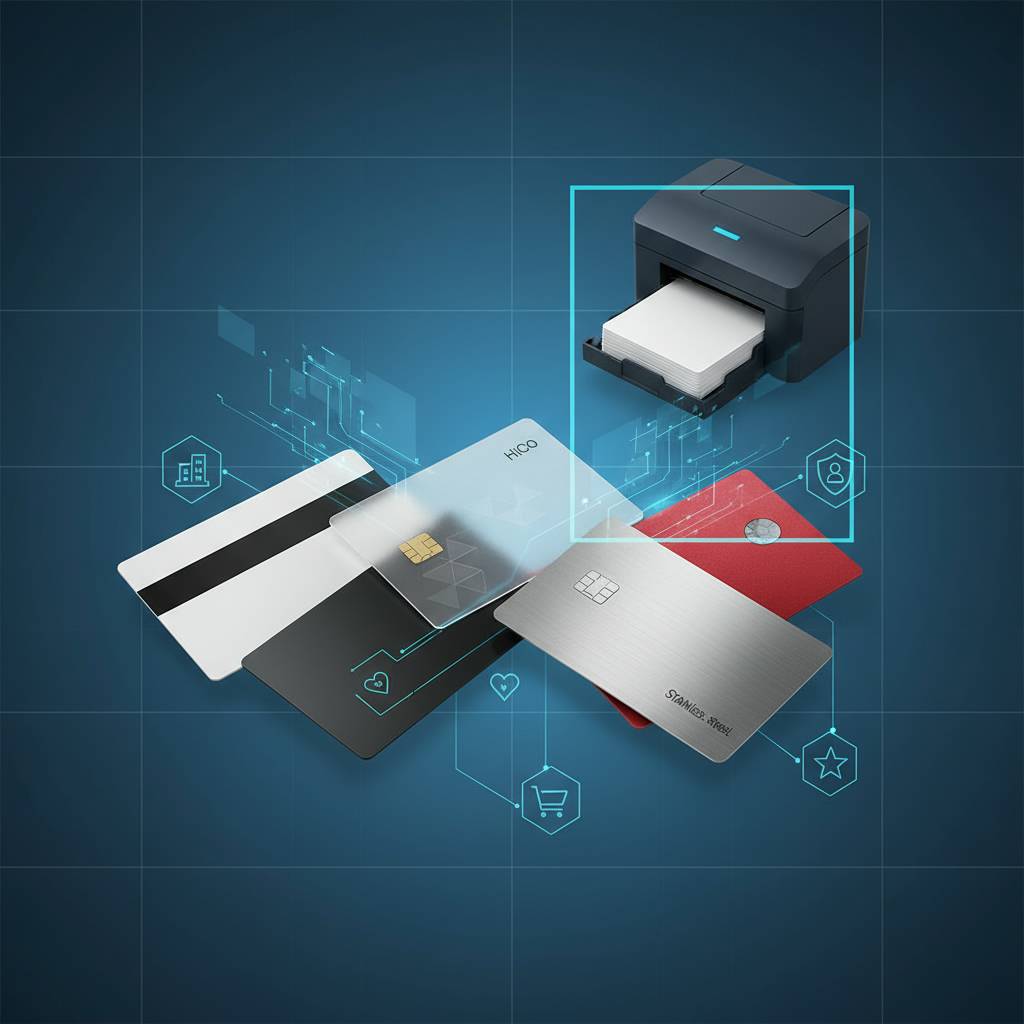 Not every card program runs on plain white PVC. Plastic Card ID supplies an extensive range of specialty blank cards designed for industries and applications where standard stock simply will not deliver the right combination of performance, aesthetics, and functionality.
The diversity of available blank card types reflects the genuine diversity of card applications across American businesses. Choosing the right specialty card means understanding both the technical requirements of your card readers and infrastructure and the experiential expectations of the people who will carry these cards.
Clear and Frosted Plastic Cards
Clear and frosted blank plastic cards are a premium option that creates a visually striking finished product. Transparent cards allow for creative designs that incorporate see-through elements, layered visual effects, or minimalist aesthetics that feel genuinely distinctive in a cardholder's wallet. Frosted cards diffuse light differently, giving a softer, luxury feel that resonates particularly well with spa, salon, fitness, and premium retail brands.
Printing on clear or frosted stock requires attention to ink selection and print settings, and CPE provides guidance on compatible printer ribbons and techniques. The end result - when done correctly - is a card that stands out dramatically from the sea of standard white plastic cards that most consumers receive. In the loyalty and membership card space, visual differentiation drives card retention, and card retention drives program engagement.
Casino and Hospitality Cards
Casino player cards and hotel key cards represent two of the highest-volume blank card applications in the United States. Both demand specific performance characteristics. Casino player cards are tracked through loyalty systems that log every transaction at every machine or table - they need to be reliably readable, carry the right magnetic stripe or RFID specification, and hold up to heavy daily use across a player's visits over months or years.
Hotel key cards present a different profile: they need to function perfectly for 1-5 days and then be reset for the next guest. LoCo magnetic stripe cards are standard here, though RFID-based hotel key systems are increasingly common. Plastic Card ID supplies blank hotel key cards compatible with the major lock system brands used across American hospitality properties, and can handle card affixing and mailing fulfillment for programs that require it.
Colored Stock, Die-Cut, and Metal Cards
Beyond the standard white CR80 format, CPE offers colored PVC stock for programs that want built-in visual differentiation without full-color printing on every card. A blue blank card for security staff, a red one for contractors, and a white one for permanent employees creates an instant visual classification system that is immediately legible at a glance.
Custom die-cut shapes move beyond the rectangular CR80 format entirely - though they require careful coordination with card reader compatibility. And at the ultra-premium end of the spectrum, metal cards in stainless steel, brass, and gold deliver a physical weight and aesthetic impact that no plastic card can match. These are increasingly popular as VIP membership credentials, executive loyalty cards, and high-value client gift vehicles where the card itself is part of the value proposition.
Frequently Asked Questions About Blank Plastic Cards
Over 25 years of serving more than 100,000 customers generates a lot of recurring questions. Below are the most common things buyers want to know when they are first exploring blank plastic card programs - answered directly and practically.
What Printer Do I Need to Print on Blank Plastic Cards?
Blank plastic cards require a card printer specifically designed for PVC stock - standard paper printers will not work and can be damaged by attempting to run plastic cards through them. The primary technologies are dye-sublimation (for full-color photographic quality printing) and thermal transfer (for monochrome or limited-color applications). Plastic Card ID carries printers from Evolis, Zebra, and Fargo - three of the most trusted names in card printing - and can match the right printer to your specific volume, color needs, and encoding requirements.
Entry-level desktop card printers are capable and affordable, suitable for programs printing up to a few hundred cards per month. Mid-range and high-volume printers handle encoding, dual-sided printing, and faster throughput. Choosing the right printer is as important as choosing the right blank card stock, and CPE provides expert guidance on both. Reach our team at 800.835.7919 for a personalized printer recommendation.
How Many Cards Should I Order at Once?
Blank PVC cards store well when kept in a cool, dry environment away from direct sunlight. This means ordering in larger quantities - typically 500, 1,000, or more - delivers meaningful per-card cost savings without the risk of waste. Most organizations running active card programs find that a 3-6 month supply is the optimal balance between cost efficiency and storage practicality.
- Programs printing under 100 cards per month may do well ordering in quantities of 500
- Programs between 100-500 cards per month typically benefit from 1,000-card orders
- High-volume programs printing thousands per month should explore bulk pricing on 5,000 unit orders
- Specialty cards (clear, frosted, die-cut) often have minimum order quantities that differ from plain PVC
- Magnetic stripe and RFID blank cards may have specific storage recommendations that CPE will advise on
Are Blank Plastic Cards Compatible with All Card Readers?
Compatibility depends on the technology embedded in the card, not the blank status. A plain PVC card with no stripe or chip works with any printer that accepts CR80 stock but cannot be read by a magnetic stripe or RFID reader - because there is nothing to read. The encoding technology must match your reader infrastructure. A 125 kHz proximity card will not communicate with a 13.56 MHz RFID reader, and a LoCo stripe will not perform reliably in a system calibrated for HiCo.
This is why the initial card selection conversation matters so much. Plastic Card ID asks the right questions upfront - what readers are you using, what system are you encoding to, what is your expected card lifespan - to ensure the blank cards you purchase will integrate seamlessly with your existing infrastructure. Getting this right at the start prevents costly reprints, system failures, and frustrated card program administrators.
Value-Added Services That Complete Your Card Program
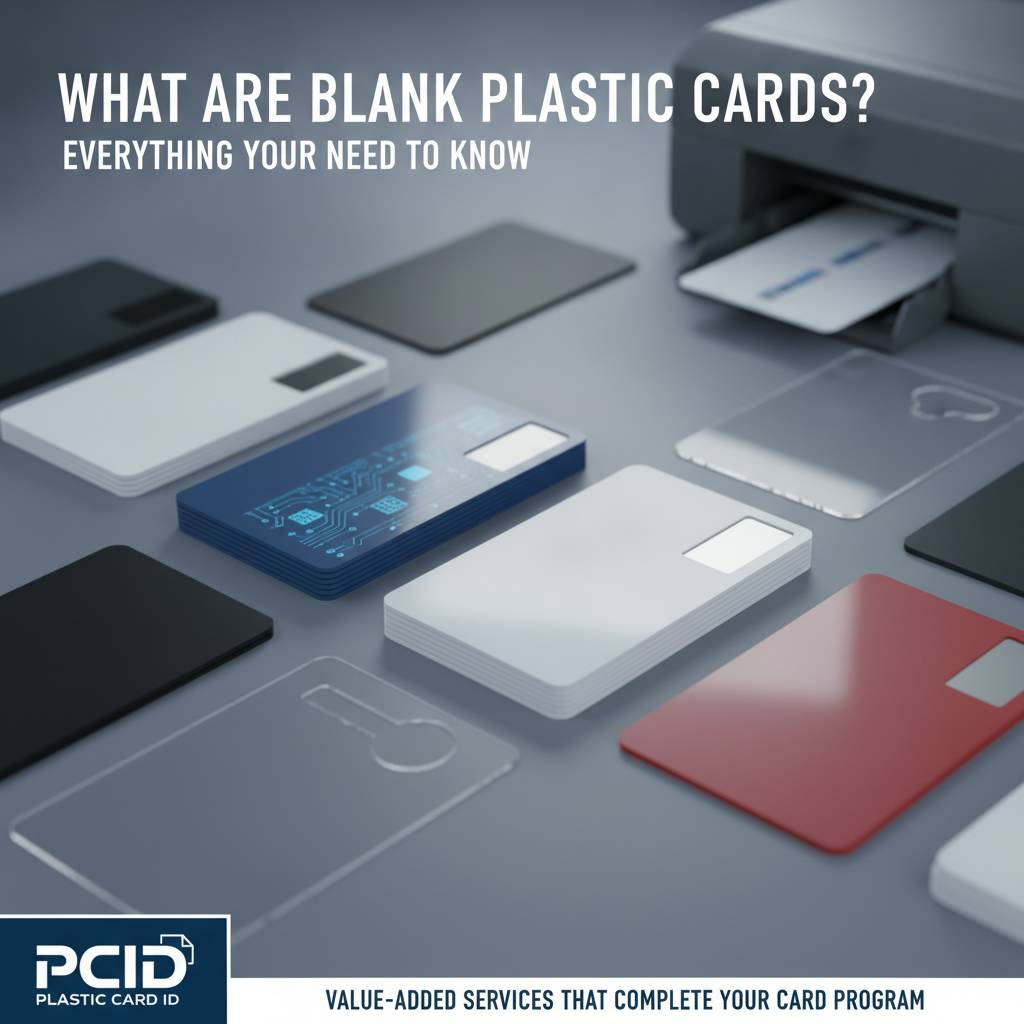
Blank plastic cards are the foundation, but a complete card program requires more than just the card stock. CPE operates as a genuine one-stop shop, supplying everything surrounding the card itself so that clients do not need to juggle multiple vendors across their program's supply chain.
Printer Ribbons and Consumables
A card printer is only as good as the ribbon inside it. Printer ribbons are consumables that directly determine the print quality and durability of finished cards. Using off-brand or incompatible ribbons with a premium card printer is one of the fastest ways to degrade print quality and void equipment warranties. Plastic Card ID stocks OEM and compatible ribbons for Evolis, Zebra, and Fargo printers - ensuring that the full printing system performs as designed.
Cleaning kits are the other essential consumable. Card printer rollers accumulate dust, card debris, and ink residue over time, and a dirty printer produces cards with defects, streaks, and inconsistent color. Regular cleaning cycles extend printer life and maintain print quality. Stocking ribbons and cleaning supplies alongside blank card inventory keeps your program running without interruption.
Card Carriers, Sleeves, and Accessories
Once cards are printed, they often need to be distributed - and how they arrive in a recipient's hands matters. Card carriers are professionally printed paper or cardstock holders that accompany the plastic card, providing space for instructions, branding messages, terms and conditions, or personalized greetings. For loyalty and gift card programs especially, the carrier is the first impression of the program.
Protective card sleeves extend the functional life of cards, particularly in high-friction environments. Badge holders, lanyards, retractable reels, and card clips are the accessories that make ID and access card programs functional day-to-day. Plastic Card ID supplies all of these, ensuring that clients can source their entire card program infrastructure in one place without compromising on quality at any level.
Card Affixing and Mailing Fulfillment
For organizations distributing cards to a large, geographically dispersed membership or customer base, the logistics of getting cards to recipients is a real operational challenge. Plastic Card ID offers card affixing and mailing services that handle this fulfillment step professionally - attaching printed cards to their carriers and managing the mailing process so that clients do not need to add a distribution operation to their internal workload.
This service is particularly valuable for retail loyalty card launches, annual membership renewal programs, and hotel chains sending keys to pre-arrival guests. The combination of blank card supply, in-house printing capability, and fulfillment services represents a genuinely comprehensive program solution that scales from small nonprofits to national retail chains.
Ready to Start or Upgrade Your Card Program? Contact Plastic Card ID
Blank plastic cards are deceptively simple objects with surprisingly powerful effects on the programs they support. Retailers who switch from paper gift cards to plastic see revenue increases of 35-50%. Loyalty programs built on plastic cards that live permanently in wallets dramatically outperform paper punch cards that get lost or damaged. Membership and ID programs that issue professional plastic credentials signal legitimacy, permanence, and organizational seriousness that paper simply cannot communicate.
The right blank card program, matched to the right printer and supported by the right consumables and accessories, is one of the highest-return investments a business or organization can make in its operational infrastructure. CPE has spent over 25 years and 50 million cards building the expertise to help you get it right - from the first card to the millionth.
Plastic Card ID is your strategic partner for blank plastic cards, card printers, and every component of a professional card program. Call us today at 800.835.7919 and let's build something that works.
Previous Page